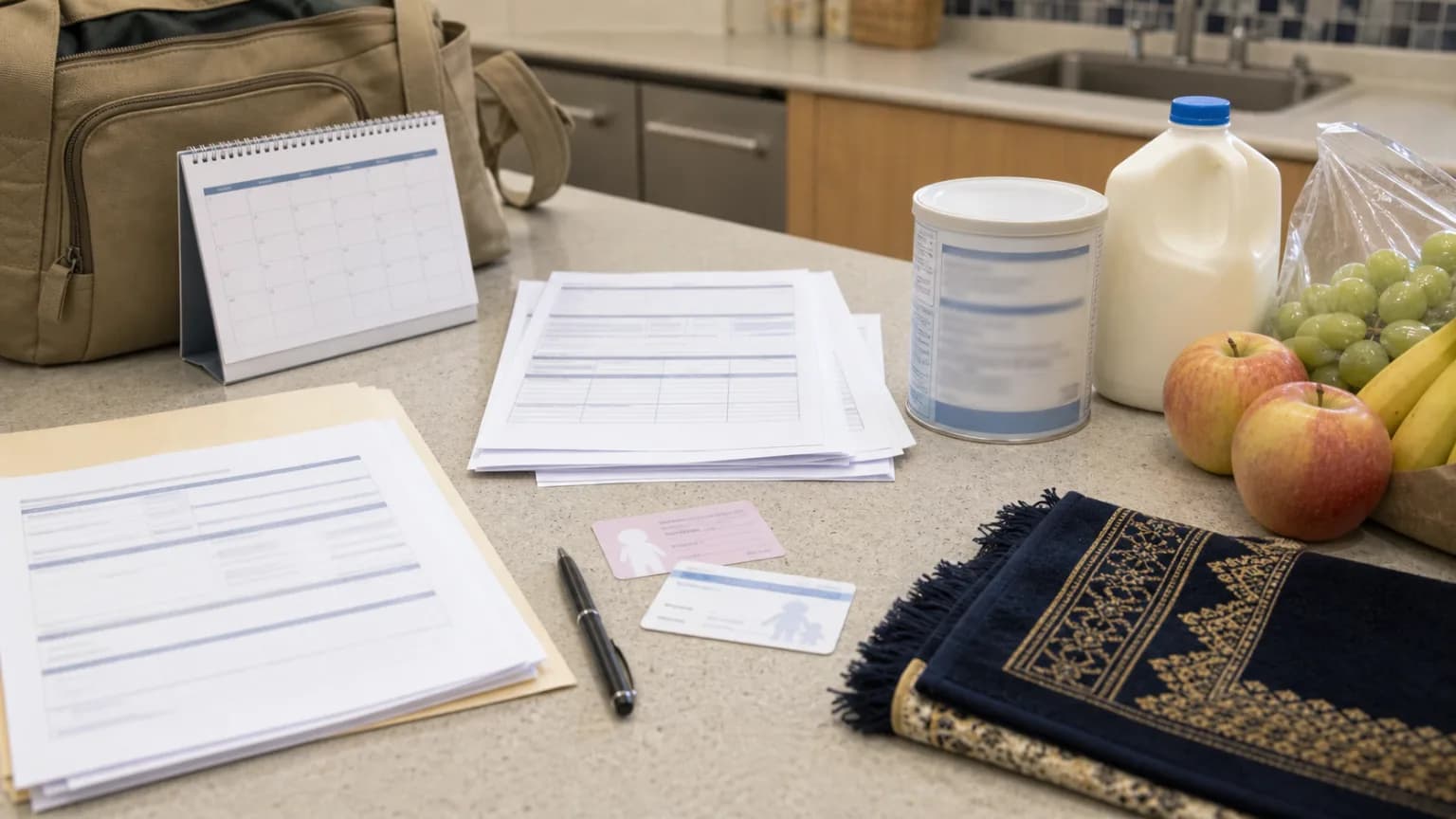
Muslim WIC Appointment Certification Checklist for Income Nutrition Baby Formula and Prayer
A practical Muslim WIC appointment certification checklist covering income proof, identity, residence, pregnancy or child records, nutrition questions, baby formula, halal food planning, prayer timing and privacy.
A Muslim WIC appointment certification checklist should help a parent or pregnant participant arrive with the right proof and the right food questions. The folder may include appointment details, clinic address, identity, residence, income proof, pregnancy record, child birth certificate or health record, immunization note when requested, breastfeeding questions, baby formula needs, halal food planning, Ramadan or fasting concerns, prayer timing, interpreter needs and privacy boundaries. The goal is not to make the appointment complicated. The goal is to keep the family from missing benefits because one document or question was left at home.
Use this with the Muslim public benefits appointment checklist for a broader benefit folder, with the Muslim SNAP recertification checklist if food support records overlap, and with the Muslim doctor appointment checklist when pregnancy, infant feeding or medical notes are part of the visit. This guide is not medical, nutrition, benefits, legal, immigration, tax, financial or religious advice. It is a document organizer for a WIC appointment or certification visit.
The sources set the WIC map. USDA FNS keeps the federal WIC program, certification documentation and nutrition context visible. USA.gov keeps broader food assistance separate from WIC. California WIC and Texas WIC show why appointment scheduling, clinic steps, proof examples, benefit cards, food lists and local clinic contacts are handled through state and local systems. The Muslim layer adds halal food planning, infant feeding privacy, Ramadan care questions, prayer logistics, modesty concerns and careful boundaries when relatives help with documents or childcare.
Prepare proof before the clinic visit
The cover sheet should list the participant name, baby or child name, appointment date, clinic address, phone number, online or phone application status, requested documents, interpreter need, transportation plan and who is allowed to help. Then separate the folder into identity, residence, income, pregnancy or child record, nutrition questions, formula or breastfeeding, referrals, submission proof and follow-up. If the family recently moved, changed income, gave birth, added a child, lost work or needs a different formula discussion, write the date and the practical question before the appointment.
- Appointment file: clinic address, appointment time, phone number, application status, reminder message, transportation plan and interpreter request.
- Proof file: identity, residence, income, benefits letter, pregnancy record, child record, birth certificate or health information requested by the clinic.
- Nutrition file: breastfeeding questions, formula needs, allergies, halal food planning, vegetarian limits, Ramadan schedule and pediatric advice to ask about.
- Family file: caregiver name, who brings the child, sibling childcare, privacy boundaries and emergency contact for the appointment day.
- Muslim care notes: plan salah around clinic timing, protect income and health privacy, separate zakat help from official proof and avoid shaming food needs.
WIC visits often combine paperwork with nutrition conversation. A family may need to talk about breastfeeding, formula, weight, anemia screening, picky eating, pregnancy nausea, halal food access, food allergies or a child refusing certain foods. Write those questions in normal words. If a topic feels private, decide whether the participant wants a spouse, parent, friend or interpreter in the room. A helper can watch children or drive to the clinic without hearing every medical or feeding detail.
Make the proof tab concrete. A California WIC appointment, a Texas WIC application step and another local clinic may use different words, but the family can still prepare the same core packet: photo ID or other identity record, proof of address, proof of income or benefit participation, pregnancy confirmation when relevant, baby or child record, clinic reminder, food-benefit card or app notes, and the name of the person who will bring the child. If the appointment is by phone or video, add the device, charger, email, text reminder and quiet room plan. If it is in person, add transportation, stroller, diapers, snacks, prayer break and who can watch siblings.
Keep halal planning practical and separate from proof
Halal planning belongs in the nutrition tab, not as a demand that every WIC food item be religiously labeled. Write the practical questions: which cereals, dairy, eggs, fruits, vegetables, beans, peanut butter, baby foods or formula options are available; which stores are nearby; what to do during Ramadan; whether a clinician has advised a specific formula; and how to avoid waste if a child cannot use an item. If there is a medical issue, ask the clinic or clinician. If there is a religious question, ask a qualified adviser separately.
After the appointment, save the benefit start date, card or app instructions, next appointment, food list, referral notes, formula instructions, clinic contact and any missing-document request. If the clinic asks for another proof item, put that request on the first page immediately. A useful Muslim WIC appointment certification checklist leaves the family with documents ready, nutrition questions written, privacy protected, prayer timing respected and the next visit visible.


