Muslim REAL ID and DMV Checklist for License Address Prayer and Documents
A practical Muslim REAL ID and DMV checklist covering state license appointments, identity documents, Social Security number, address proof, vital records, prayer timing, childcare and document safety.
A Muslim REAL ID and DMV checklist should prevent one missing paper from wasting a whole family morning. A license or state ID appointment can involve proof of identity, lawful presence if required, Social Security number, address proof, name-change records, birth or marriage certificates, old licenses, fees, photos, eye tests, childcare, transportation and prayer timing. Muslim families may also be trying to coordinate modest photos, Ramadan energy, school pickup, elder rides and keeping sensitive documents away from casual helpers.
Use this with the Muslim international travel documents checklist if travel is involved, and with prayer times when planning the appointment day. This guide is not legal, immigration, DMV, travel, identity, benefits or religious advice. It is a document organizer for families preparing a state license, state ID or REAL ID appointment.
The sources set the document map. USAGov points families toward state motor vehicle services and vital document replacement. DHS and TSA keep REAL ID and airport identification questions visible. The Social Security Administration source keeps Social Security number or card issues separate from DMV paperwork. The Muslim layer adds salah timing, modest clothing for the photo, childcare, halal snacks for long waits, family privacy and a careful plan for originals and copies.
Build the DMV folder before booking the appointment
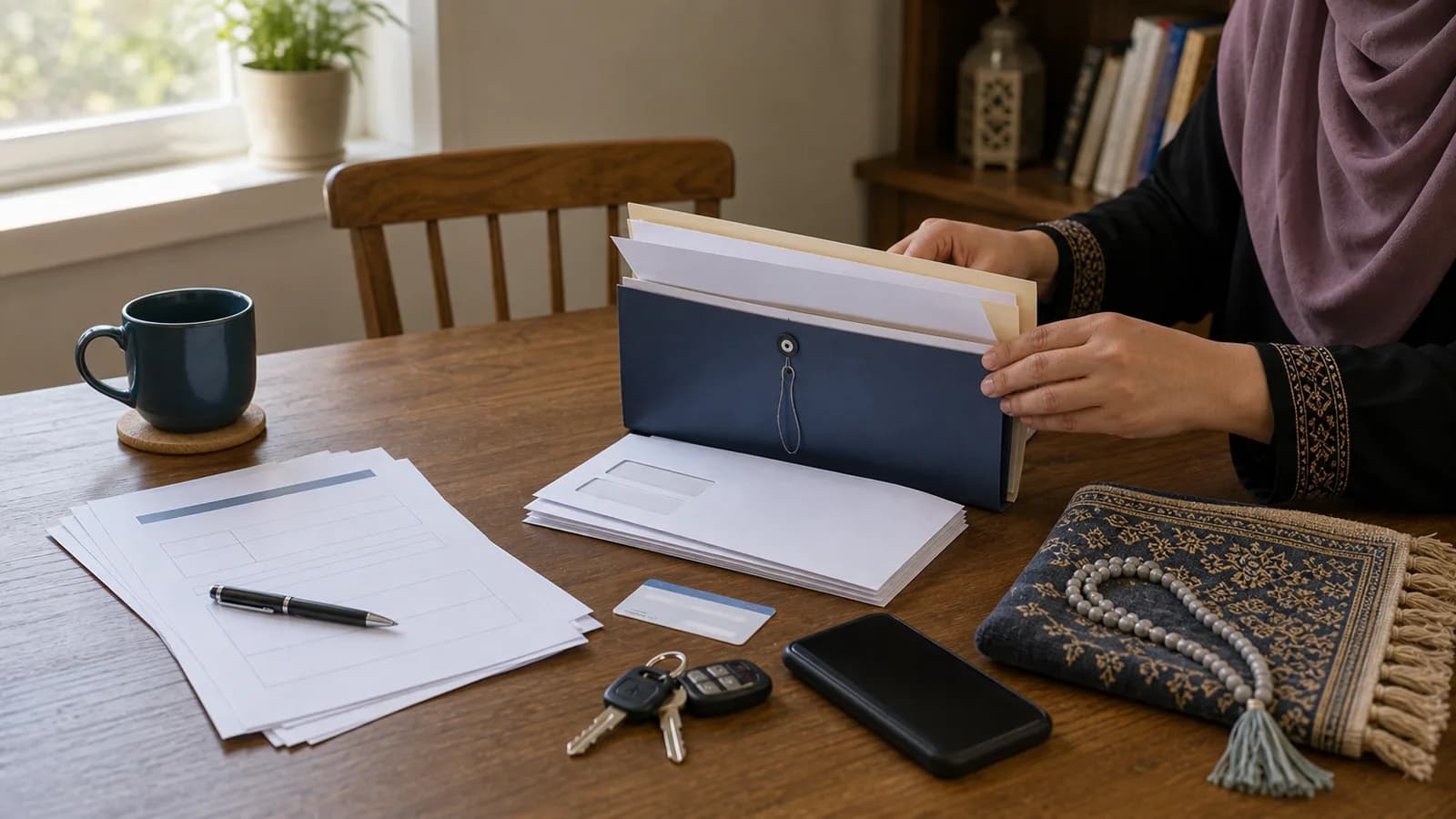
The folder should include the appointment confirmation, state DMV checklist, current license or ID, passport or birth certificate if used, Social Security number proof if required, two address proofs if required, name-change documents if the current name differs, immigration or lawful-presence documents if relevant, glasses or contacts for a vision check, payment method, child-care plan, prayer timing and a list of documents that must not be left behind. Put originals in one sleeve and copies in another.
- Identity: current ID, passport, birth certificate, immigration document if relevant, and name-change records.
- Numbers and address: Social Security number proof if required, utility bill, lease, bank statement or other accepted address record.
- Appointment: state DMV office, confirmation number, fee, photo rule, vision check, parking, transit and wait-time plan.
- Family logistics: childcare, elder transportation, school pickup, medication, halal snack, phone battery and prayer timing.
- Document safety: originals, copies, secure folder, no casual photo sharing, and a post-appointment scan or storage plan.
The most common DMV mistake is assuming every office uses the same list. State rules differ, and even a familiar office may change appointment rules. Use the state motor vehicle site named by USAGov, then print or save that exact checklist. If the family recently moved, married, divorced, changed a name, became a citizen, replaced a lost card, or changed immigration status, mark that issue early. The DMV counter is not the place to discover that two records spell a name differently.
Separate REAL ID, travel and replacement-record questions
A REAL ID question is not only a driving question. A family may need it for domestic air travel or certain federal identification uses, while an ordinary state license may still serve other purposes depending on state rules. Write why the household needs the card: driving, state ID, airport travel, work onboarding, school pickup, bank account, public benefits or elder care. That purpose decides how urgent the appointment is.
Replacement records can take longer than the DMV appointment itself. If a birth certificate, marriage certificate, divorce decree, adoption record, naturalization certificate or Social Security card is missing, write the replacement path and expected delay. Keep receipts and confirmation numbers. A Muslim family trying to prepare for Hajj, umrah, a new job, school enrollment or a hospital visit should not let a missing vital record hide until the last week.
Prayer and modesty should be planned as ordinary logistics. Check whether Dhuhr or Asr falls during travel and waiting. Dress for the ID photo in a way that follows the office rules and the family's modesty needs. If the appointment lands during Ramadan, plan food for children, medication, transportation and energy honestly. Worship should steady the day, not become a forgotten detail in a fluorescent waiting room.
Document privacy matters. Do not send full photos of passports, Social Security cards, immigration documents or birth certificates through family chats unless truly necessary. If a relative helps with translation or driving, let them help without handing over every document. A simple checklist protects both the appointment and the household identity trail.
Close the appointment with a receipt and storage plan
After the appointment, save the receipt, temporary license if any, tracking number, next deadline and any rejected-document note. Scan or photograph only what is safe to store, then put originals back in a secure place. If the DMV rejected a document, write the exact reason and the official path to fix it instead of guessing.
A useful Muslim REAL ID and DMV checklist keeps the trip practical: correct office, correct documents, prayer and childcare planned, originals protected, replacement records started and the next step written down. The wait may still be boring, but it should not be wasted.


