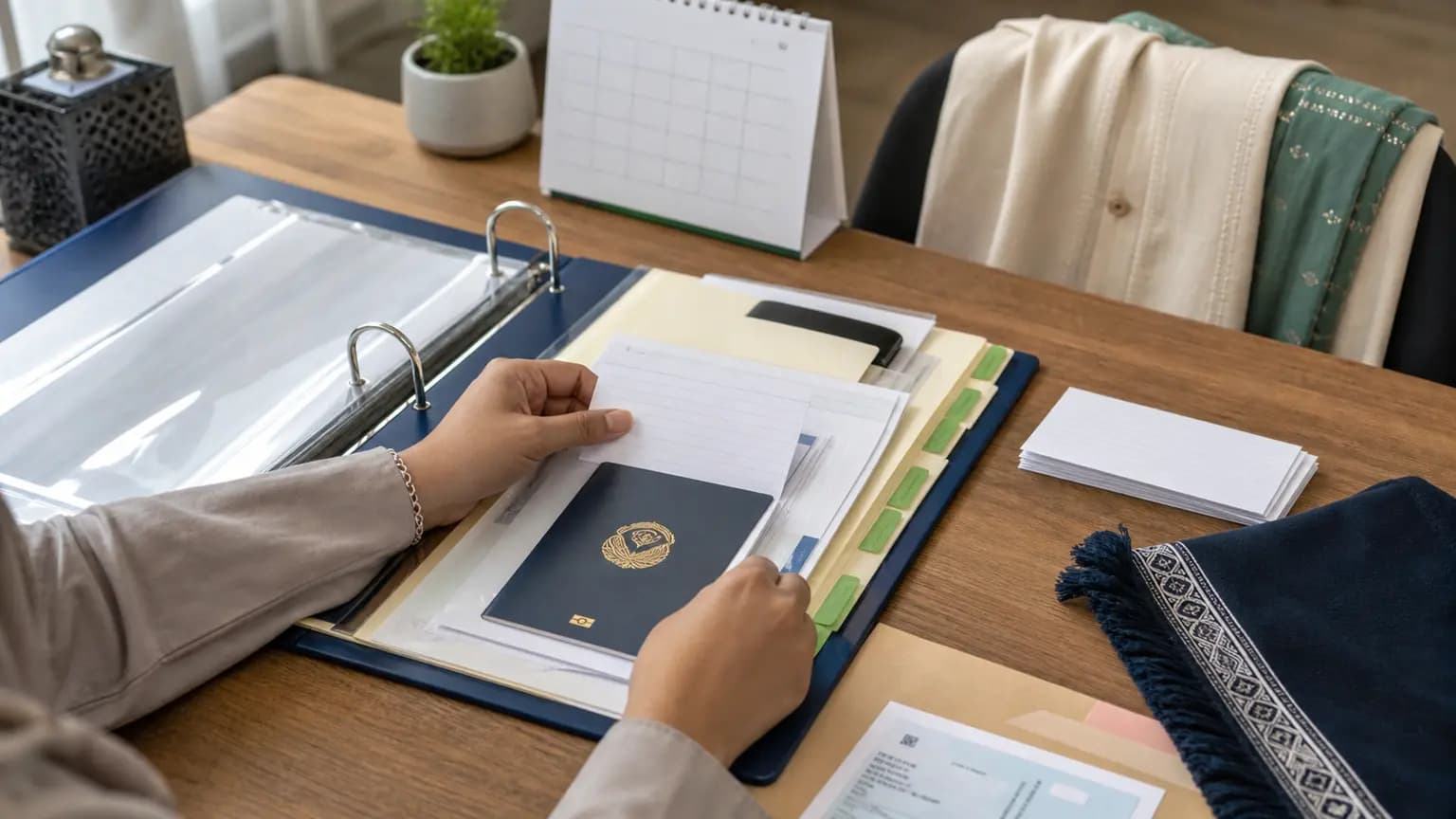
Muslim Naturalization N-400 Interview and Oath Checklist for Civics Passports and Prayer
A practical Muslim N-400 naturalization interview and oath checklist covering interview notice, civics study, passports, tax records, travel history, oath ceremony, prayer timing and family privacy.
A Muslim naturalization N-400 interview and oath checklist should help an applicant prepare for a serious citizenship step without turning the household into a scattered pile of memories. The folder may include the interview notice, green card, passports, travel history, tax records, selective service question, marital records, children records, name-change question, civics study plan, oath ceremony notice, prayer timing, modest clothing, transportation and privacy boundaries. The goal is not to rehearse legal answers from the internet. The goal is to make sure the applicant can find the documents, dates and study materials that belong to the official process.
Use this with the Muslim immigration appointment checklist for field-office logistics, with the Muslim Selective Service registration checklist if that question may affect the file, and with the Muslim IRS tax transcript checklist if tax history must be reviewed. This guide is not legal, immigration, tax, travel, education or religious advice. It is a document organizer for N-400 interview and oath preparation.
The sources set the naturalization map. USCIS N-400 material keeps the application path visible. Interview and test guidance keeps the appointment, English and civics preparation in view. USCIS interview-sequence material helps families plan what may happen at the visit. Naturalization ceremony guidance separates oath-day records from interview-day records. The 2025 civics test resource keeps study materials visible without turning the evidence folder into a workbook. The Muslim layer adds prayer scheduling, modesty at the field office, family trust boundaries, halal travel or meal planning and care with sensitive marital, travel or tax facts.
Separate evidence from study materials
The front sheet should list the applicant name, A-number location, interview date, field office, receipt number, USCIS online account, current address, phone, email, transportation plan and who may attend or help. Then divide the binder into notices, identity, passports and travel, residence, tax records, family records, selective service if relevant, name-change question, civics study, English practice, oath ceremony and follow-up. Study cards are useful, but they should not bury the interview notice or passport history.
- Notice file: interview notice, online account update, reschedule question if any, field-office address and arrival plan.
- Identity file: green card, state ID, passports, name spellings, birth date, address history and safe storage notes.
- History file: travel dates, tax records, work or school records, marriage or divorce records, children records and changed facts since filing.
- Study file: civics questions, English reading and writing practice, weak topics, study calendar and test-day calm notes.
- Muslim care notes: salah timing, modest clothing, halal meal or medication needs, family privacy and who may translate or drive.
Travel history needs special patience. Many applicants have visits for Eid, funerals, Umrah, sick relatives, school breaks or work trips. Put passport stamps, old passports, tickets if available and the travel list in one tab. If a date is uncertain, write the evidence used to reconstruct it rather than pretending memory is perfect. If a question could affect eligibility, make a separate page of questions for a qualified immigration professional. The interview folder should organize facts, not invent confidence.
Plan the interview day and oath day as two stages
The interview day packet should include the notice, IDs, required originals, copies, transportation plan, prayer time, childcare plan, phone storage plan and a calm list of changed facts since filing. A spouse, adult child, imam, friend or community volunteer may want to help, but the applicant should decide what that person may see. A ride to the field office does not require access to private marital history, travel concerns, tax records or every page of the application.
The oath stage deserves its own tab. Save the oath ceremony notice, guest rules, certificate review notes, old green card return question, Social Security update question, passport application question and voter registration timing question. If the ceremony overlaps with Jumuah, Ramadan, caregiving or work, write the logistics early. After the oath, protect the certificate like a vital record. Do not hand the only original to a relative for scanning without a plan.
Naturalization preparation often reaches outside USCIS. USA.gov can sit in the overview tab, Selective Service material belongs in the selective-service question tab, IRS transcript material belongs in the tax tab, and State Department passport material belongs in the travel tab. This structure helps an applicant avoid mixing a civics flash card with a passport, a tax transcript request with an oath notice, or a family rumor with an official source. It also makes the next question clearer for a qualified immigration professional if a travel, tax, name-change or registration issue needs review.
Close the folder after each milestone. After the interview, record what happened, what documents were kept, what was returned, what decision or continuation notice was received and what deadline comes next. After the oath, record the certificate details, storage location, passport plan, Social Security update plan and voter registration question. A useful Muslim N-400 checklist leaves the applicant prepared, truthful, organized, prayer-aware and less dependent on family rumor.
Sources
- USCIS: Application for Naturalization (Form N-400).
- USCIS: The Naturalization Interview and Test.
- USCIS: What to Expect at Your Naturalization Interview.
- USCIS: Naturalization Ceremonies.
- USCIS: 2025 Civics Test.
- USA.gov: U.S. Citizenship Through Naturalization.
- Selective Service System: Who Needs to Register.
- IRS: Get Transcript.
- U.S. Department of State: Passports.


