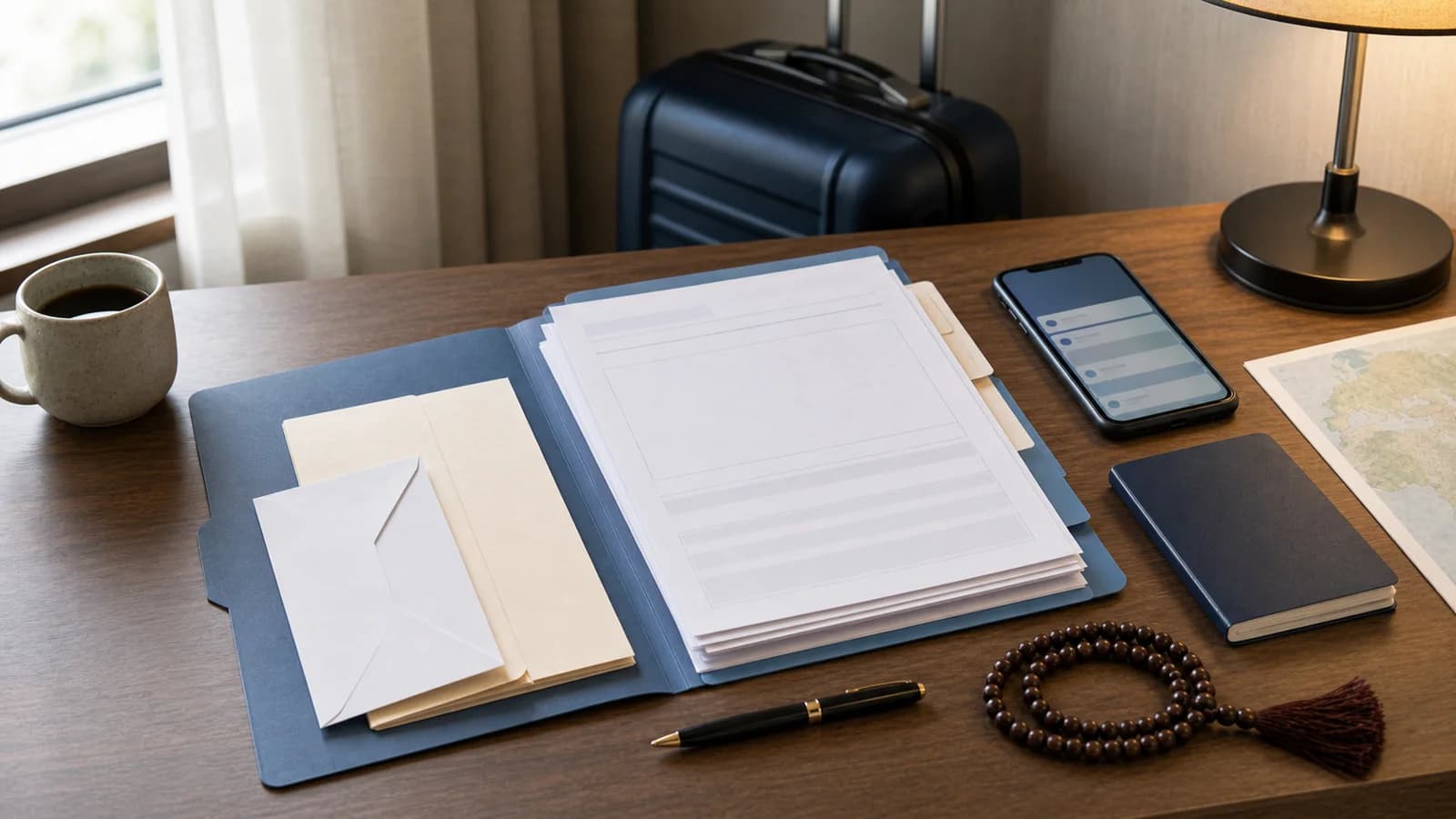
Muslim I-131A Carrier Documentation Checklist for Lost Green Card Travel and Prayer
A practical Muslim I-131A carrier documentation checklist covering lost green card abroad, passport, travel proof, returning resident context, copies, privacy and prayer timing.
A Muslim I-131A carrier documentation checklist should help a permanent resident abroad organize a travel-document emergency without turning panic into bad decisions. The folder may include passport, green card copy if available, lost or stolen card report, travel itinerary, proof of permanent resident status, boarding or carrier question, consulate or USCIS appointment notes, returning resident context, translations, copies, prayer timing and privacy limits. The checklist does not decide whether I-131A is available, whether a person has abandoned residence or whether travel is safe. It organizes the record so the person can ask the right official and qualified questions quickly.
Use this with the Muslim I-90 green card replacement checklist when the person is back in the United States or planning a replacement card file, with the Muslim international travel documents checklist when the travel folder needs broader passport and itinerary planning, and with the Muslim online FOIA immigration records checklist when old status or travel records are missing. This guide is not legal, immigration, abandonment, airline, consular, travel safety or religious advice. It is a document organizer for an I-131A travel-document file.
The sources set the travel-document map. USCIS I-131A keeps the carrier-documentation lane visible. USCIS permanent resident travel material keeps ordinary travel context separate from emergency documentation. State Department returning resident material keeps long-absence questions separate from boarding documentation. eCFR and GovInfo Part 211 belong in a reference tab. USA.gov keeps public immigration context nearby. The Muslim layer adds amanah, careful handling of identity documents, privacy around travel stress, family dignity, halal logistics and salah scheduling while abroad.
Build the travel timeline before contacting helpers
The front sheet should list the permanent resident's full name, A-number if known, passport number, green card number if known, date left the United States, countries visited, current location, lost or stolen document date, airline or carrier issue, appointment question, prayer windows, language needs and who may help. Do not begin by buying another ticket or forwarding every identity document to relatives. First write the timeline: last U.S. departure, card loss, police or loss report, airline denial or warning, consulate or USCIS contact, planned return date and any long absence concern.
- Identity file: passport, green card copy if any, A-number, prior notices, old card photos, name spellings and safe digital backup.
- Travel file: tickets, boarding issue, departure date, planned return date, airline contact, appointment notes and proof of location abroad.
- Loss file: police report or loss note if available, stolen-card question, translation status and who may hold copies.
- Residence-risk file: long absence question, returning resident context, job or family ties and questions for qualified help.
- Muslim care notes: prayer timing while traveling, halal food and medicine logistics, family privacy and how to ask for help without broadcasting identity documents.
Identity documents should be shared with restraint. A relative may need a passport number to help book an appointment; that does not mean a group chat should hold photos of every identity page. A mosque contact abroad may help find translation or transportation; that does not mean they need the whole immigration history. Make a limited helper packet with only the pages needed for the task, and keep the full packet in a safer folder. Amanah includes protecting identity records when the family is anxious.
Separate boarding documentation from replacement-card planning
I-131A carrier documentation, I-90 green card replacement and returning resident questions should not sit in one loose pile. The carrier-documentation tab tracks what is needed to board or return. The I-90 tab tracks replacement-card planning after return. The returning resident tab tracks long absence questions and State Department context. The travel logistics tab tracks hotel, prayer, medication, halal food, phone access and safe transport. This separation prevents a travel emergency from swallowing every future immigration task.
Copies and receipts matter because travel days move quickly. Save appointment confirmations, payment or fee notes, delivery receipts, airline messages, loss reports, translations, scans and final documents in one folder. If a document is submitted through an online portal or at an appointment, write the date, time, office, file name and who attended. If a helper makes a phone call, write what was asked and what answer was given. Do not rely on memory after a stressful day in a foreign city.
Before traveling or submitting anything, review the folder after prayer or in another calm moment: passport ready, green card issue written, travel timeline clear, loss record saved, carrier question separated, long-absence question listed, private identity pages protected, copies backed up, family update limited and next appointment visible. A useful Muslim I-131A checklist does not promise boarding or admission. It helps the traveler keep documents, dignity and worship logistics steady while solving the emergency.


