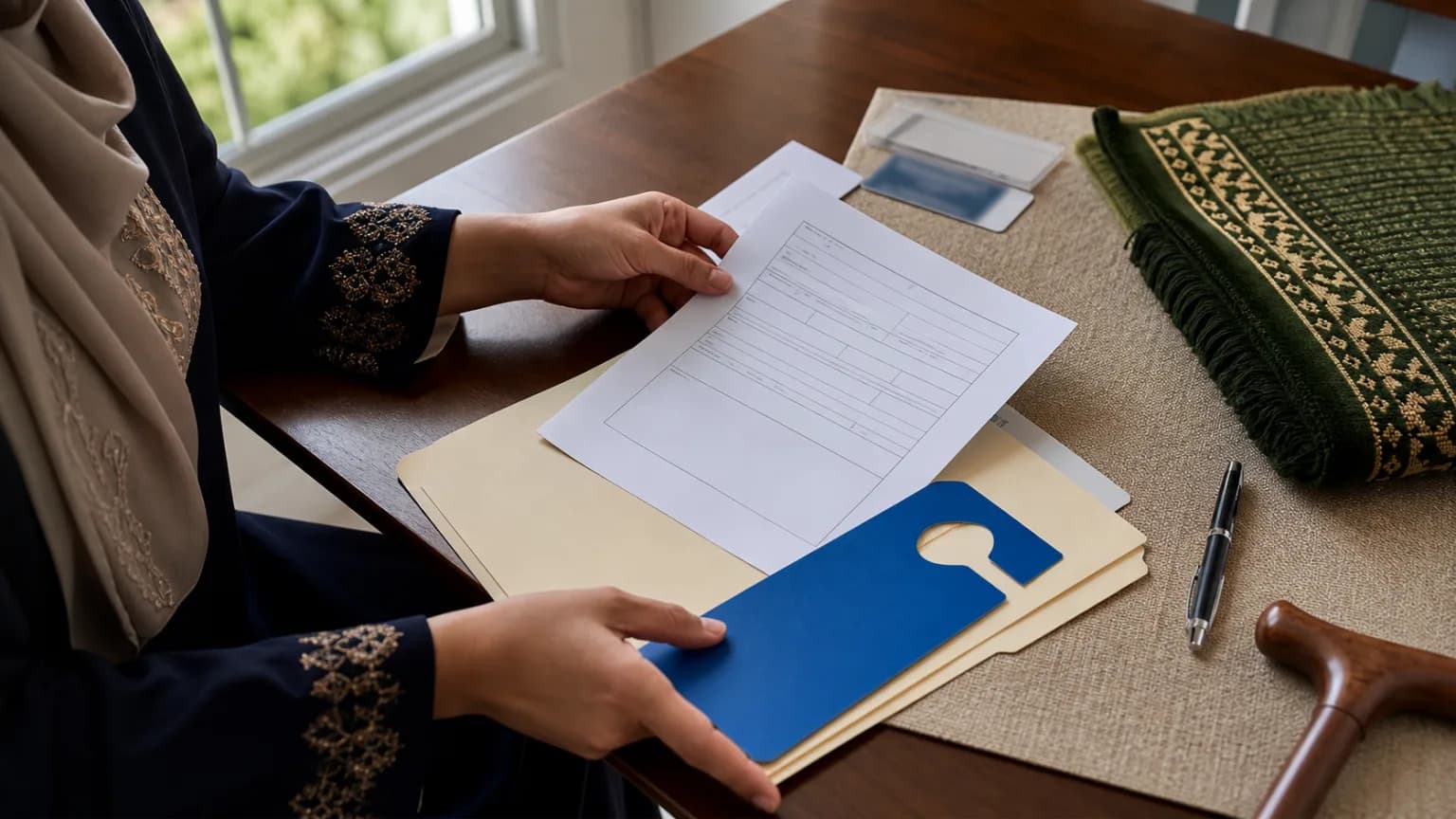
Muslim Disabled Parking Placard Checklist for Doctor DMV Caregiver and Prayer
A practical Muslim disabled parking placard checklist covering medical certification, DMV forms, temporary or permanent placards, caregiver privacy, prayer and transport.
A Muslim disabled parking placard checklist should help a disabled person, elder, parent or caregiver organize transport access without exposing more medical detail than necessary. The folder may include the state DMV or local permit page, application form, medical certification, doctor appointment notes, temporary or permanent placard question, ID, vehicle information if required, mailing method, receipt, expiration date, renewal reminder, mosque parking needs, medical appointment transport, prayer logistics and privacy limits. The checklist should center dignity: the placard supports access, not public debate about someone's body.
Use this with the Muslim disability benefits application checklist for broader benefits records, with the Muslim medical records request checklist before a doctor certification visit, and with the Muslim elder care checklist when a caregiver is coordinating rides. This guide is not legal, medical, disability-rights, DMV, benefits, financial or religious advice. It is a document organizer for an accessibility permit task.
The sources set the accessibility map. ADA.gov accessible parking material keeps the access purpose visible. California DMV application material shows how a state process can collect the request. New York DMV material keeps state disabled parking rules in view. Texas DMV material keeps placard and plate distinctions visible. Mass.gov material keeps application and renewal planning in the folder. The Muslim layer adds caregiver amanah, prayer and masjid access, modesty around medical detail, privacy in family chats and transport planning for people who should not have to explain pain at every errand.
Start with the state rule and the medical certification path
The first page should list the applicant name, state, application page, doctor or certifying professional, appointment date, form deadline, temporary or permanent question, mailing or online submission method, fee if any, expected placard date and expiration reminder. Then split the folder into state rule, medical certification, application, submission proof, placard storage and renewal. Do not send a caregiver to the DMV with a half-filled form and no certification plan.
- State file: DMV or local permit page, application form, eligibility notes, temporary or permanent option and renewal rule.
- Medical file: appointment date, certification section, relevant records, mobility notes and privacy limits for what helpers may see.
- Submission file: ID, vehicle or mailing information if required, fee note, receipt, confirmation number and copy of the application.
- Transport file: medical visits, masjid access, school pickup, work, grocery trips, winter or heat risks and backup driver list.
- Muslim care notes: salah timing, modesty, avoiding public shaming, caregiver amanah and keeping medical details out of group chats.
Medical certification should be prepared respectfully. The applicant may need a doctor, specialist or other allowed professional to complete part of the form. The caregiver can help schedule the visit, print the form and organize records, but they do not automatically need every diagnosis. Write exactly what the certifier must complete and what the applicant wants kept private. A useful file gives enough evidence for the permit without turning disability into family gossip.
Separate placard use from disability explanation
A disabled parking placard can become socially uncomfortable when relatives, neighbors or masjid attendees question who is using it. Put the use rules and expiration date in the folder so the household knows who may use it, when it must be displayed and when it must be renewed or returned. Do not make the disabled person perform pain for approval. Access paperwork exists because ordinary walking distance can become a barrier.
Prayer logistics should be concrete. If a person avoids Jumuah, Eid, halaqah or medical visits because parking is too far, write the real transport pattern: arrival time, closest accessible entrance, driver, cane or walker, weather risks, restroom needs and whether the person needs extra time for wudu or salah. A placard is not a spiritual shortcut; it is one practical support that can help someone participate safely and with dignity.
Renewal belongs on the first page. Temporary placards can expire quickly, and permanent placards or plates can still have renewal steps. Put the expiration date into the household calendar, save the receipt and store a copy of the application. If the condition changes, if the person moves, or if a placard is lost, stolen or damaged, use the state process instead of guessing from another state's rule.
Finish with proof, storage and caregiver boundaries
After applying, save the confirmation, mailing receipt, office note or issued placard details. Write where the placard is stored, who may drive, who may not use it, renewal date and what medical papers should be shredded or kept. A useful Muslim disabled parking placard checklist leaves the applicant with access paperwork filed, doctor certification tracked, caregiver help bounded, prayer and transport easier, and private medical information treated as an amanah.


