Muslim College Dorm Checklist for Prayer Halal Food and Roommates
A practical Muslim college dorm checklist covering prayer space, qibla, halal food, shared fridges, roommates, campus safety, student documents, discrimination records and first-week routines.
A Muslim college dorm checklist should be more specific than bedding, towels and a laptop charger. A dorm is where a student will pray, sleep, store food, host friends, study, talk with roommates, handle campus alerts and learn how to protect personal documents. The first semester can go sideways when prayer space is improvised, halal meals are left to chance, roommates never discuss pork or alcohol in the fridge, and family documents are scattered across email threads.
Use prayer times to understand the student's class schedule before move-in, and use the qibla finder when choosing the cleanest prayer corner. This guide is not legal advice and it does not turn every roommate conversation into a formal complaint. It is a practical document for Muslim students and parents who want faith, safety, food and paperwork to be ready before orientation week becomes noisy.
The sources shape the checklist. The U.S. Department of Education's Title VI and religion material and OCR complaint page keep discrimination records in view. Ready.gov's campus guidance adds emergency contacts and alerts. FoodSafety.gov gives a simple food-safety frame for tiny fridges and shared kitchens. The FTC student scam warning keeps job, money and identity requests from getting mixed into ordinary campus messages.
Set the room up for daily worship and ordinary study
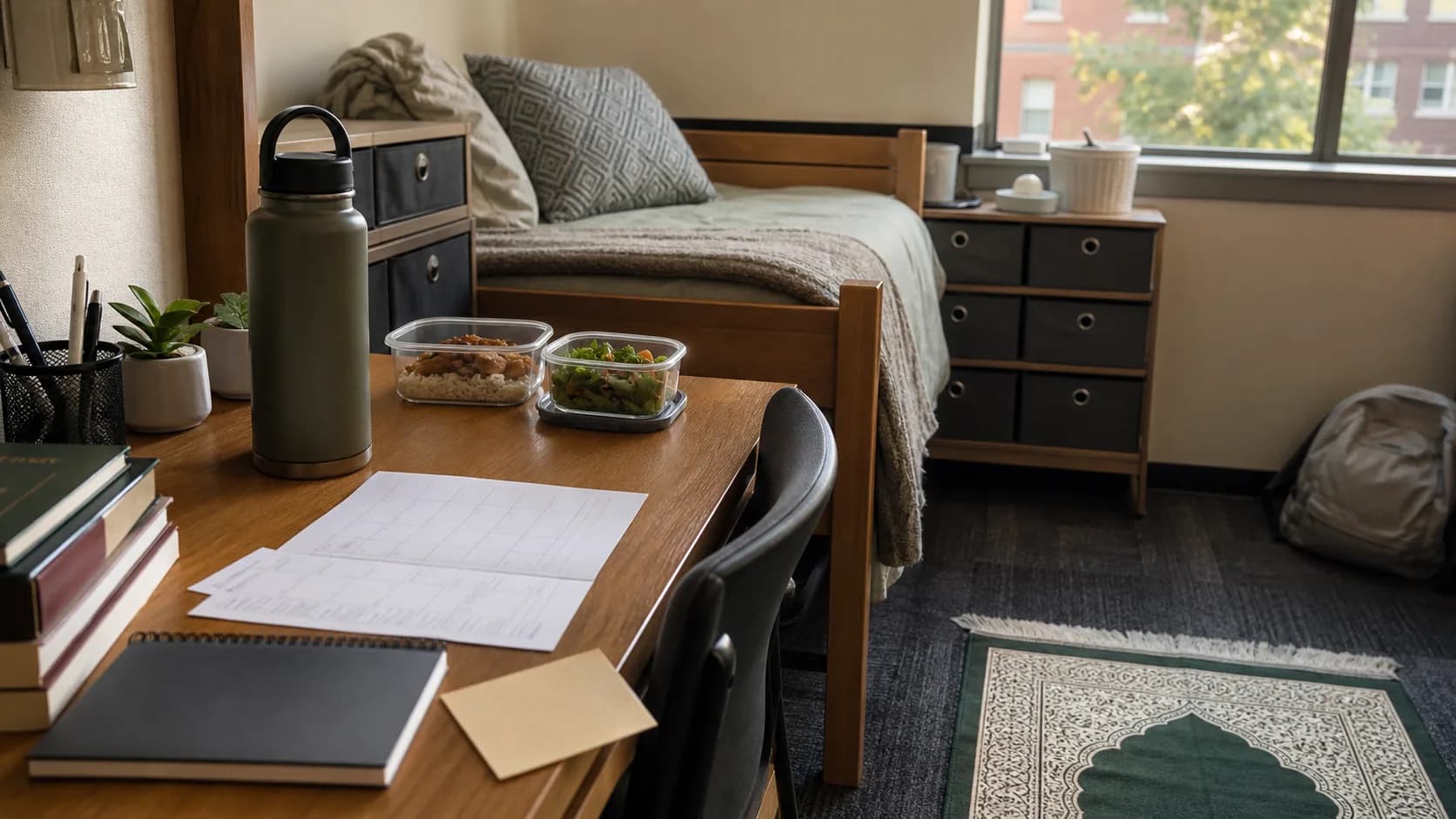
Before the bed is raised and the desk is covered, choose the prayer area. It should be clean, easy to reach, away from shoes if possible, and not in the only traffic path between the door and the bed. Put the prayer mat, modest clothing, small towel, water bottle and qibla note where the student can find them without unpacking half the room. If a roommate will be present during prayer, the conversation can be simple: this is a short daily prayer, this is the corner used, and this is how privacy or quiet can work without making the room feel tense.
- Prayer: qibla direction, clean mat space, wudu towel, Friday prayer route and class-time prayer windows.
- Food: halal shelf, labelled containers, shared fridge rules, pork or alcohol boundaries and first-week meals.
- Roommates: guests, quiet hours, shoes, music, visitors during prayer and Ramadan schedule expectations.
- Documents: student ID, insurance card, emergency contacts, campus housing agreement and financial records.
- Safety: campus alerts, evacuation route, locked storage, pharmacy, local mosque and family check-in plan.
The halal food plan should be written before hunger does the negotiating. Decide whether the student will use campus dining, bring shelf-stable food, cook in a shared kitchen or rely on a mini fridge. Label containers. Separate halal meat from roommate food. Keep a simple rule for pork contact, alcohol storage and shared utensils. If the student eats vegetarian or fish when halal meat is unavailable, write that down too so the first week does not become a stream of uncertain cafeteria decisions.
Make roommate expectations boring and clear
Roommate agreements are usually strongest when they sound ordinary. Do not start with a lecture. Start with daily logistics: sleep, guests, cleaning, fridge shelves, shared dishes, privacy, alarm times, shoes, music and what happens if one person is studying or praying. A Muslim student can explain prayer in the same tone as explaining a lab schedule. The point is not to ask a roommate to become religious. The point is to make sure the room can support both people without resentment.
If a residence hall, staff member or campus office creates a religious problem, keep records early. Save emails, housing messages, meeting notes, dates, names and exact wording. A student should first understand the campus process, but serious discrimination questions should not be handled only through hallway memory. The OCR complaint source matters here because any later conversation is clearer when the record says what happened, who was involved and what the student requested.
Emergency planning belongs in the same folder as prayer and food. The student should know the campus alert system, evacuation route, emergency contacts, local urgent care, pharmacy, mosque contact, ride options and what family should do if the student stops answering during a campus alert. A small dorm go-bag can include medicine, charger, ID copy, cash, snack, water, scarf or modest layer and a compact prayer mat. This is not dramatic. It is how a student away from home stays organized when campus life is not calm.
The FTC warning is useful because college students receive many offers that look like opportunity: remote work, tutoring, housing, scholarships, packages, equipment purchases or student clubs asking for money. A Muslim student who wants halal income may be especially eager to accept a quick job, but pressure to pay, buy equipment, share banking details or send identity documents before a real hiring process should slow everything down. Keep sensitive documents in a secure folder, not in casual chat threads.
Build the first-week rhythm before classes start
During the first week, test the full routine once: wake up, pray, shower, get to class, eat halal lunch, find the next prayer space, return to the dorm, store food safely, call family and review tomorrow's schedule. Use the Muslim student prayer checklist for school-specific prayer planning and the halal grocery label guide when stocking dorm snacks.
A strong Muslim dorm checklist is not about making the room perfect. It is about making the first semester less fragile. The student has a clean place to pray, enough food certainty to avoid constant guessing, a roommate conversation that happened before conflict, a record folder for serious issues and a campus safety plan. That is a good beginning: faith is present, documents are findable and the student can focus on learning instead of repairing preventable chaos.


