Islamic Manuscript Inks: Carbon, Iron Gall, Red and Gold
How black, red and metallic writing materials were made and identified, why recipes vary, and how ink chemistry shapes manuscript conservation.
Islamic manuscripts may contain carbon-based black ink, iron-gall ink, mixed inks, colored pigments, and gold, sometimes on one page. Historical recipes are evidence for possibilities, not identification. Modern conservators use microscopy, X-ray fluorescence, Raman or related non-destructive methods as appropriate.
Carbon-Based Black Ink
Carbon ink suspends soot particles in a binder. This formulation provides a stable black medium for the main text body. The visual appearance is typically matte and deep, offering strong contrast against parchment or paper backgrounds. While often considered durable, poor quality binders can lead to abrasion over time. The consistency of the suspension allows for smooth flow through the reed pen.
Iron-Gall Ink Characteristics
Iron-gall ink forms from tannin-rich material and iron salts. Under some conditions it can contribute to brittleness, cracking or loss in paper. Those visible effects do not identify the ink on their own, and the original maker’s priorities cannot be inferred simply from later damage. Conservators therefore combine close examination with appropriate material analysis before deciding how a page should be handled.
Colored Pigments and Gold
Red writing may be pigment-based, but a color name alone does not identify its chemistry. Gold can appear as leaf or powdered paint. Scribes and artists used contrasting materials for headings, verse markers and illumination, although one page does not prove that several specialists were involved. Layering, particle shape and elemental analysis can help separate materials that look similar to the unaided eye.
Analytical Identification
Modern conservators employ non-destructive methods such as microscopy, X-ray fluorescence, or Raman spectroscopy. These tools help distinguish between surviving evidence, written prescriptions, later copies, and modern reconstruction. Historical recipes provide context but do not guarantee material composition. Analysis supports the connection between ink choice, script style, and repair needs. The distinction between what is observed and what is inferred remains critical in conservation practice.
- Assess surface texture under magnification
- Check for corrosion patterns around iron-gall lines
- Identify elemental markers using non-destructive tools
- Compare pigment layers with known historical techniques
Understanding these materials helps conservators plan appropriate repair strategies. The choice of ink influences script legibility and illumination design. Recognizing the limits of evidence prevents unwarranted assumptions about original appearance. Each manuscript presents unique conditions requiring individual assessment. Preservation efforts must respect the material history of the object.
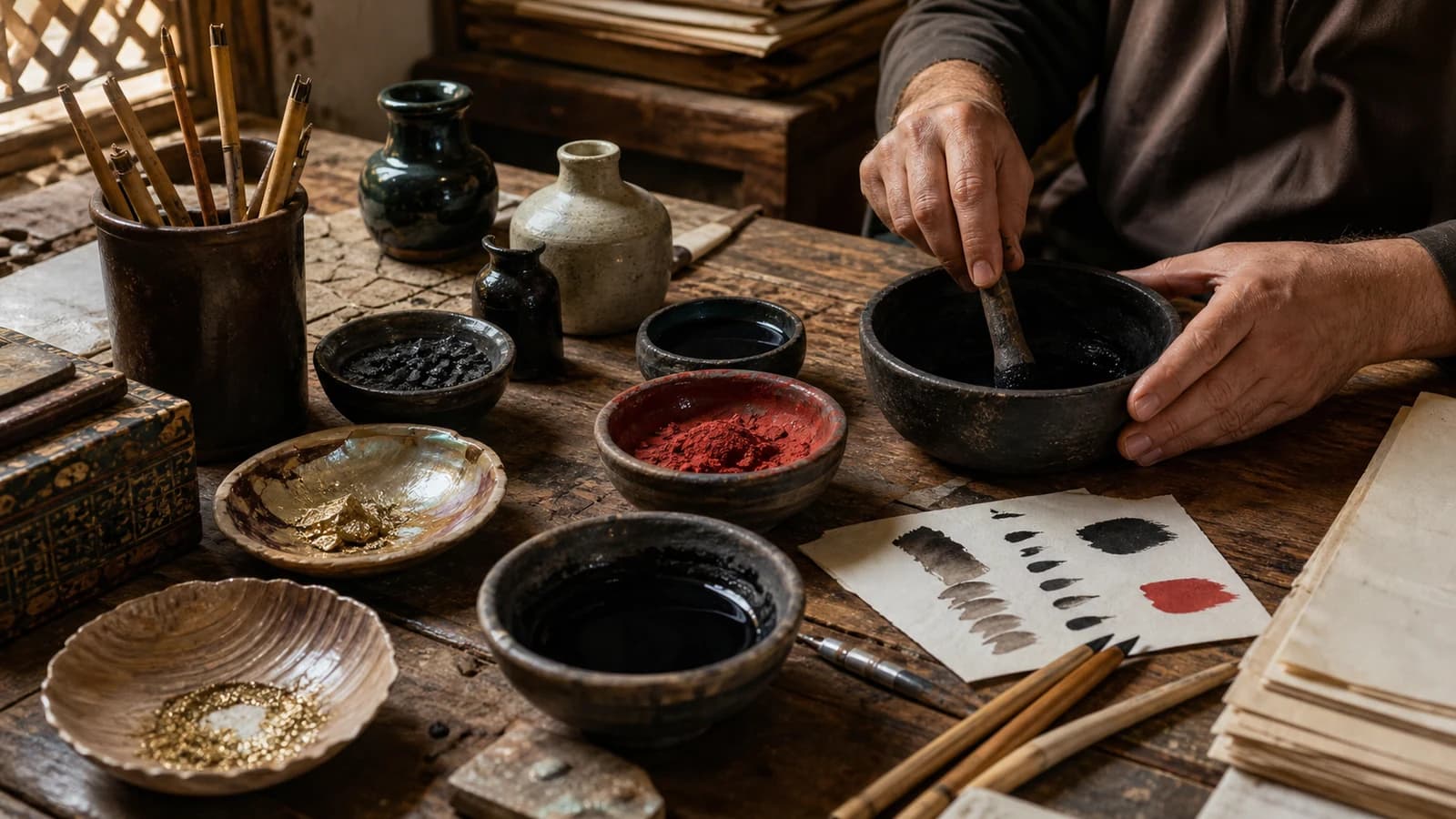
The cover image is an original AI-assisted manuscript workshop reconstruction, not a photograph of tested historical ink samples.
Sources
- Heritage Science: Materials and Techniques of Islamic Manuscripts — multianalytical study of Islamic manuscript materials.
- University of Birmingham: Qur’an Manuscript FAQ — identified brown and red writing materials.
- University of Chicago Library: Iron Gall Ink — degradation and conservation evidence.


