Resource
Muslim Public Space Cleanliness Adab Guide
A practical checklist for keeping shared spaces clean with responsibility, consent, neighbor care and calm follow-up.
Use case
Shared homes, mosques, classrooms, workplaces, event rooms and community spaces
Main check
Leave better, ask permission, clean small messes, report hazards and follow up calmly
Best time
Before leaving a shared room, after events and when a small issue appears
Boundary
Does not replace law, building policy, professional sanitation, emergency response or fatwa
Shared-space cleanliness is a daily form of responsibility. Quran 7:56 warns against causing corruption after things have been set right, Quran 2:222 mentions Allah loving those who purify themselves, Quran 74:4 commands purification of garments, and Quran 4:36 includes kindness to neighbors and nearby companions.
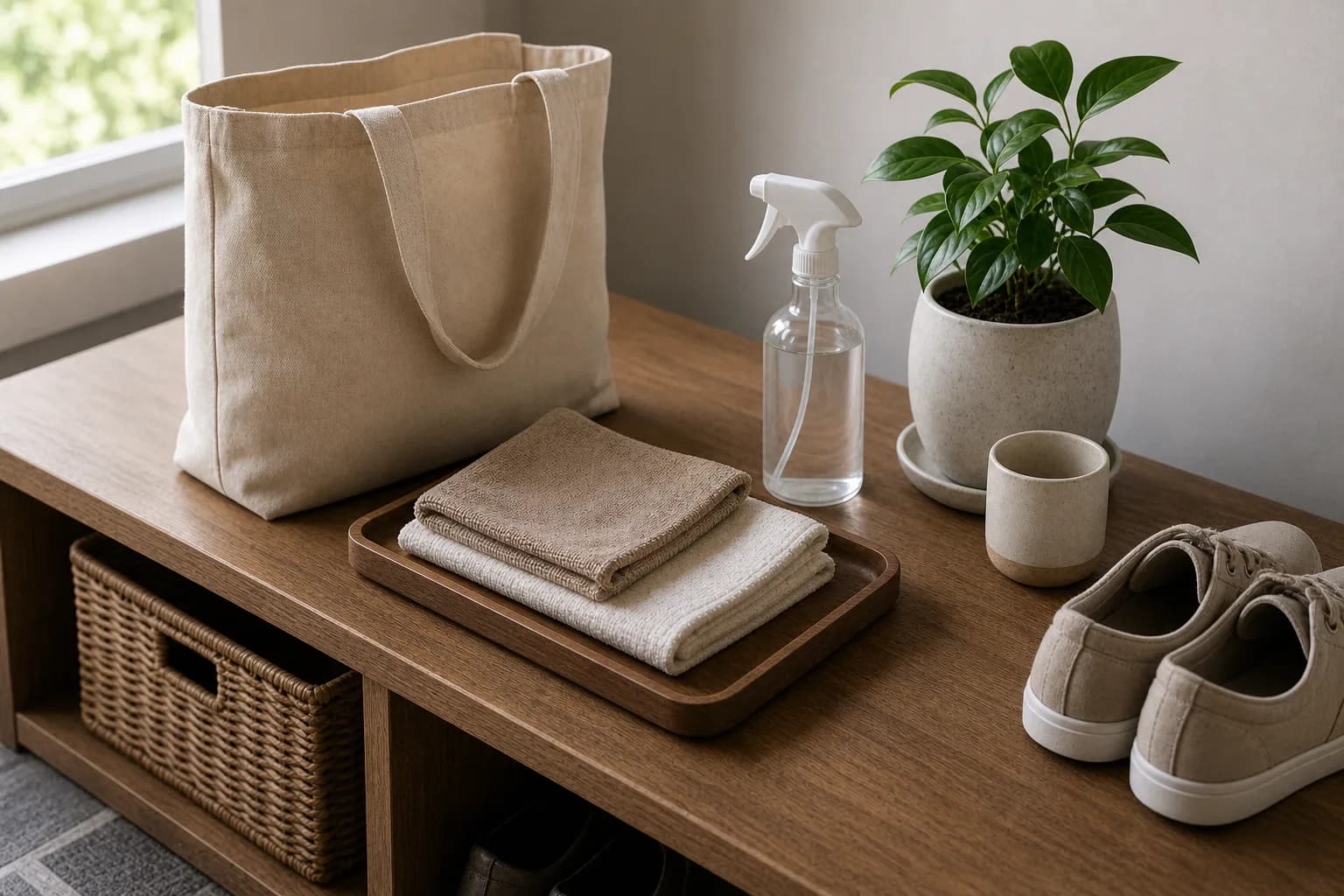
This guide focuses on public and shared spaces: leave the area better than you found it, clean small messes without making a show, ask permission before moving another person's items, report hazards calmly, and help without turning the space into blame. Cleanliness works best when it becomes a reliable habit.
This page is not municipal law, building policy, professional sanitation guidance, emergency management, legal advice or a fatwa. It is a practical public adab checklist for homes, mosques, schools, workplaces, events and shared community rooms.
Public Space Cleanliness Adab Checklist
| Area | Question | Practical action | Boundary |
|---|---|---|---|
| Exit check | Will the next person find this space usable? | Take belongings, wipe small spills and return shared items to their place. | Do not move private items without permission. |
| Small mess | Can I fix this quietly now? | Clean a small safe mess without announcing it or filming it. | Do not handle dangerous waste without proper support. |
| Hazard | Is this a safety issue rather than a simple mess? | Report it calmly to the person or team responsible for the space. | Follow emergency and facility procedures. |
| Follow-up | What habit would prevent the same problem next time? | Adjust the setup: clearer bin, extra cloth, shoe area or closing checklist. | Keep follow-up practical, not accusatory. |
FAQ
Is this about mosque cleaning only?
No. It applies to any shared space: homes, schools, workplaces, event rooms and community facilities.
Should I clean up after others?
For small safe issues, quiet help can be good. For repeated, unsafe or unfair burdens, use calm follow-up with the responsible people.
Can I post before-and-after cleaning photos?
Be careful. Public posts can embarrass people or expose a private space. Use minimal coordination and permission when visibility is necessary.
Related reading
- Mosque Etiquette First Visit Guide
Use when shared-space cleanliness is connected to mosque visits.
- Islamic Community Volunteering Planning Guide
Use when cleanliness becomes a group service effort.
- Uyghur Islam: Religious Practice, Mosques and Community Life
A source-based guide to Uyghur Sunni practice, mosque life, Ramadan, shrines and the difference between lived religion, law and political claims.
Connected by community.
- How the Hijra from Mecca to Medina Unfolded in 622
A source-critical guide to the Hijra in 622: its date, Mecca-to-Medina route, cave tradition, arrival, community change, calendar epoch and common myths.
Connected by community.
- Meshrep Explained: Uyghur Community Gathering, Music and Social Practice
What Meshrep means, how music, dance, storytelling and social norms fit together, and how to read UNESCO safeguarding claims critically.
Connected by community.
- Reko Diq Copper-Gold Project: Location, Ownership, Timeline and Impacts
A dated guide to the Reko Diq project in Balochistan covering Chagai location, ownership, mine plan, financing, 2026 schedule uncertainty and environmental and community questions.
Connected by community.
- Uyghur Heritage Language for Children: Literacy and Family Guide
A research-based guide for Uyghur families and community schools covering home language, Arabic-script literacy, mixed proficiency, curriculum, assessment and child safeguarding.
Connected by community.
- Hazara Shia Muslims in Quetta: History, Community and Religious Life
A careful history of Hazara Shia Muslims in Quetta, distinguishing ethnicity, faith, citizenship and refugee status while documenting neighbourhoods, migration and insecurity.
Connected by community.
Languages
- دليل آداب العام space النظافة الأدب
- গাইড: পরিচ্ছন্নতা adab
- Průvodce: čistota adab
- Guide til renhed adab
- Leitfaden zu Sauberkeit adab
- Οδηγός για καθαριότητα adab
- Muslim Public Space Cleanliness Adab Guide
- Guía de espacio público limpieza adab
- Guide de propreté adab
- Panduan kebersihan adab
- Guida a pulizia adab
- ガイド: 清潔 adab
- 가이드: 청결 adab
- Panduan kebersihan adab
- Gids voor netheid adab
- Veiledning om renhet adab
- Przewodnik po czystość adab
- Guia de espaço público limpeza adab
- Руководство по теме общественное пространство чистота adab
- Sprievodca: čistota adab
- Guide till renlighet adab
- คู่มือ ความสะอาด adab
- Rehber: temizlik adab
- مۇسۇلمان ئاممىۋى بوشلۇق پاكىزلىق ئەدەب قوللانمىسى
- Hướng dẫn về sạch sẽ adab
- 穆斯林公共空间清洁 Adab 指南
- 指南: 清潔 adab
- 指南: 清潔 adab