Resource
Muslim Neighbor Privacy Boundary Adab Guide
A practical Islamic guide for respecting neighbor privacy around doors, windows, shared entrances, messages, deliveries, and everyday curiosity.
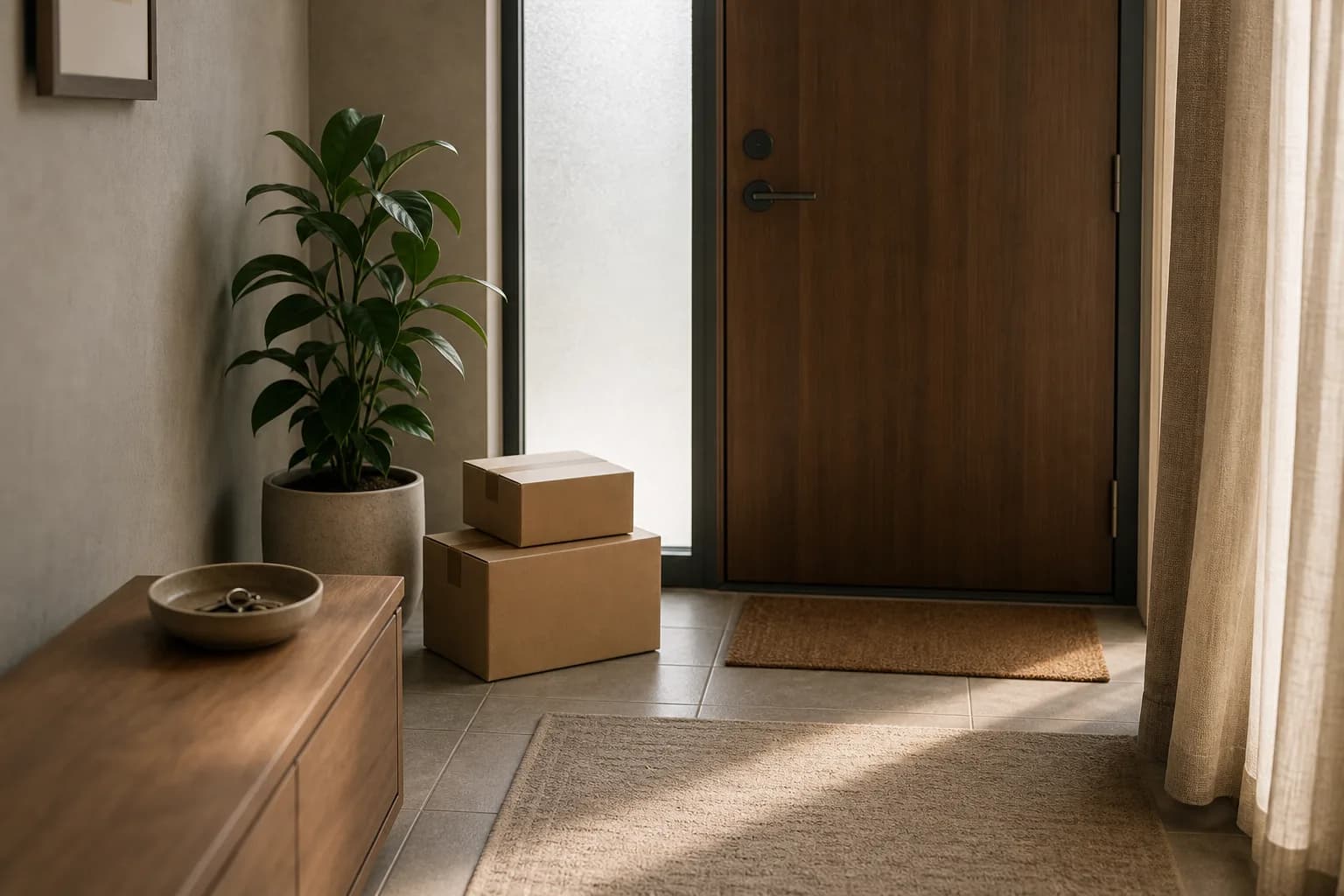
Core value
Being near a neighbor does not give permission to inspect their life.
Daily habit
Turn away from private details seen or heard by accident.
Care channel
Use proper safety or building channels when real harm is present.
Boundary
This is not legal, security, or emergency advice.
Living near people can make private lives visible: packages at a door, voices through a wall, windows across a courtyard, or a family dispute heard by accident. Islam does not treat access as permission. The Quran teaches permission before entering homes and warns against spying and speaking without knowledge.
Neighbor privacy adab begins with restraint. Do not stare, listen for details, repeat what was overheard, photograph what is not yours, or use shared spaces to monitor another household. If information reaches you by accident, treat it as a trust rather than a story.
This guide is educational and does not replace safety reporting, building policy, or legal advice. If there is real danger, use the proper channel. For ordinary curiosity, the Islamic answer is simpler: cover what should be covered, ask before crossing boundaries, and leave people dignity.
Neighbor Privacy Boundary Adab Checklist
| Moment | Boundary question | Adab response |
|---|---|---|
| At the door | Have I been invited past this boundary? | Knock, wait, and leave if there is no clear welcome. |
| Through a wall | Did I hear this by need or by curiosity? | Do not repeat accidental private details. |
| Packages or mail | Is this item entrusted to someone else? | Protect it from exposure and avoid inspecting labels or contents. |
| Concern | Is there real harm or only curiosity? | If harm is real, use the proper channel and keep facts precise. |
FAQ
What if I accidentally hear private information?
Stop listening, do not repeat it, and treat the knowledge as something to protect. If there is serious harm, use an appropriate reporting channel rather than gossip.
Can I photograph a neighbor's mess or behavior?
Avoid photographing private matters for curiosity or humiliation. If documentation is needed for a legitimate safety or building issue, keep it limited, factual, and shared only through the proper channel.
How do I set a boundary kindly?
Use clear words without blame: name the boundary, explain the practical need, and offer the respectful way to communicate next time.
Related reading
- Muslim Household Privacy Permission Adab Guide
Use it for home-entry and permission habits.
- Muslim Personal Data Privacy Amanah Guide
Use it to connect physical privacy with digital privacy.
- Muslim Passport and Travel Document Hub for DS-11 Renewal Child CRBA and Prayer
A Muslim passport and travel document hub for renewals, child passports, DS-11, DS-3053, DS-64, DS-5504, DS-86, CRBA context, travel privacy and prayer planning.
Connected by privacy.
- Muslim N-600 Certificate of Citizenship Checklist for Parents Birth Passport and Prayer
A practical Muslim N-600 certificate of citizenship checklist covering parent citizenship, birth records, passport evidence, custody or residence records, translations, privacy and prayer timing.
Connected by privacy.
- Muslim I-601A Provisional Waiver Checklist for Unlawful Presence Hardship and Prayer
A practical Muslim I-601A provisional waiver checklist covering USCIS form file, unlawful presence issue, hardship evidence, NVC timing, privacy and prayer scheduling.
Connected by privacy.
- Muslim N-336 Naturalization Hearing Checklist for Denial Notice Evidence and Prayer
A practical Muslim N-336 naturalization hearing checklist covering denial notice, evidence, civics study, interpreter question, copies, privacy and prayer timing.
Connected by privacy.
- Muslim I-824 Action on Approved Application Checklist for Notice NVC Family and Prayer
A practical Muslim I-824 action on approved application checklist covering approval notice, NVC follow-up, family file, address updates, copies, privacy and prayer timing.
Connected by privacy.
- Muslim Home Inventory and Insurance Claim Checklist for Photos Receipts and Prayer
A practical Muslim home inventory and insurance claim checklist covering photos, receipts, policy numbers, emergency documents, FEMA inspection notes, claim payments, prayer and privacy.
Connected by privacy.
Languages
- دليل آداب الجار الخصوصية boundary الأدب
- গাইড: গোপনীয়তা adab
- Guia de privacitat adab
- Průvodce: soukromí adab
- Guide til privatliv adab
- Leitfaden zu Datenschutz adab
- Οδηγός για ιδιωτικότητα adab
- Muslim Neighbor Privacy Boundary Adab Guide
- Guía de vecino privacidad adab
- Opas: yksityisyys adab
- Guide de confidentialité adab
- Panduan privasi adab
- Guida a privacy adab
- ガイド: プライバシー adab
- 가이드: 개인정보 adab
- Panduan privasi adab
- Gids voor privacy adab
- Veiledning om personvern adab
- Przewodnik po prywatność adab
- Guia de vizinho privacidade adab
- Руководство по теме сосед приватность adab
- Sprievodca: súkromie adab
- Guide till integritet adab
- คู่มือ ความเป็นส่วนตัว adab
- Rehber: mahremiyet adab
- مۇسۇلمان قوشنا مەخپىيەتلىك چېگراسى Adab قوللانمىسى
- Hướng dẫn về quyền riêng tư adab
- 穆斯林邻里隐私边界 Adab 指南
- 指南: 私隱 adab
- 指南: 隱私 adab