Resource
Muslim Apartment Shared Space Neighbor Adab Guide
A practical Islamic guide for caring for apartment hallways, entryways, shared bins, laundry rooms, lifts, and common items without harming neighbors.
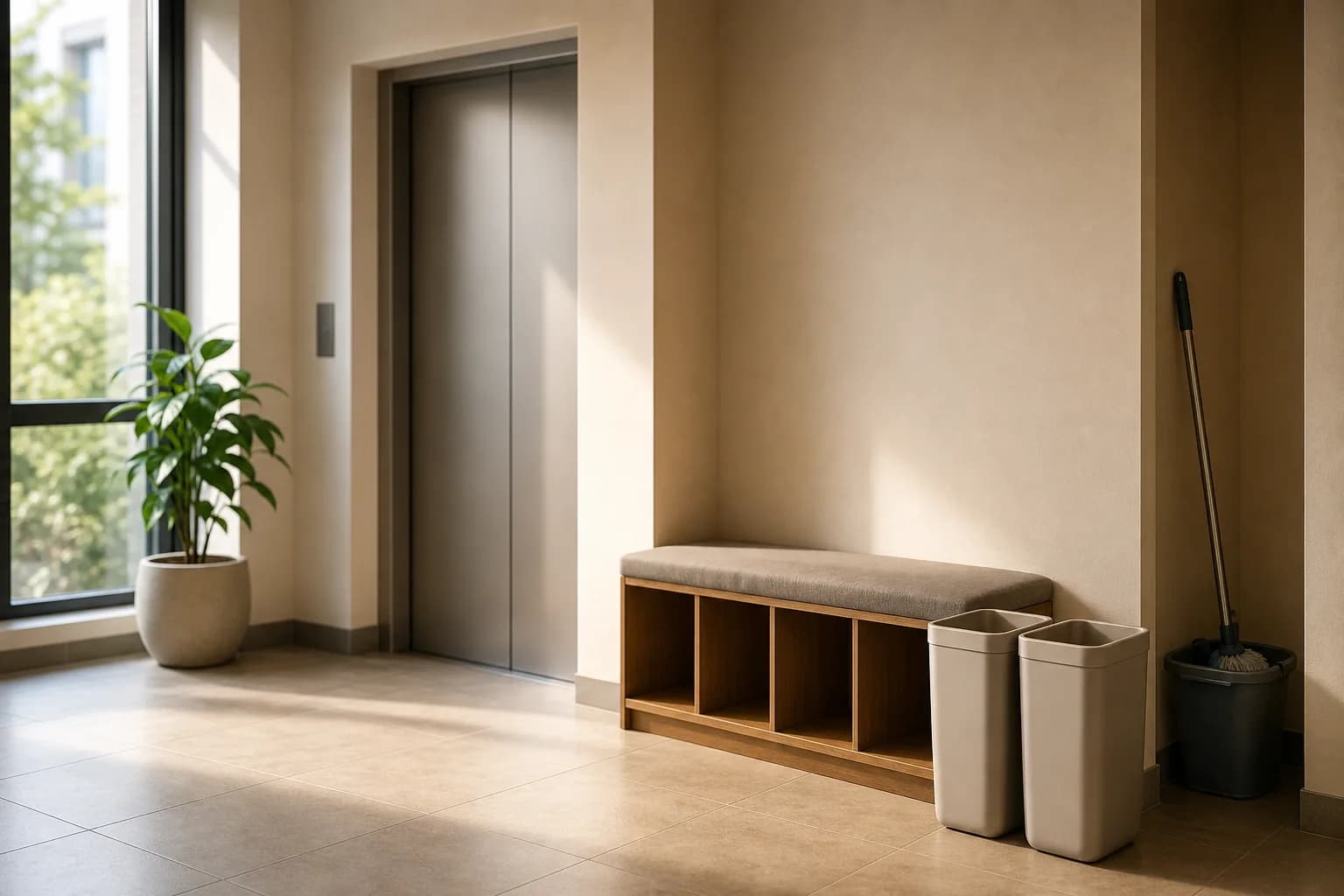
Core value
Shared space is a trust because many neighbors depend on it.
Daily habit
Leave the hallway, lift, bin area, or laundry room better than you found it.
Risk sign
Blocked paths, lingering smells, mess, and wasted supplies can harm others.
Boundary
This is not building code, fire safety, tenancy, or legal advice.
Shared residential spaces reveal character because they are used by many people but owned by no single household in daily practice. A hallway, lift, stairwell, bin area, or laundry room can become either a place of ease or a source of hidden harm. Islam connects neighbor care with cooperation in good and the love of cleanliness.
The adab is to treat shared space as a trust. Do not leave spills, boxes, smells, blocked paths, or used items for someone else to solve. Avoid wasting shared supplies and do not turn common areas into private storage, argument space, or a place where others feel unwelcome.
This guide is educational and does not replace building rules, fire safety rules, tenancy terms, or local law. It helps a Muslim household ask a simple question before leaving a shared area: would this make the next neighbor's path cleaner, safer, calmer, and more dignified?
Apartment Shared Space Neighbor Adab Checklist
| Shared place | Adab question | Practical action |
|---|---|---|
| Hallway | Can someone pass safely and comfortably? | Keep shoes, boxes, bikes, and bags out of the path. |
| Bin area | Am I leaving smell or cleanup for others? | Tie bags, sort properly, and clean spills immediately. |
| Laundry room | Am I delaying another household? | Remove items on time and wipe shared surfaces after use. |
| Lift or entrance | Does my use make others feel blocked or unwelcome? | Give way, keep voices calm, and avoid storing private items there. |
FAQ
Why is shared space an Islamic adab issue?
Because neighbors depend on it for safety, movement, cleanliness, and dignity. Leaving harm in a shared place means another person must carry the cost.
What if other neighbors are careless first?
Do not copy the harm. Keep your own amanah, document patterns only through proper channels if needed, and use calm communication where it is safe.
Can I leave items in the hallway temporarily?
Check the building rules and the neighbor impact. Even temporary items should not block movement, create risk, smell, or make the shared space feel claimed by one household.
Related reading
- Muslim Public Space Cleanliness Adab Guide
Use it for broader public cleanliness habits beyond the apartment building.
- Muslim Shared Property Care Adab Guide
Use it when common spaces include shared tools, fixtures, or supplies.