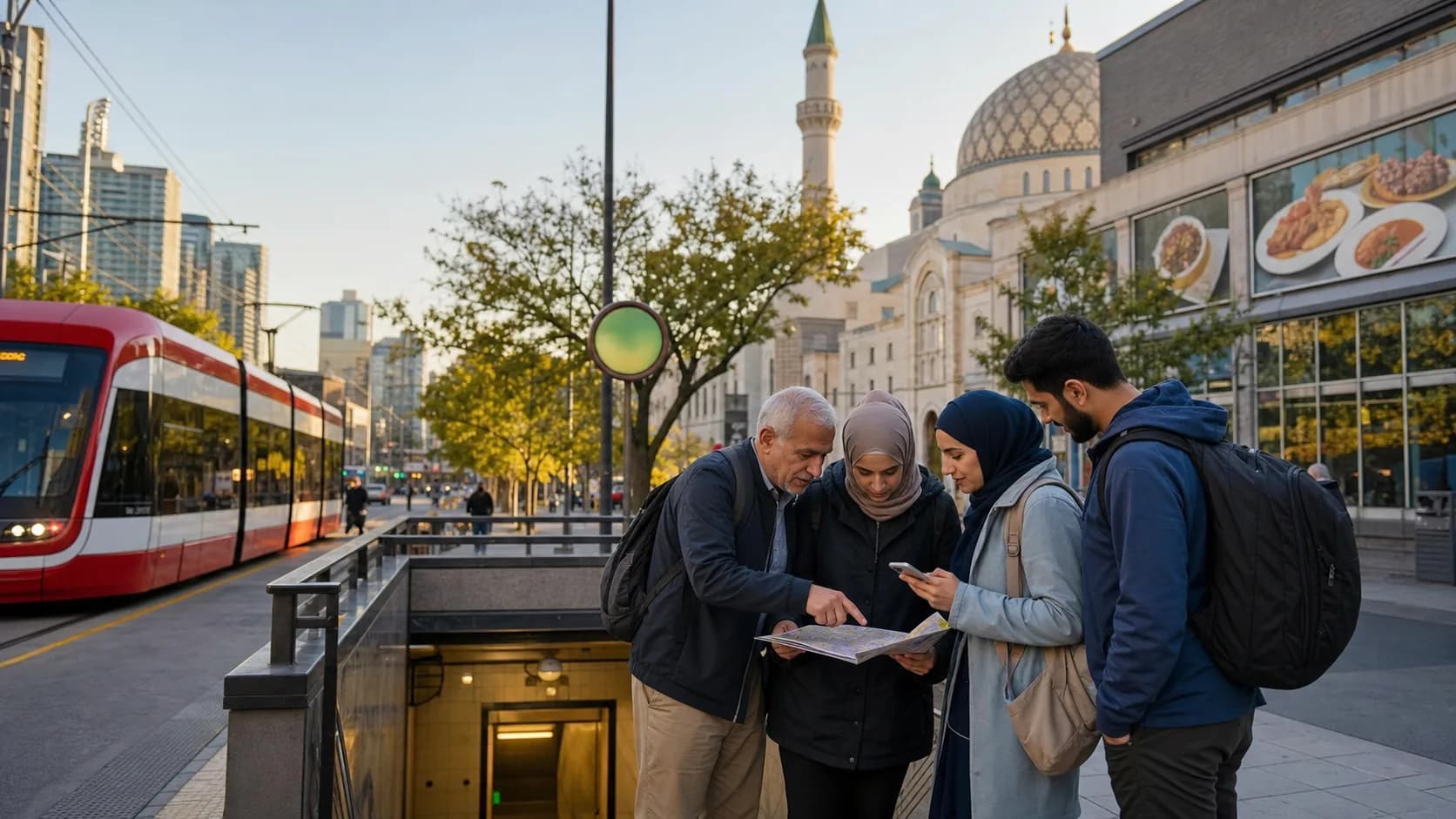
Toronto Muslim Travel Guide for Prayer Spaces Halal Food and TTC Planning
A Toronto Muslim travel guide with mosque anchors, HMA halal checks, TTC fare planning, weather buffers and a practical one-day workflow.
Toronto is comfortable for many Muslim travelers, but a useful guide still needs to do more than say that the city is diverse. A visitor may be staying downtown, meeting family in Scarborough, arriving through Pearson, visiting the waterfront, or trying to combine halal food with prayer and public transit. The itinerary becomes easier when it starts with prayer anchors, verified meal choices and TTC movement rather than a generic attraction list.
Before leaving the hotel, check local prayer times, keep the qibla finder ready, and decide which part of the city owns the day. Toronto rewards neighborhood-based planning. It punishes routes that jump from the waterfront to Scarborough to North York to downtown again without a prayer or meal reason. Winter weather, traffic, construction and weekend crowds can turn a short move into a long one.
Use mosque anchors rather than isolated pins. Islamic Foundation Toronto can be a useful Scarborough-area community anchor. Downtown travelers may need a different prayer point depending on the exact route. Destination Toronto is useful for official city context, but it will not automatically solve halal verification, women’s prayer access, wudu timing or family pacing. Those are the filters this article adds.
Plan Toronto by area, not by wish list
A first visit can be split into two kinds of days. A downtown day might include the waterfront, a museum, a market and one nearby prayer stop. A Scarborough or North York day might focus on family visits, community centers and halal food clusters. Mixing both in one day is possible, but it needs a real transit buffer and a backup meal. Without that buffer, the day can collapse around Maghrib or dinner.
Families should add more time than the map suggests. Toronto stations, winter clothing, children, elders and stroller access can slow the route. If a mosque is the anchor, check whether your timing leaves room for wudu and whether the next move after prayer is simple. A Muslim-friendly itinerary is often a calmer itinerary, not a packed one.
Check halal standards before crossing town
Halal language is common in Toronto, but travelers differ on what they need. Some are comfortable with a restaurant statement. Others look for HMA certification or a similar verification path. Halal Monitoring Authority Canada publishes certification context and a certified-restaurant lookup. If certification matters to you, check before taking a long TTC ride for a meal.
The most useful food plan is one verified main meal plus one flexible backup near your prayer anchor. That might mean choosing a Scarborough halal stop on a community day, or a downtown backup when the family does not want to travel farther after Asr. The guide should not pretend every reader shares the same halal threshold. It should make the verification choice clear.
Use TTC planning to protect prayer time
The Toronto Transit Commission publishes fare and pass information, and visitors should decide their payment method before the first ride. The deeper habit is to plan the city in clusters. If your route depends on two transfers, one bus and a tight prayer window, treat it as fragile. If the route keeps prayer, food and sightseeing in the same area, it is much more likely to work.
A simple one-day version is to pick either a downtown day or a Scarborough/community day. Pair that area with one prayer anchor, one verified halal meal, one flexible indoor stop, and one backup if weather changes. That structure gives Muslim travelers what they usually need most: confidence that the day will still work when Toronto does not move exactly on schedule.


