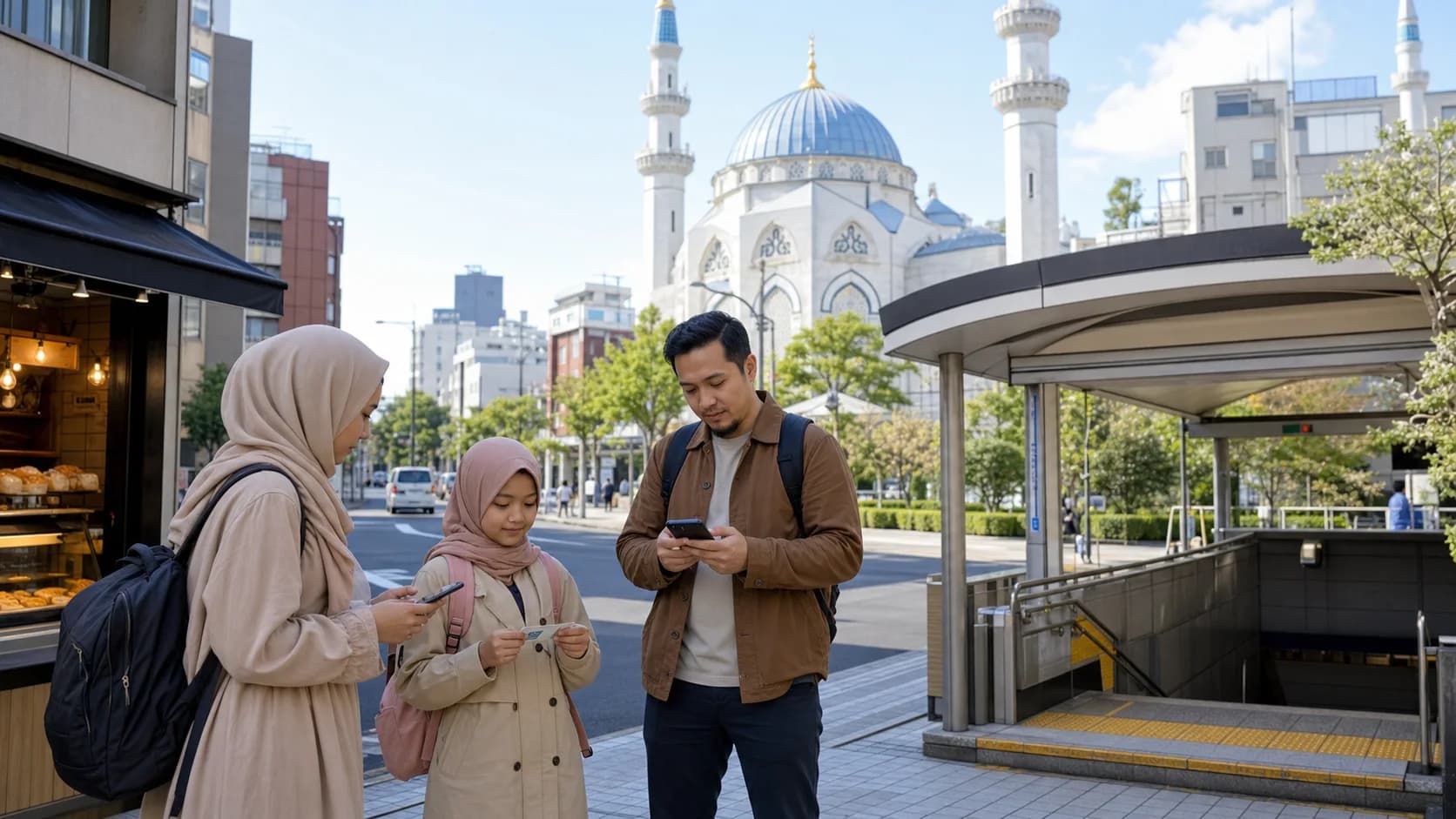
Tokyo Muslim Travel Guide for Prayer Spaces Halal Food and Subway Planning
A practical Tokyo Muslim travel guide with Tokyo Camii, JNTO and GO TOKYO Muslim resources, halal food checks, subway tickets and family buffers.
Tokyo is becoming easier for Muslim travelers, but it is still a city where planning matters. A useful Tokyo Muslim travel guide should not pretend that every restaurant or hotel is simple. It should explain how to anchor the day around Tokyo Camii or another prayer space, how to read Muslim-friendly dining claims, and how to use subway tickets without turning worship and meals into a rushed transfer puzzle.
Before leaving the hotel, check local prayer times, keep the qibla finder ready, and choose one zone as the main route. Tokyo is huge, but the Muslim traveler’s day often becomes easier when it is smaller: one prayer anchor, one verified meal, one attraction cluster and one backup plan if the restaurant or train route changes.
JNTO explains that Japan has more Muslim-friendly services, including halal-accredited restaurants, facilities, mosques and prayer rooms, while also noting the need for traveler awareness. GO TOKYO publishes a Tokyo Muslim Travelers Guide for restaurants, lodgings, worship places and shops. Those official resources are helpful, but they still need to be turned into a real itinerary with prayer and meal timing.
Use Tokyo Camii as a real anchor, not a checkbox
Tokyo Camii is one of the clearest anchors for first-time Muslim visitors. Its visit page gives general visiting hours and notes around Friday access, while its welcome message frames the mosque as a community center for Muslims in Japan and abroad. This is more useful than a map pin because it helps the traveler understand when to visit, when to avoid casual sightseeing, and how to build the day around worship respectfully.
A practical Tokyo Camii day can include the mosque, nearby Yoyogi-Uehara movement, one verified meal and a manageable subway route to Shibuya, Harajuku or another nearby zone. A traveler can absolutely see more of Tokyo, but the first day should not depend on crossing the city several times between prayer and food. Tokyo rewards precision; it punishes vague plans.
Read halal and Muslim-friendly dining claims carefully
Tokyo dining information can use several different signals: halal-certified, Muslim-friendly, no pork, no alcohol used in a dish, vegetarian, seafood, or staff able to explain ingredients. These are not the same. GO TOKYO’s dining resources and the Tokyo Muslim Travelers Guide are useful starting points, but the traveler should still check current hours, reservation needs, certification language and whether alcohol or mirin is used in sauces.
The safest food plan is one verified meal before the day begins and one backup that does not require a long train ride. If the family is visiting a popular district, call or check the restaurant directly when certainty matters. A Muslim-friendly Tokyo plan is not about anxiety. It is about reducing ambiguity before hunger and prayer timing make every decision feel urgent.
Use Tokyo Subway Tickets only when the route justifies them
Tokyo Metro publishes tourist subway ticket options for 24, 48 and 72 hours. Those passes can be excellent when the itinerary uses Tokyo Metro and Toei Subway repeatedly. They are less helpful if the day is mostly walking around one mosque and one neighborhood, or if the route depends on other rail operators. Decide the ticket after the day shape is known, not before.
A calm first Tokyo Muslim travel day is mosque, verified meal, one attraction cluster and a simple return path. Save distant food hunts, major shopping districts or day trips for later. This structure gives Tokyo room to be Tokyo while still protecting worship, food confidence and family energy.


