Suq and Bazaar: How Markets Organized the Islamic City
How suqs grouped crafts, linked gates to central streets, managed storage and traffic, and changed from open stalls into covered commercial districts.
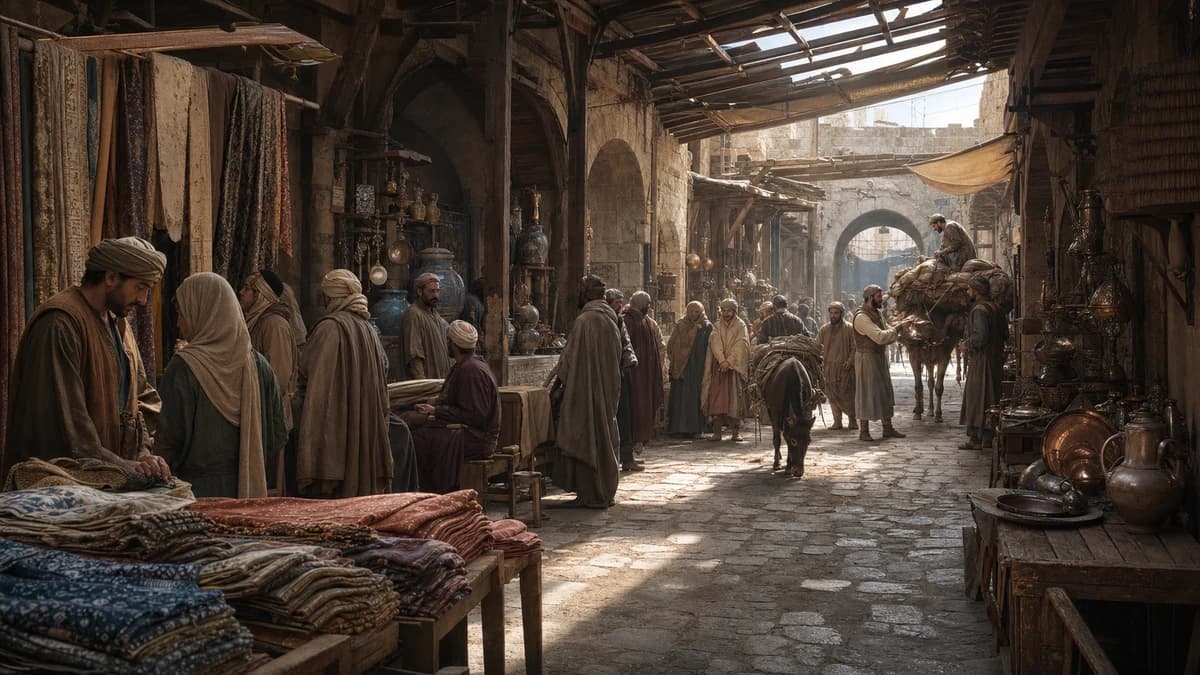
The cover image is an original AI-assisted urban reconstruction, not a photograph of a specific historic market.
Markets grew through streets and specializations
In many cities, shops selling related goods clustered together. Textile sellers, coppersmiths, spice merchants and food vendors benefited from shared customers, supply chains and oversight. The arrangement was never perfectly tidy: rents, fire risk, smell, water needs and political intervention all shifted trades over time.
The Met’s study of early Islamic commercial activity shows both planned marketplaces and older urban streets gradually filled by stalls. In Jerusalem, medieval sources and surviving routes reveal product-based organization rather than markets divided simply by the religion of their shopkeepers.
Architecture solved practical problems
Shade protected people and goods. Shutters turned shop fronts into counters; upper rooms stored stock or housed occupants; gates could close a covered market at night. Khans and caravanserais nearby received bulk goods, animals and travelers, while retail activity occupied denser central lanes.
Location linked markets to city gates, major mosques, ports and roads, but there is no rule that every suq formed a straight ceremonial axis. Older plots, topography and rebuilding created bends, branches and layers. Fire, earthquake and modernization repeatedly altered roof structures and shop sizes.
Commerce was also social contact
Markets brought together residents, rural producers, pilgrims, merchants and craftsmen. Goods carried techniques and tastes across regions; merchants responded to customers of different communities. That contact did not remove inequality, taxation or conflict, but it made the suq a powerful site of daily exchange.
The romantic image of an unchanged “oriental bazaar” is misleading. Historic markets were working infrastructure. They adopted new products, credit arrangements, transport and regulations, and many remain active precisely because they changed.
How to read a historic market
- Map gates, main streets, worship sites, warehouses and water access.
- Look for trade clusters, but verify them with records rather than present shop signs alone.
- Separate retail lanes from production, storage and animal circulation.
- Identify modern roofs, widened streets and reconstructed façades.
A suq is not only a picturesque corridor. It is a changing network that connects the scale of a shop to the economy of a city and the movement of goods far beyond it.
Sources
- The Met: Trade and Commercial Activity in the Early Islamic Middle East — planned and organically transformed marketplaces.
- The Met: Jerusalem 1000–1400 — suq organization, crafts and regulation.
- UNESCO: The Historic City of Nablus — specialized bazaars in a surviving urban fabric.


