Singapore Muslim Travel Guide for Prayer Spaces Halal Food and MRT Planning
A Singapore Muslim travel guide with Sultan Mosque, MUIS halal checks, MRT and SimplyGo planning, Kampong Gelam routing and family buffers.
Singapore is one of the easiest cities in Asia for a Muslim visitor to plan well, but the useful plan still starts with prayer, halal confidence and movement. A generic Singapore itinerary may jump from Marina Bay to Orchard to Sentosa to a hawker centre. A Muslim-specific itinerary asks a better question first: where is the prayer anchor, which meal is actually verified, and how will the MRT route protect the next salah window?
Before leaving the hotel, check local prayer times, keep the qibla finder ready, and decide whether the day belongs to Kampong Gelam, the civic district, Orchard, Sentosa or a family route. Singapore is compact, but humidity, station transfers, rain, children and meal searches can make a short map route feel longer than expected.
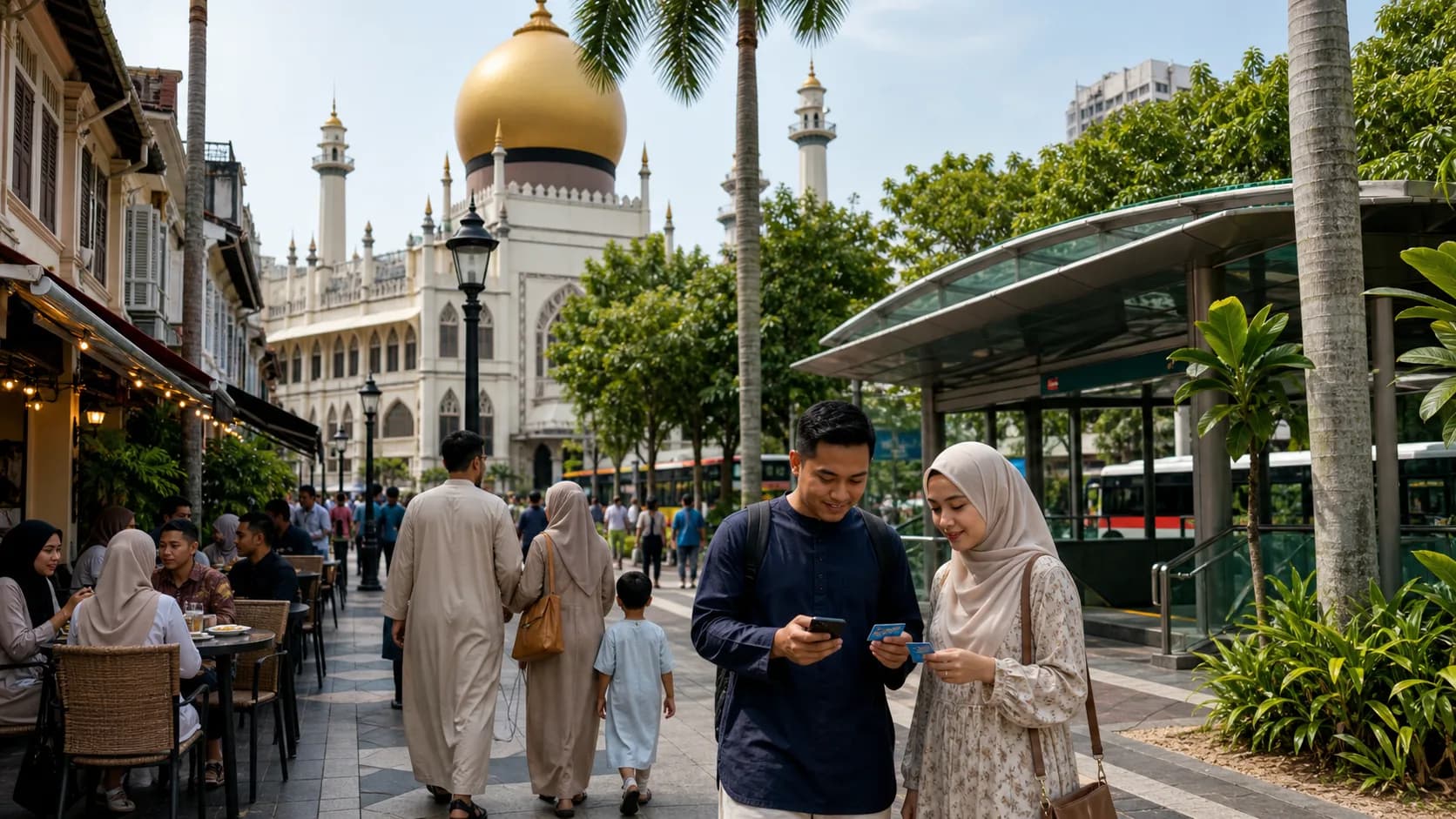
Sultan Mosque is the clearest first-day anchor. Visit Singapore lists it at 3 Muscat Street in Kampong Gelam and presents the area as a historic Muslim and cultural neighborhood. That makes it a better planning point than a random map result. Start with the mosque, then add nearby food and one or two attractions rather than turning the day into an island-wide checklist.
Use Kampong Gelam as the calm first route
A first Singapore day can be simple: Sultan Mosque, nearby streets, one MUIS-checkable meal, a shaded break and a short MRT hop if the family still has energy. The official Muslim Visitor Guide from Visit Singapore is useful because it frames the city around Muslim visitor needs, but the traveler still has to convert that guide into a real day with prayer timing and food verification.
Do not confuse compact with effortless. Singapore stations are efficient, but a route that crosses the island for one restaurant can still break the day if rain or crowds arrive before Asr. A Muslim-friendly Singapore guide should cluster the day around worship and food, not just around photo stops.
Check MUIS halal signals before deciding the meal
MUIS provides the official halal certification context for Singapore, and the MUIS e-Service supports halal-certified establishment lookup. That distinction matters. A place may be Muslim-owned, halal-friendly, vegetarian-friendly, seafood-focused or MUIS-certified. Different travelers accept different thresholds, so the guide should teach the checking behavior rather than pretend every label means the same thing.
The safest practical pattern is one verified main meal and one backup near the prayer anchor. In Kampong Gelam, this is usually easy. Around major shopping or entertainment areas, check before the family is hungry. The best time to verify food is in the morning, not when Maghrib is close and everyone is already tired.
Plan MRT payment before the first gate
LTA’s journey-planning information and SimplyGo’s tourist pass information should be handled before the first ride. Visitors can use different payment approaches depending on length of stay, card type and ride volume. The exact choice is less important than making the choice early. A tight prayer window is the wrong time to discover that a card, pass or child fare decision needs attention.
A practical first-day Singapore Muslim route is mosque, meal, nearby cultural streets, one MRT-connected attraction and an indoor backup for rain. A second day can handle Sentosa, Orchard or the waterfront. That split gives the traveler something better than a dense list: a day that respects worship, halal confidence, weather and family energy.


