New York Muslim Travel Guide for Prayer Spaces Halal Food and Subway Planning
A practical New York Muslim travel guide with mosque anchors, halal verification, OMNY subway planning, family buffers and a one-day workflow.
A useful New York Muslim travel guide should help a visitor make decisions before the day becomes noisy. New York can be easy for Muslim travelers because halal food, mosques, airports, museums and subway routes are all present. It can also be exhausting because the useful places are spread across Manhattan, Queens, Brooklyn and the Bronx. The day works better when prayer, halal food and movement are planned first, then sightseeing is built around those anchors.
Start with the same three checks every morning: the next two salah times, one realistic prayer anchor, and one verified meal plan. Use local prayer times before leaving the hotel and keep the qibla finder ready for airports, parks, quiet corners and family stops. The goal is not to turn travel into a spreadsheet. The goal is to avoid discovering at 4:30 p.m. that your meal is still 40 minutes away and Asr time is almost gone.
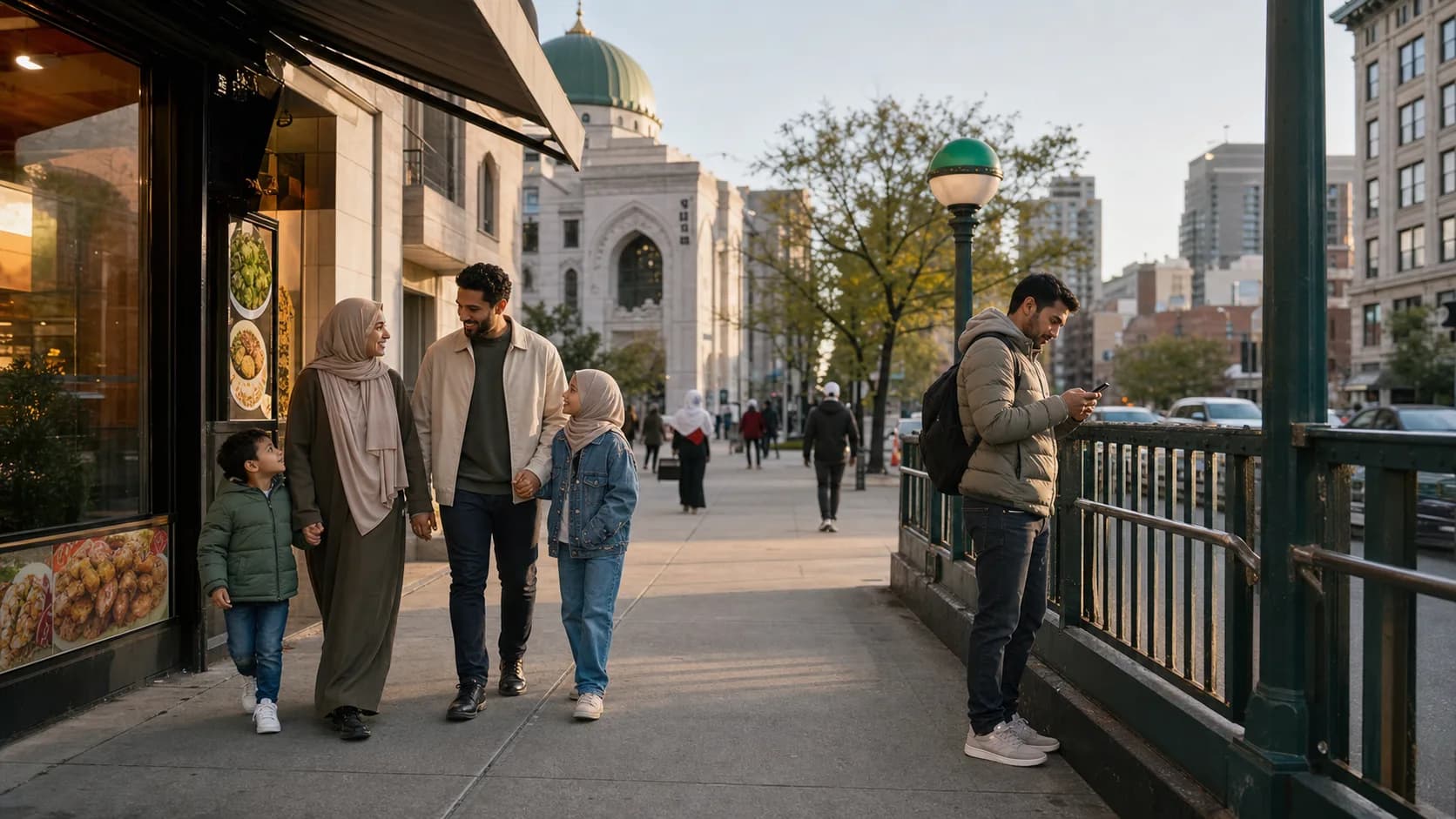
For first-time visitors, Manhattan is often the easiest base. The Islamic Cultural Center of New York can serve as a recognizable prayer anchor for a Central Park, museum or Upper East Side day. Queens and Brooklyn may offer denser halal food options in some neighborhoods, but they also require more careful transit timing. NYC Tourism publishes a halal travel guide, which is useful for discovering neighborhoods, but a Muslim-specific itinerary should still ask whether a place is suitable for your prayer, food and family needs.
Choose a prayer anchor before choosing attractions
A mosque that appears close on a map can still be hard to reach if the subway line is delayed, a station exit is confusing, or a family member needs extra time for wudu. Pick one prayer anchor for the part of the city you will actually be in. If your day is Central Park, the Metropolitan Museum of Art or the Upper East Side, a Manhattan anchor keeps the route calmer. If your day is Queens food, airport transfer or community visits, choose a Queens anchor and keep Manhattan plans for another day.
Jumuah changes the math. Arrive early, expect crowds, and avoid scheduling a timed ticket immediately before or after prayer. Families should check entrances, stroller routes and whether there is enough time for children or older relatives to settle. Solo travelers should still add a buffer, because a subway transfer can quietly consume the same time you planned for wudu.
Verify halal food instead of trusting map labels
New York has thousands of places that use halal language, but the word can mean different things in practice. Some travelers accept a restaurant statement. Others need certification or a clearer supply-chain claim. HFSAA lists New York certification context, and New York State publishes halal-food protection information. Those sources do not tell you where every traveler must eat, but they do explain why verification matters.
Build the day around one verified main meal and one flexible backup. In Midtown or near Central Park, you may choose a simple checked meal before moving to the next prayer. In Queens or Brooklyn, you may have more choices, but popular places can still be crowded. Do not let a restaurant search drag the family away from the next prayer anchor with no backup plan.
Use subway planning as a worship buffer
The MTA describes OMNY as the contactless fare system for subway and bus travel. For visitors, the practical rule is simple: use one card or device consistently and plan routes by neighborhood. A Muslim-friendly New York day is not one that checks every landmark. It is one that protects prayer time, keeps food decisions calm, and leaves enough room for delays, weather, children and tired feet.
A workable one-day plan could begin with a Manhattan prayer anchor, a museum or park stop, one verified lunch, and an afternoon route that stays near the same subway corridor. A second day can focus on Queens or Brooklyn food neighborhoods. Splitting the city this way gives you fewer dramatic photos in one day, but it produces a day that a real Muslim traveler can actually complete.


