Muslim Medicare Card and Open Enrollment Checklist for Seniors Caregivers and Prayer
A practical Muslim Medicare card and open enrollment checklist covering Medicare card access, plan review, SSA enrollment, SHIP counseling, prescriptions, prayer and caregiver privacy.
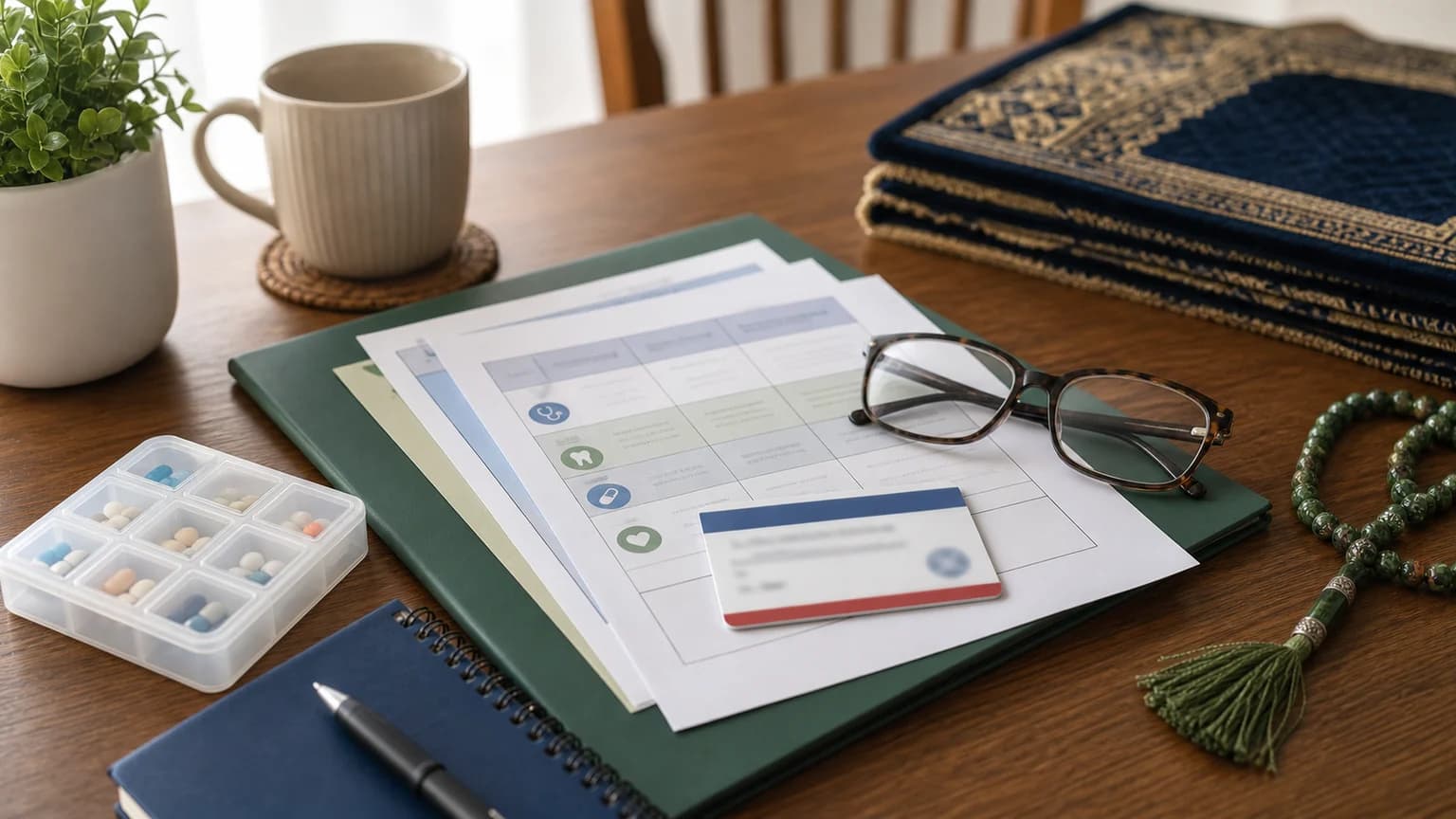
A Muslim Medicare card and open enrollment checklist should help an older adult or caregiver review coverage without turning health care into a family argument. The folder may include the Medicare card, Medicare number storage plan, Social Security account notes, Part A and Part B status, Medicare Advantage or Original Medicare choice, Part D drug list, pharmacy, doctors, specialists, preferred hospitals, premiums, deductibles, notices, plan comparison notes, caregiver permission and appointment records. Muslim households may also need to plan prayer time, modesty needs, halal medicine questions, Ramadan medication timing, transport to appointments and privacy around diagnoses.
Use this with the Muslim elder care checklist when a caregiver is helping, with the Muslim doctor appointment checklist before comparing providers, and with the Muslim health insurance appeal checklist if a denial or bill dispute appears. This guide is not legal, medical, Medicare, insurance, financial, benefits or religious advice. It is a document organizer for a complicated coverage season.
The sources set the Medicare map. Medicare.gov card guidance keeps the card and account access visible. Medicare.gov open enrollment material keeps plan review in the folder. SSA Medicare material keeps enrollment and Social Security account steps separate. CMS open enrollment partner resources keep official education reminders available. ACL SHIP material keeps neutral counseling in view. The Muslim layer adds family amanah, caregiver privacy, prayer logistics, halal medicine questions and respect for elders who may need help without losing control of their own records.
Start with the card, the account and the helper boundary
The first page should list the beneficiary legal name, Medicare number storage location, Social Security account access method, mailing address, phone, preferred language, caregiver name, permission limits, doctors, medicines, pharmacy and the next deadline. Then separate the folder into card access, enrollment, plan comparison, drug coverage, notices, bills, appeals and caregiver notes. If an adult child is helping, write what they are allowed to see and do. Help should not quietly become full control.
- Card and account: Medicare card, account login storage method, mailing address, replacement-card notes and scam caution.
- Coverage file: Part A, Part B, Original Medicare, Medicare Advantage, Part D, Medigap questions and plan notices.
- Care file: doctors, hospitals, pharmacy, medicine list, doses, side effects, halal ingredient questions and refill timing.
- Enrollment review: open enrollment date, plan comparison notes, premiums, deductibles, networks, drug costs and SHIP counseling questions.
- Muslim care notes: prayer timing, modesty needs, caregiver permission, Ramadan medicine questions, transport and family privacy.
Open enrollment should begin with real life, not commercials. Write the medicines actually taken, the doctors actually used, the preferred pharmacy, the travel needs, the prayer and modesty constraints, and the help the person can afford. A cheaper premium may not be cheaper if the medicine, doctor or transport pattern changes. If the elder trusts a masjid friend, relative or agent, still compare the plan documents and write who explained what.
Keep medical privacy from becoming family noise
Medicare papers can reveal illnesses, medicines, mental health, reproductive history, disability, finances and family conflict. If a caregiver needs to call a plan, pharmacy or doctor, keep a call log and do not forward every document into a family chat. If siblings disagree, hold shura about roles before the deadline: who drives, who calls, who stores documents, who pays premiums if needed and who does not need private health details.
Medicine timing deserves its own page. List each medicine, dose, refill date, pharmacy, prescriber, side effects, whether it is urgent and any halal ingredient or fasting question. Ramadan, travel, surgery and hospital stays can change routines. The checklist should not answer religious or medical questions by itself; it should make sure the right question reaches the clinician and a qualified religious adviser when needed.
Scam caution belongs in the file. Medicare cards, plan changes and health benefits attract pressure calls. Write how official notices arrive, which accounts are used and who is allowed to discuss plan changes. If someone asks for a Medicare number, bank information, gift card, remote computer access or urgent signature, pause. A careful elder-care folder protects dignity by slowing down the moment when fear says yes too quickly.
Close each enrollment week with evidence
After each comparison, appointment or call, write the plan name, person spoken to, reference number, documents reviewed, medicine price question, doctor network question and next step. Save screenshots and letters. If the plan changes, note the effective date and what cards or notices are expected. A useful Muslim Medicare checklist leaves the elder with card access secure, open enrollment reviewed, caregiver roles clear, privacy respected and prayer still part of care.


