Mosul Inlaid Metalwork: Silver, Brass and a Mobile Style
How medieval metalworkers cut silver and copper into brass, signed objects from Mosul, and spread a prestigious visual language far beyond one city.
In the twelfth and thirteenth centuries, metalworkers across northern Mesopotamia, Syria and neighboring regions transformed brass vessels with inlaid silver and copper. Mosul became so famous that signatures and inscriptions naming the city carried prestige, but “Mosul school” describes a networked artistic phenomenon rather than a perfectly bounded workshop.
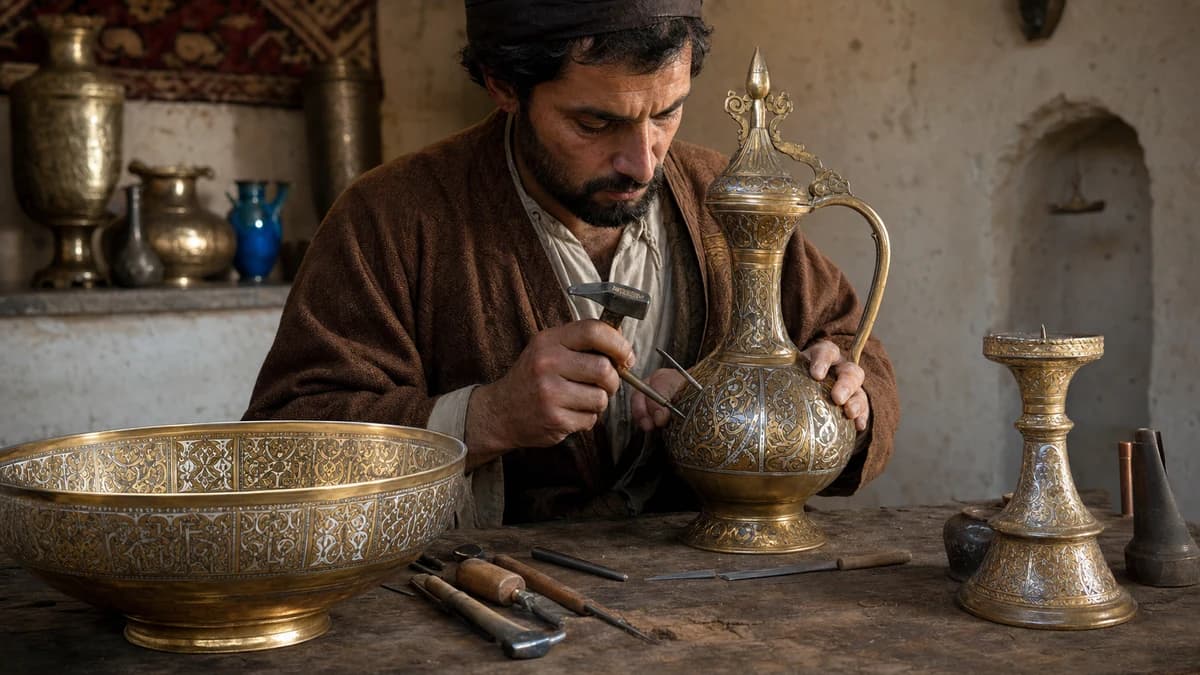
The cover image is an original AI-assisted metalworking reconstruction, not a photograph of a named medieval vessel.
Inlay begins by cutting the surface
A craftsperson casts or hammers the brass body, engraves lines and recesses, and presses another metal into prepared channels. Silver creates bright figures and inscriptions against the yellow alloy; copper supplies a warmer contrast. Details can be engraved through the inserted metal after it is secured.
Surfaces were once more brilliant than many museum objects appear today. Tarnish, corrosion, worn inlay and deliberate removal of precious metal have changed their visual balance. Conservation images are essential when reconstructing original effect.
Objects carried complex programs
Ewers, basins, candlesticks, pen boxes and trays could combine courtly banquets, hunters, musicians, zodiac signs, enthroned figures and blessings to an owner. Christian scenes also appear on objects made in the region, reflecting plural communities and markets rather than a single iconographic rule.
Inscriptions may name a maker, patron, city or recipient. Each category answers a different question. A phrase “made in Mosul” is strong evidence for claimed origin, but historians still examine whether the maker traveled or used a prestigious geographic label abroad.
War moved craftspeople and styles
Ayyubid courts supported luxury metalwork across Syria and Egypt. Political disruption and Mongol expansion displaced patrons and artisans, helping techniques and motifs circulate. Similar inlaid work appears from multiple centers, making attribution through style alone risky.
The most useful approach combines alloy analysis, construction marks, inscription, comparison and provenance. A modern market history without an excavated context demands extra caution.
How to read an inlaid vessel
- Separate the brass body from silver, copper and later restoration.
- Map image bands and inscriptions in the order a user would turn the object.
- Identify whether a named place belongs to manufacture, patronage or later collection.
- Consider the object’s practical function alongside its imagery.
Mosul metalwork was portable architecture in miniature: layered bands, flashing materials and inscriptions organized a complete visual world around a usable object.
Sources
- The Met: The Art of the Ayyubid Period — regional patronage and inlaid metalwork.
- The Met: Courtly Art of the Ilkhanids — continuity and movement after the Mongol conquests.
- The Met: Ewer with Inscription, Horsemen and Vegetal Decoration — a dated inlaid brass vessel attributed to Mosul.


