The Kiswah: Making Textiles for the Kaaba
How woven silk, embroidered inscriptions, door curtains and annual replacement joined skilled textile work with patronage, transport and sacred service.
The kiswah is the textile covering draped over the Kaaba in Mecca, representing a highly specialized tradition of state-sponsored weaving, calligraphy, and ceremonial renewal.
Materials, Weaving, and Calligraphy
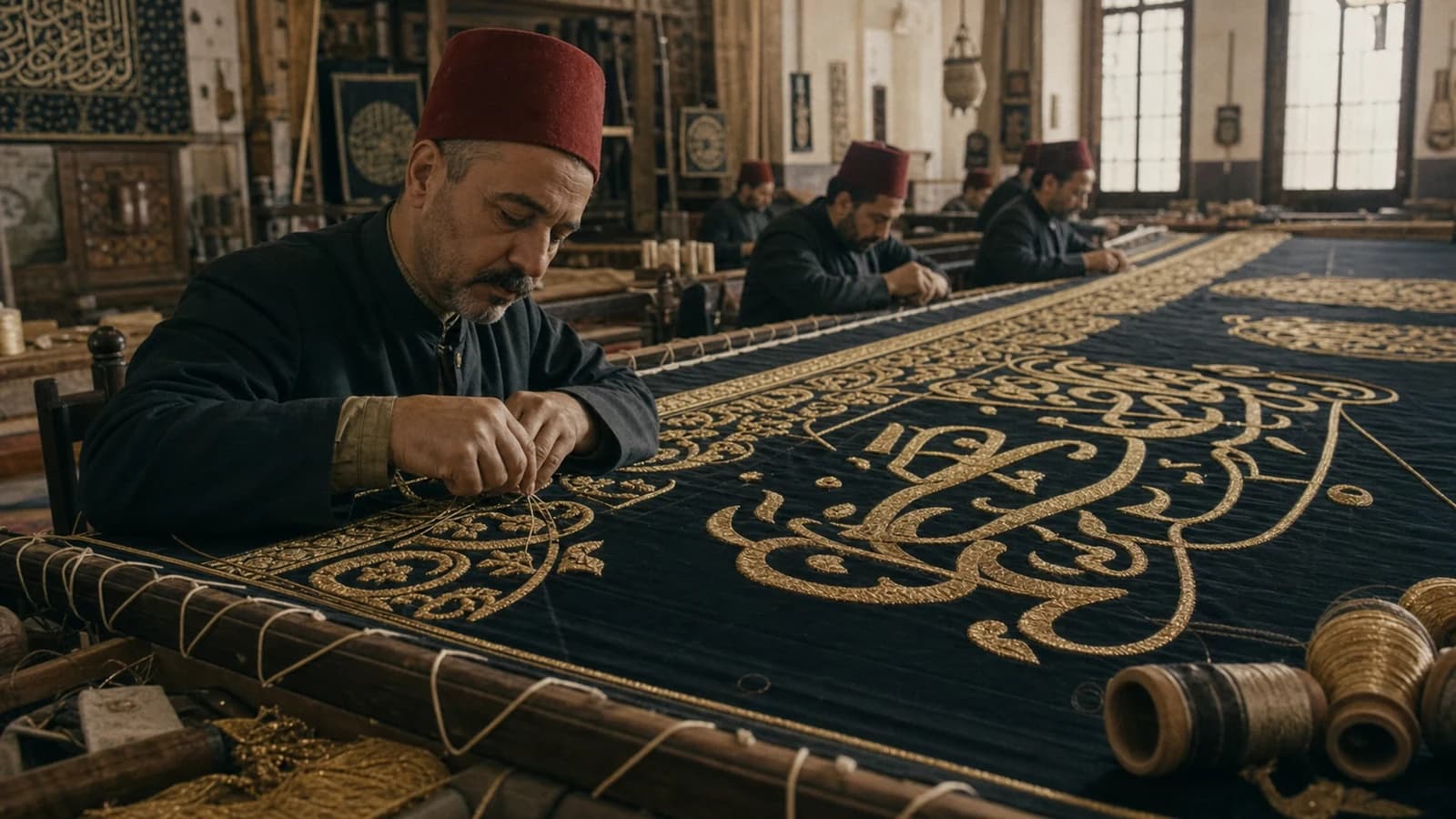
The production of the kiswah involves complex technical processes, primarily utilizing high-grade silk dyed black for the exterior and green or red for internal linings. The most prominent features are the calligraphic bands, which are executed using a technique where silver and gold-plated copper threads are couched or applied over cotton padding to create a dramatic, raised three-dimensional effect. These bands contain Quranic verses, the date of manufacture, and the names of the sponsoring rulers.
It is critical to distinguish the overall exterior covering of the Kaaba from specialized textile elements associated with it. For instance, the sitara (or burqu) is the highly decorated curtain that covers the door of the Kaaba, which features much denser embroidery and distinct iconographic programs compared to the long, repeating calligraphic bands of the main kiswah body.
Sponsorship and Shifting Production Centers
The political sponsorship and physical manufacture of the kiswah have shifted across different Islamic empires over the centuries, reflecting changes in regional hegemony. For several hundred years, Cairo was the preeminent center of production, where specialized state workshops known as the Dar al-Kiswah prepared the textiles annually before they were transported to the Hijaz in grand caravans. In the modern era, this responsibility shifted to dedicated workshops established directly in Mecca.
These shifts in production locations were never merely logistical; they carried immense political weight. Sponsoring the kiswah was a primary assertion of sovereignty and guardianship over the Holy Sanctuaries. Consequently, changes in the workshop location and the names woven into the calligraphic bands document the rise and fall of dynasties, from the Mamluks and Ottomans to the modern Saudi state.
A Checklist for Analyzing Historic Kiswah Fragments
Because the kiswah was replaced annually, older textiles were systematically dismantled, distributed, and repurposed, leaving behind a vast corpus of fragments in global collections.
- Measure the exact dimensions of the textile fragment to determine if it originated from the main body, a corner piece, or a specialized curtain.
- Analyze the metal thread composition and the underlying padding material to identify the technological standards of the manufacturing workshop.
- Translate the calligraphic inscriptions fully to locate any named political patrons, workshop directors, or specific dates of production.
- Document the wear patterns, exposure to sunlight, and presence of perfume residues to verify if the fragment was actually hung on the Kaaba or remained unused.
Conservation Challenges and Display
Preserving historic kiswah fragments presents severe conservation challenges due to the inherent physical properties of the materials. The extreme weight of the heavy gold and silver embroidery pulls downward on the fragile silk ground, causing tension tears and warping over time. Additionally, centuries of handling, exposure to desert weather, and earlier, invasive repair methods complicate modern museum display.
Museum curators must also avoid the common error of classifying every black-and-gold textile fragment as part of the exterior kiswah. Without precise dimensions, inscription analysis, and technical weave comparisons, it is impossible to rule out whether a fragment belonged to a tomb cover, a mosque hanging, or a ceremonial banner. Accurate attribution relies on rigorous material science rather than visual similarity alone.
The cover image is an original AI-assisted textile-workshop reconstruction, not a photograph of the current Kiswah factory or a replica of a specific sacred textile.
Sources
- The Met: Sitara, Interior Door Curtain of the Kaaba — object, patronage, workshop and placement.
- The Met: Conservation Study of a Madina Sitara — materials, construction and conservation.
- Khalili Collections: Hajj and the Arts of Pilgrimage — comparative sacred textiles and pilgrimage objects.


