How a Hammam Works: Cold, Warm and Hot Rooms
A practical history of the hammam: room sequence, underfloor heating, water, light, social use and the difference between public baths and palace baths.
A hammam is a bathhouse organized around controlled movement through spaces of different temperature. It continued and transformed older Roman and Byzantine bathing traditions across Islamic cities. Some hammams served neighborhoods, while others belonged to palaces or charitable complexes; scale and luxury varied enormously.
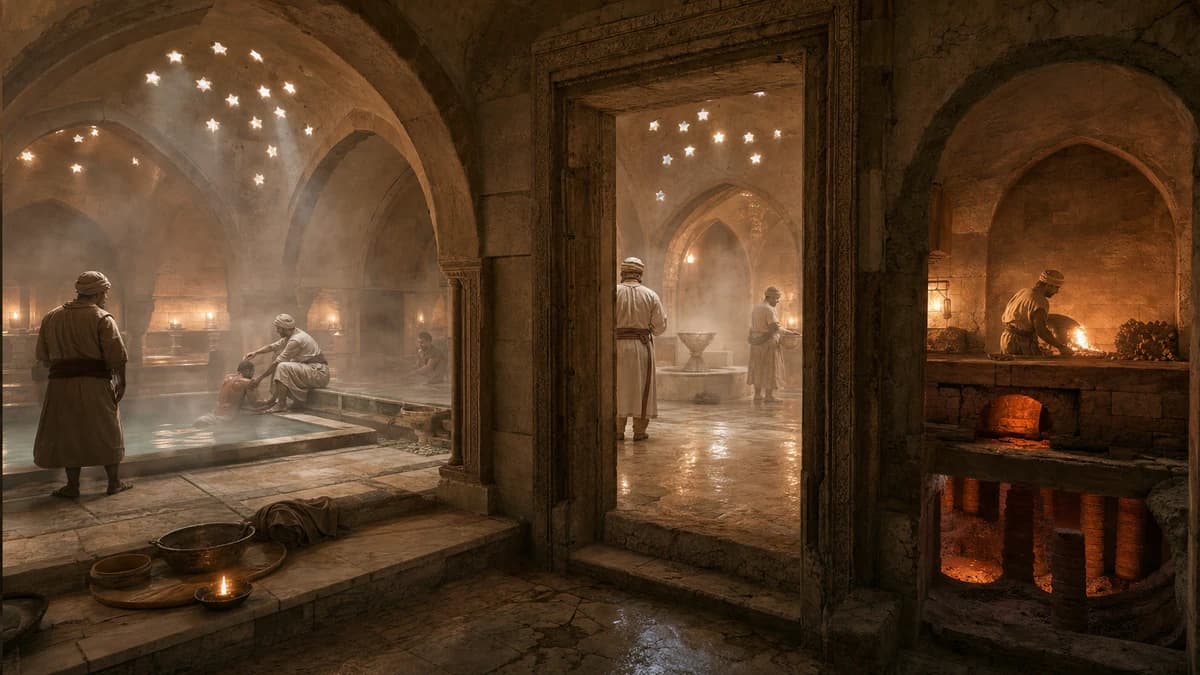
The cover image is an original AI-assisted historical reconstruction, not a photograph of a specific surviving bath.
The visit begins outside the hottest rooms
Many bathhouses lead from an entrance into a reception and changing area. From there, bathers move through cooler or warm transitional rooms toward the hot room. The sequence protects privacy and reduces abrupt temperature change. Regional names differ, and not every plan preserves a perfect three-room order.
Small domed openings admit filtered daylight while limiting direct views and heat loss. Masonry benches, basins and private washing niches support bathing and rest. The architecture manages bodies, clothing, water, steam and staff circulation within a compact footprint.
Heat comes from a service zone
A furnace heats water and air. In many hammams, hot gases pass through spaces beneath raised floors and sometimes through channels in walls, warming masonry that releases heat gradually. This hypocaust principle has ancient precedents, but it was adapted to local construction and fuel supplies.
Water storage, boilers, drains, chimneys and fuel delivery are as important as decorated interiors. A bath that looks serene from the public rooms depended on constant labor behind them. Poor ventilation, blocked drains or damaged flues could make operation unsafe.
Public bath, palace bath and social space
The Met notes that public bathing was a vital urban institution before modern household plumbing. Hammams supported hygiene, grooming and sociability; some also hosted rituals connected with weddings or other life events. Access could be separated by time, gender or distinct facilities depending on place and period.
Qusayr Amra in Jordan is different from a neighborhood bath: its early eighth-century hammam belonged to an elite desert establishment and preserves remarkable wall paintings. Nablus, by contrast, documents bathhouses embedded in a living urban fabric. One example cannot stand for all bathing culture.
How to read a hammam
- Follow the temperature sequence from changing room to hot zone.
- Locate furnace, water storage, flues and drainage.
- Distinguish public circulation from staff and fuel routes.
- Check whether the visible decoration belongs to the original phase or a later restoration.
The hammam is best understood as environmental engineering joined to social routine. Domes and marble are memorable, but heat, water and skilled maintenance made bathing possible.
Sources
- The Met: Baths and Bathing Culture in the Middle East — public bathing and social history.
- UNESCO: Quseir Amra — an early Islamic palace bath with warm and hot rooms.
- UNESCO: The Historic City of Nablus and Its Environs — a documented urban hammam plan and continuing use.


