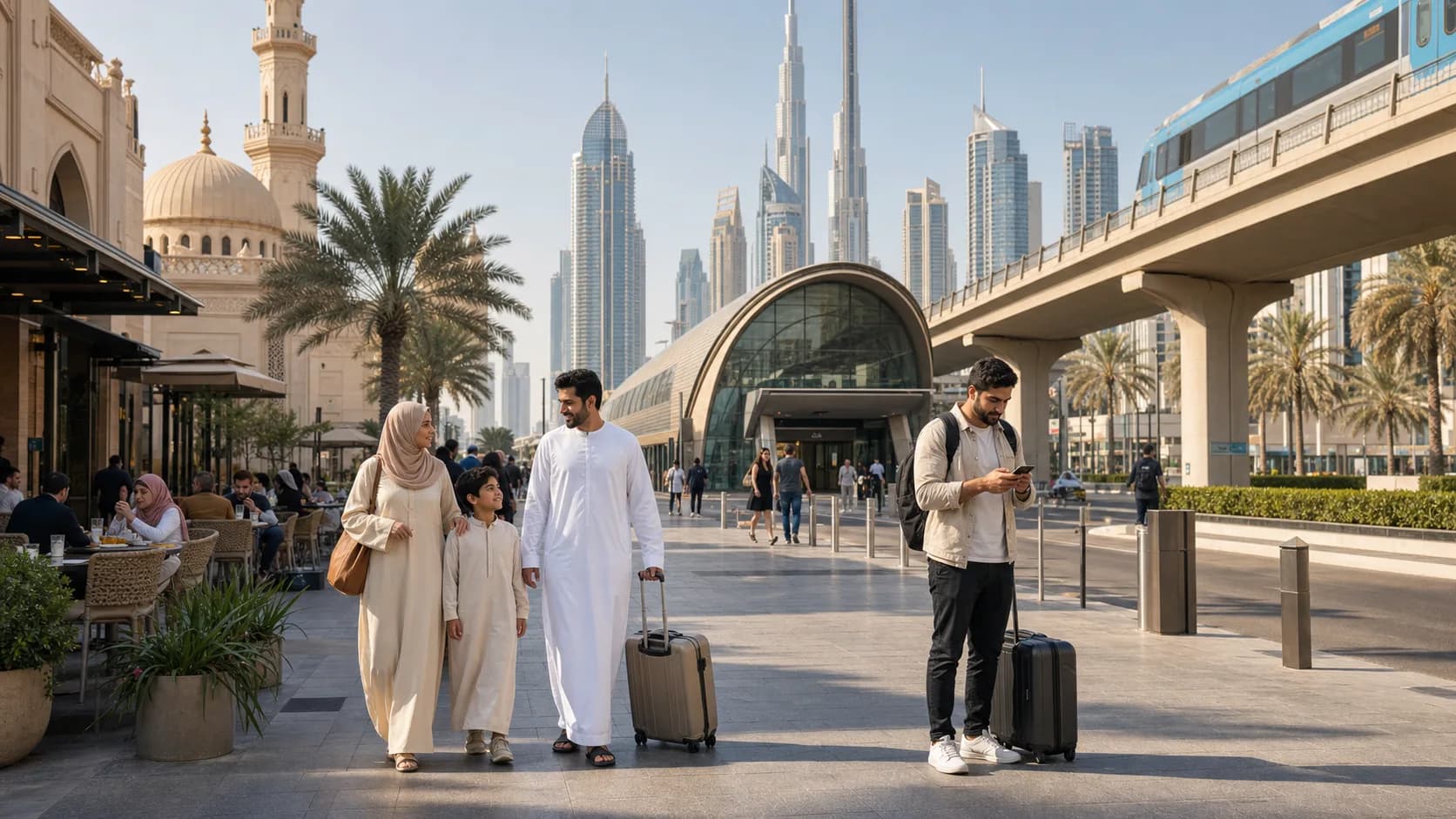
Dubai Muslim Travel Guide for Prayer Spaces Halal Food and Metro Planning
A practical Dubai Muslim travel guide with mosque anchors, halal confidence checks, RTA nol card planning, airport prayer-room context and family buffers.
Dubai is one of the easiest major cities for many Muslim travelers, but that can make planning deceptively lazy. A useful Dubai Muslim travel guide should not simply say that halal food and mosques are everywhere. It should help a visitor decide where the day begins, which mosque or prayer room anchors the route, how the Metro and nol card affect timing, and when a car or taxi is more realistic than forcing every stop onto a rail map.
Start with the same travel routine every morning: check local prayer times, keep the qibla finder ready for hotels and airport corners, and choose one area as the owner of the day. Dubai can feel frictionless until heat, mall distances, station walks, family needs and evening traffic all arrive together. Planning prayer and transport first is how the day stays calm.
Jumeirah Mosque is a strong first-visit anchor because Visit Dubai presents it as a public-facing mosque experience, and Visit Dubai also maintains a broader mosque guide for the city. Use those official pages for visitor context, dress expectations and area planning. A mosque anchor does not mean the traveler must spend the entire day there. It means nearby food, beach, old-city or museum plans should be chosen with the next salah window in mind.
Choose a Dubai day by area, not by ambition
A first Dubai day can work well around Jumeirah, a mosque visit, one confirmed meal and one low-pressure waterfront or cultural stop. Another day can focus on Downtown, the Metro corridor, a mall and an evening route. A third can be Old Dubai, creek crossings and souks. Combining all three in one day is technically possible, but it turns worship and family pacing into a race through stations, taxis and indoor-outdoor transitions.
RTA explains that the nol card is used across Metro, bus, tram, marine transport and other services, while the fare pages show zone-based travel and transfers. For Muslim travelers, this is not just payment trivia. It tells you whether a route with two transfers and a hot station walk is worth it before Asr, or whether a taxi from a mosque to a restaurant protects the day better.
Treat halal as easy but still intentional
In Dubai, many travelers will feel more comfortable about halal food than in non-Muslim-majority destinations. Still, different visitors have different confidence levels, especially for international hotel buffets, imported packaged goods, mixed kitchens or fine-dining menus. The UAE Ministry of Industry and Advanced Technology explains the Halal National Mark as part of the country’s halal conformity system. That source is useful because it gives readers a real official vocabulary for halal confidence instead of vague reassurance.
The practical meal plan is simple: one confirmed main meal, one backup near the prayer or transport anchor, and one indoor fallback for heat. If the day includes children or elders, do not let a famous restaurant pull everyone across the city just before Maghrib. Dubai has enough options that a calmer route is usually better than a more dramatic one.
Use airport prayer rooms and arrival timing wisely
Dubai Airports lists prayer rooms among inclusive facilities, which matters for arrivals, layovers and late-night transfers. A traveler landing at DXB should keep ihram, prayer clothing, medicine, charger and hotel address accessible, not buried in checked luggage. If the arrival is close to a prayer time, handle worship and basic orientation before committing to a cross-city food search.
A realistic Dubai Muslim itinerary is not the one that checks every landmark. It is the one that protects worship, uses transport intelligently, keeps halal decisions simple and leaves enough room for heat and family pacing. That is the difference between a generic Dubai guide and a guide that actually answers the Muslim traveler’s search intent.


