Dhow Is Not One Boat: Sewn Hulls and Indian Ocean Vessel Types
Why dhow is an umbrella term, how sewn-plank hulls worked, what lateen sails could do and why regional vessel names must be tied to place and period.
“Dhow” is a convenient English umbrella term for diverse sailing vessels of the western Indian Ocean and Arabian Sea. It is not one timeless hull design. Names such as baghla, boom, batil, za‘ima and sanbūq have referred to forms that changed across regions and centuries.
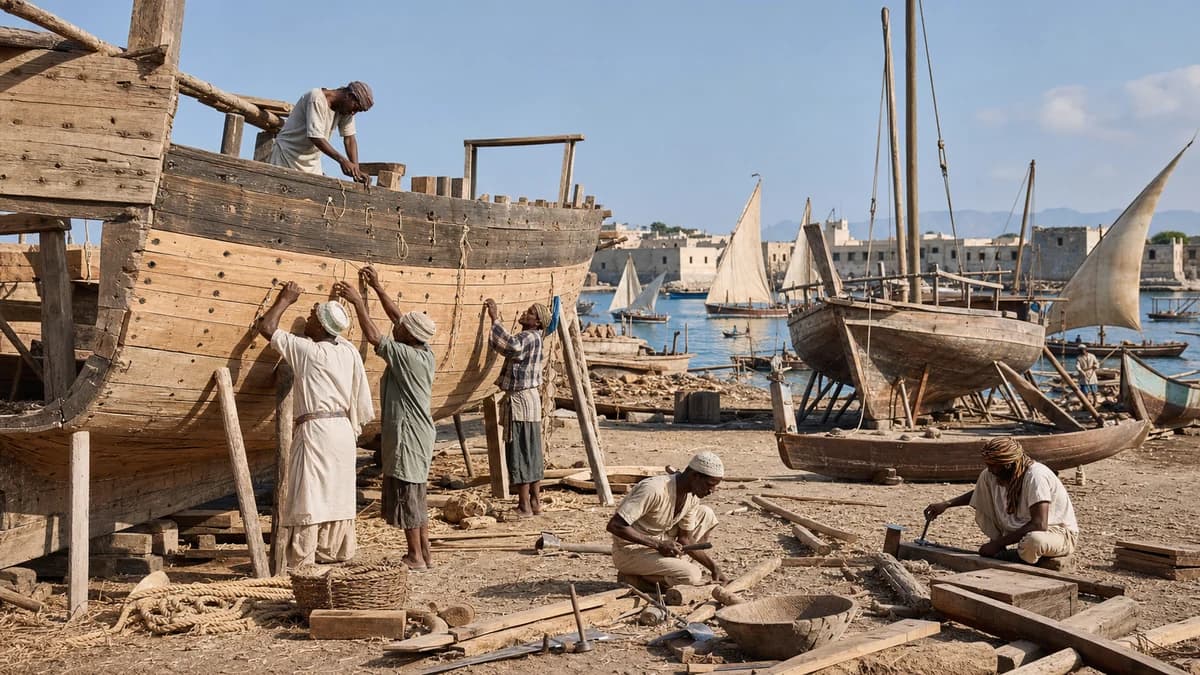
The cover image is an original AI-assisted shipyard reconstruction, not a photograph or exact replica of a named vessel.
Some hulls were sewn before nails dominated
In sewn construction, planks are pierced and lashed together with cordage, often made from coconut fiber. Caulking and internal framing stiffen and seal the hull. Sewing produces a flexible structure and uses materials available through Indian Ocean trade, but it is not a primitive step inevitably replaced by a superior universal method.
Iron-fastened and mixed construction expanded in different ports at different times. A ship’s technique can reveal access to timber, metal, labor and repair networks.
Rig and hull answer different questions
Many vessels carried triangular or quadrilateral fore-and-aft sails commonly grouped under “lateen.” These rigs allow useful maneuvering across varying wind angles, but they do not let a heavily laden ship sail directly into the wind. Tacking still costs distance and time.
Sail shape alone cannot identify the hull beneath it. European, Arab, Persian, Indian and East African mariners adopted and modified related rigs, so a silhouette is poor evidence for ethnicity or origin.
Maritime terminology changes with observers
British colonial records attempted to classify non-European vessels for administration, policing and trade. Their spellings and categories capture real observations while also forcing fluid local vocabulary into bureaucratic tables. Oral histories and shipwright knowledge can contradict a printed classification without either source being useless.
Photographs show vessels at one moment, often after engines, imported timber or altered cargo markets changed construction. Historical labels should always include date and port.
How to identify a vessel responsibly
- Begin with hull profile, stern, bow, plank fastening and rig.
- Record the local name, language, port and date of the source.
- Avoid using “dhow” as if it specified cargo, people or one technology.
- Separate modern heritage replicas from working historical craft.
The Indian Ocean’s vessels are best understood as families of solutions. Shipwrights adjusted form to cargo, harbor depth, monsoon season and available material rather than following one frozen type.
Sources
- Qatar Digital Library: Nautical Terminology and Non-European Ships — historical names and classification problems.
- UNESCO: Qal’at al-Bahrain Nomination Documentation — Gulf maritime trade and archaeological context.
- UNESCO Courier: Traditional Indian Ocean Sailing Vessels — construction and maritime heritage overview.


