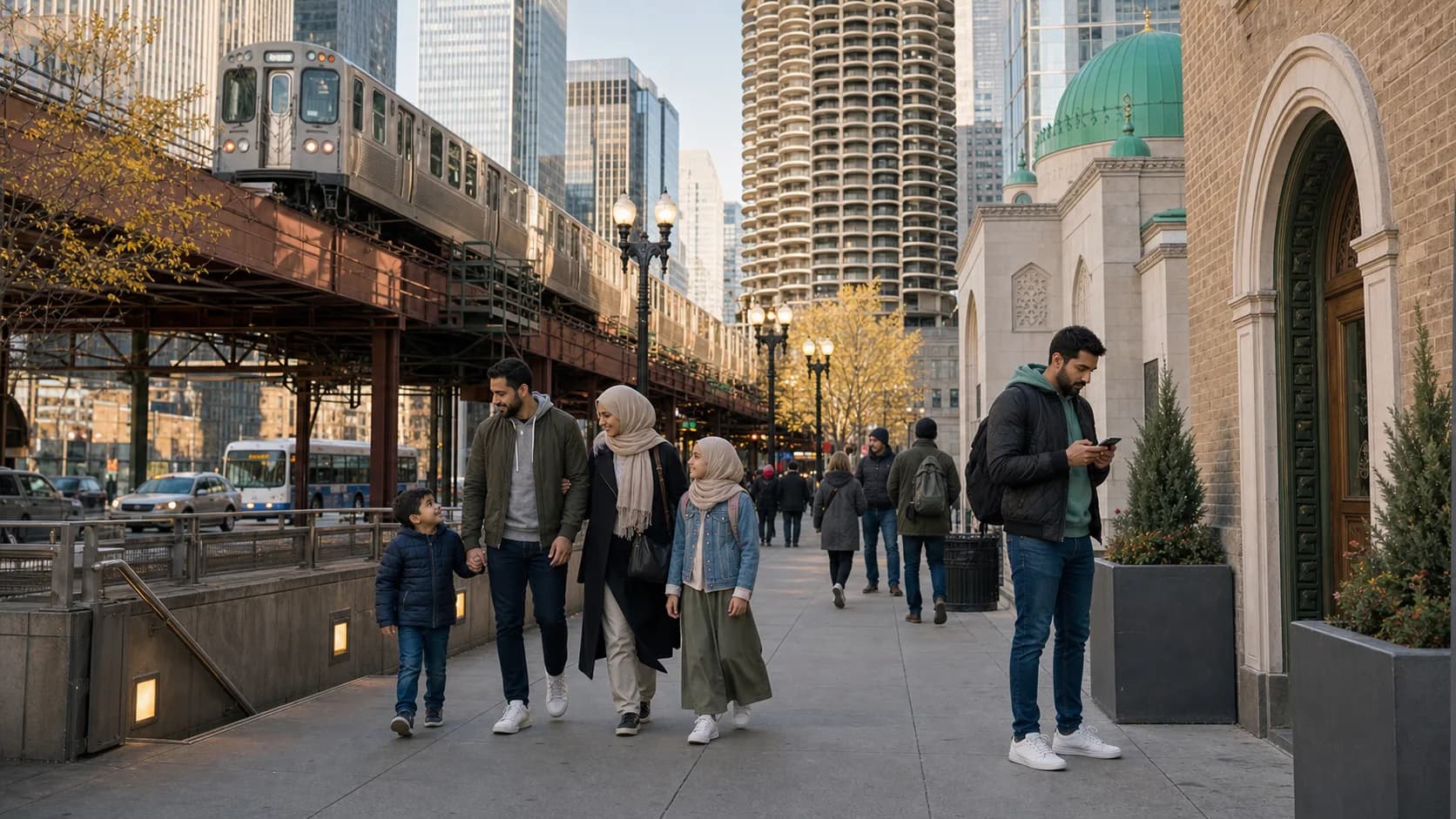
Chicago Muslim Travel Guide for Prayer Spaces Halal Food and CTA Planning
A Chicago Muslim travel guide with downtown mosque anchors, HFSAA halal checks, CTA and Ventra planning, weather buffers and a one-day workflow.
Chicago is a strong city for Muslim travelers, but it needs a practical plan. The Loop, lakefront, museums, airport transfers, halal restaurants and neighborhood visits can pull a visitor in different directions. A useful Chicago Muslim travel guide should protect the parts that matter most: a realistic prayer anchor, verified halal food and a CTA route that does not turn the day into a sequence of rushed transfers.
Start the morning with local prayer times and the qibla finder. Then decide whether the day belongs to downtown Chicago or to a neighborhood food and family route. Chicago rewards clusters. It punishes routes that jump from the lakefront to a distant restaurant to a museum to another train line with no prayer buffer.
Downtown Islamic Center is a useful anchor for the Loop, Millennium Park, the Art Institute, river walks and many CTA lines. Its visit information lists the address and nearby transit context, which makes it more useful than a generic map pin. For a first trip, keeping one prayer anchor near the main sightseeing zone can make the entire day calmer.
Build the day around downtown or a food neighborhood
A downtown day can work well for a first-time visitor: prayer near the Loop, a lakefront or museum stop, one verified meal and a CTA route that stays simple. A food-focused day may be better in another area, especially if the traveler wants a certified restaurant or a community recommendation. Both days can be good. Problems start when the itinerary tries to do both with no time for wudu, weather or train delays.
Winter and summer both matter. Cold wind near the lake can slow families down, while summer events can crowd stations and streets. A Muslim-friendly Chicago plan should include indoor buffers and a backup prayer or meal option. The best schedule is not the one with the most pins. It is the one that still works after a late train or a tired child.
Check halal confidence before crossing the city
Chicago has many Muslim communities and halal food options, but the word halal can still mean different things in practice. HFSAA publishes Chicago-area certified restaurant and meat-market context. If certification matters to you, check before building a long route around one meal. If a restaurant statement is enough for you, still check opening hours and whether the route fits the next prayer.
A good food plan has one main meal and one backup near the prayer or transit anchor. Do not let a restaurant search pull the family far from downtown just before Asr or Maghrib unless the route is intentional. Chicago is large enough that one wrong detour can become the whole afternoon.
Use CTA and Ventra planning as a time buffer
CTA publishes fare information, and Ventra explains contactless payment, transit value and passes. For visitors, the key habit is to decide the payment method before the first train or bus. Contactless payment can make a short visit easier, while a pass can make sense for repeated rides. Either way, do the fare thinking before the prayer window becomes tight.
A simple first-day route is to choose Downtown Islamic Center as the prayer anchor, keep sightseeing in the Loop and lakefront zone, eat at one verified place, and save distant food neighborhoods for another day. That plan is less dramatic than trying to see all of Chicago at once, but it is much more useful for the traveler who wants the day to respect prayer, food and family pacing.


