Acequia Irrigation and Valencia’s Water Tribunal
How gravity-fed acequias distribute river water across Valencia’s huerta, how irrigators govern turns, and what the famous tribunal actually preserves.
The acequia is a gravity-fed irrigation channel system that distributes water across agricultural landscapes in the Iberian Peninsula, particularly within the huerta of Valencia. This infrastructure supports intensive farming by managing water flow from source to field without mechanical pumps. The term derives from the Arabic al-saqiya, reflecting historical linguistic layers rather than proving uninterrupted continuity from al-Andalus.
Hydraulic Infrastructure and Flow
Water enters the system via main canals that harness the gradient of the Turia river and its tributaries. From these arteries, smaller branches divert flow through gates and turns to individual plots. The design relies entirely on elevation differences to move water. Maintenance involves regular dredging to remove sediment and repair masonry structures. These physical channels are visible across the landscape, showing Roman, Islamic, Christian, and modern engineering interventions.
Legal Framework and Allocation
Infrastructure alone does not manage scarcity; rules do. The allocation of water depends on local authority and customary law. Representatives from communities gather to resolve disputes regarding flow rights and usage timing. This legal mechanism operates independently of the physical ditch, focusing on testimony and established precedent. Distinguishing between the canal and the court is vital for accurate historical understanding.
The Water Tribunal
The Valencian Water Tribunal publicly adjudicates conflicts related to irrigation rights. It convenes in an open square, allowing community oversight of proceedings. UNESCO has recognized this practice alongside Murcia’s Council of Wise Men as intangible cultural heritage. This designation highlights the social institution rather than the hydraulic engineering. Visitors can observe the tribunal’s rituals, but historical records document the nuanced legal arguments.
Historical Layers and Observation
Suggesting a single origin story obscures the complex evolution of these systems. Early foundations may be Roman, modified during Islamic rule, and expanded under Christian kingship. Modern engineering often integrates with older paths. Tourists observe water flowing in visible ditches, but understanding the full scope requires examining archival documents about governance. The living tradition adapts to contemporary agricultural needs while preserving procedural continuity.
- Trace the main canal from its river intake point
- Observe gate mechanisms controlling branch flow
- Identify sediment traps requiring regular cleaning
- Note junction points where water splits into fields
- Document tribunal locations versus actual ditch repairs
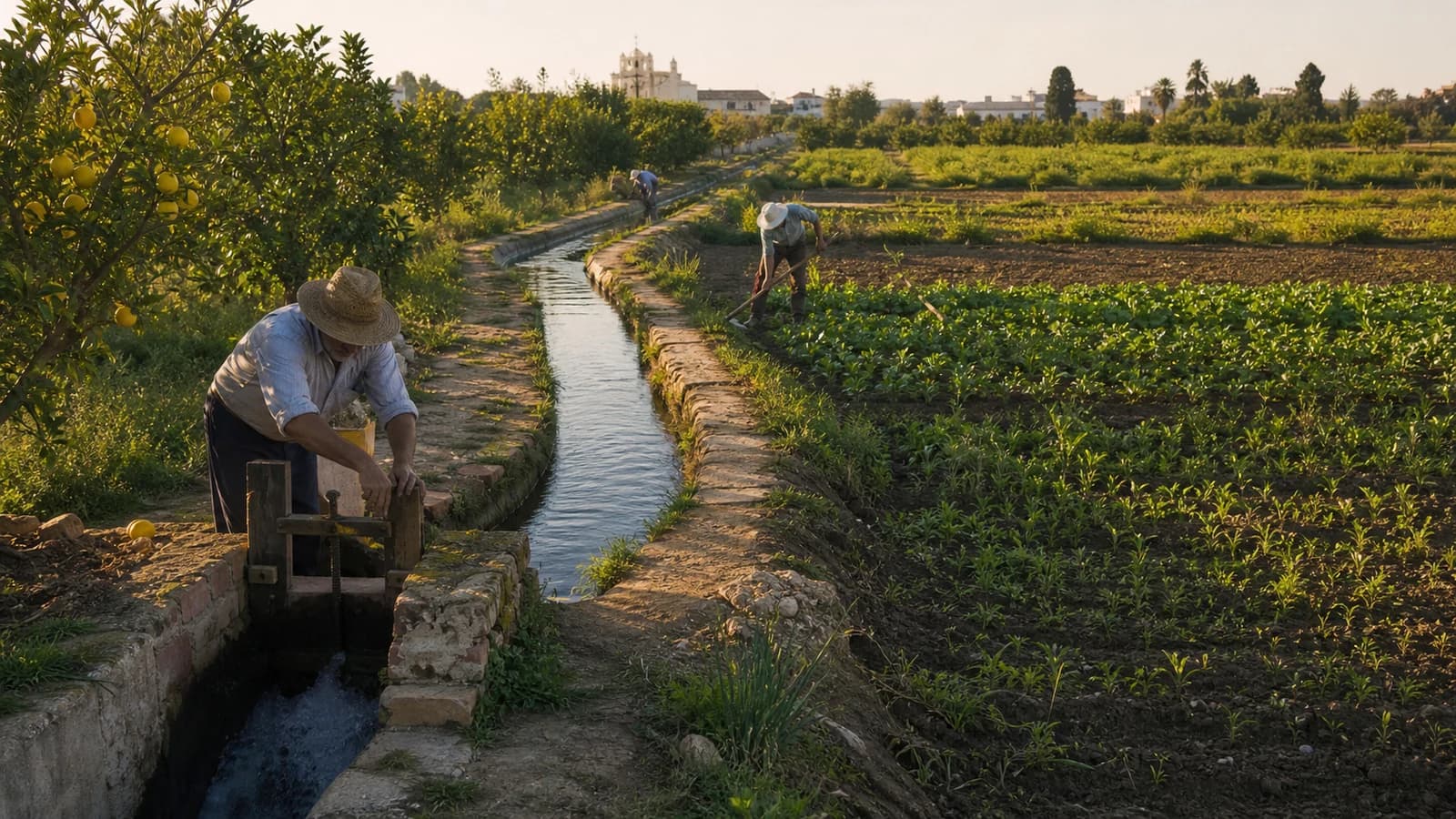
The cover image is an original AI-assisted landscape reconstruction, not a photograph of a specific Valencian canal or tribunal session.
Sources
- UNESCO Intangible Heritage: Irrigators’ Tribunals — living institutions, functions and inscription.
- UNESCO World Heritage Centre: La Huerta de Valencia — irrigated landscape and historical layers.
- FAO GIAHS: Historical Irrigation System at l’Horta de València — agricultural system, water distribution and governance.


