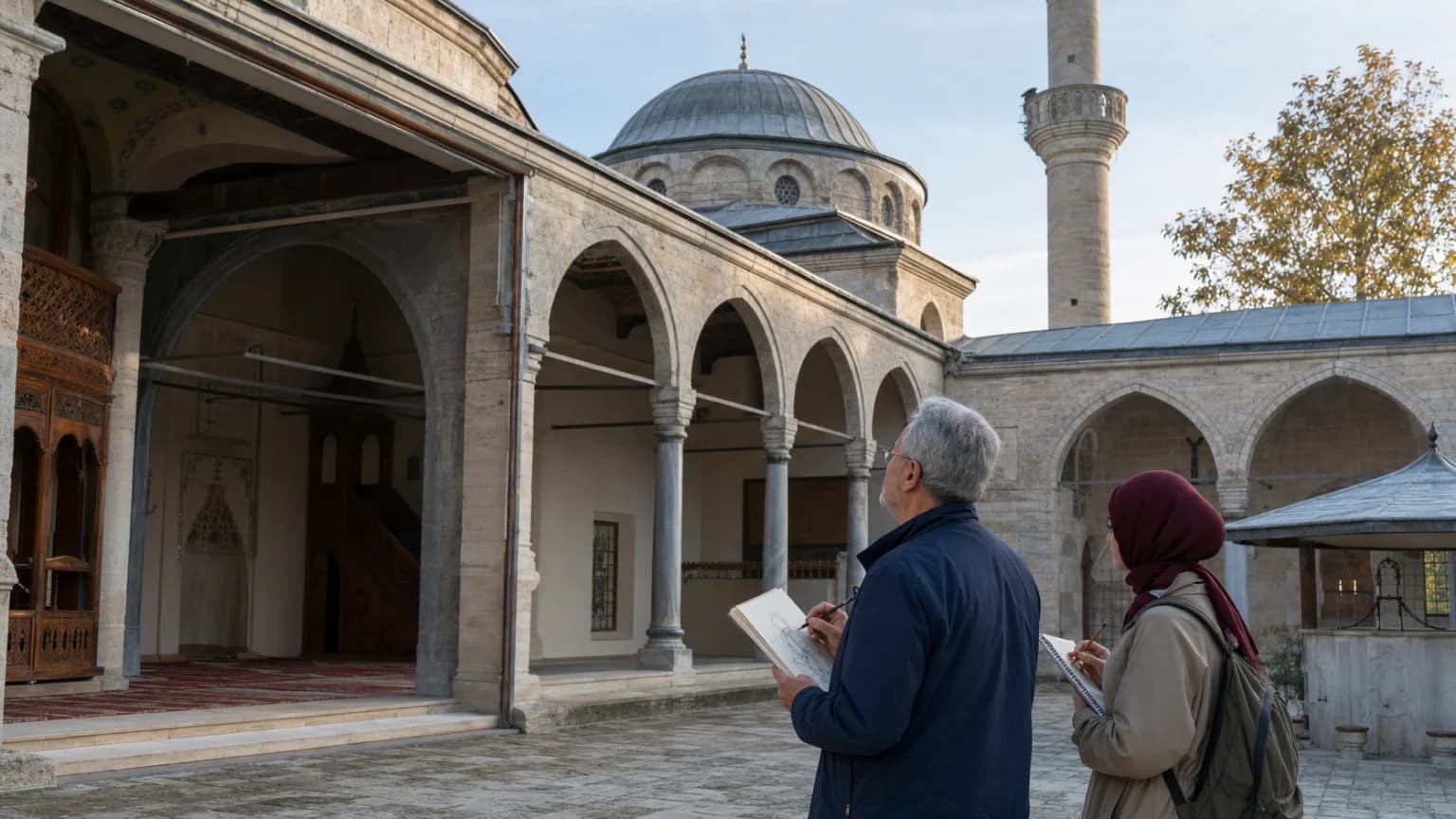
清真寺建築詞彙:朝向牆、壁龕、講壇、宣禮塔與穹頂
從功能理解清真寺空間,分清宗教需要、常見構件與各地建築傳統。
本詞彙表解釋主要術語的含義、構件通常出現的位置,以及常被混淆的對象。阿拉伯語詞彙隨時代和地區變化,歷史建築也可能在數世紀中不斷疊加新層次。應把定義當作理解功能的工具,再用具體清真寺的平面、建築實體、年代和地方傳統檢驗。
主要術語速覽
| 術語 | 基本含義 | 不要混同於 |
|---|---|---|
| 基卜拉 | 禮拜時朝向麥加克爾白的方向 | 牆壁、壁龕或羅盤裝置 |
| 朝向牆 | 禮拜廳朝向基卜拉的一面牆 | 嵌入或標記在牆上的米哈拉布 |
| 米哈拉布 | 指出禮拜方向的壁龕或標記 | 祭壇或墓穴 |
| 敏拜爾 | 用於主麻講道的階梯式講壇 | 宣禮塔 |
| 宣禮塔 | 與宣禮和城市可見性有關的塔 | 有效禮拜空間必須具備的宗教條件 |
| 薩赫恩 | 常由拱廊環繞的露天庭院 | 每座清真寺都有的特徵 |
| 里瓦克 | 有頂拱廊或柱廊 | 一側敞開的拱頂空間伊萬 |
| 庫巴 | 穹頂或穹頂建築 | 主禮拜廳必需的標誌 |
| 馬克蘇拉 | 某些清真寺禮拜焦點附近的保護性或專用圍隔 | 標準化女性禮拜區 |
| 小淨區 | 禮拜前進行儀式性清洗的地方 | 禮拜廳本身 |
一件真實壁龕如何區分形狀、材料與功能
大都會藝術博物館收藏的伊斯法罕伊瑪米經學院壁龕編號為39.20,紀年為伊曆755年,即西元1354—1355年。尖拱與矩形外框由不同顏色的小塊釉面磚拼接而成,並嵌固在砂漿中。館藏紀錄指出,外框環繞《古蘭經》經文,尖拱邊緣為庫法體銘文,中央則有流動書體的文字。僅把整件作品稱為拱門、磁磚面板或書法,都只描述了其中一個方面。
「米哈拉布」說明它標示禮拜方向的功能;磚片拼鑲說明製作方式;庫法體與流動書體說明表面的書寫形式。它原屬經學院,也表明禮拜壁龕可以位於教育建築群中。如今脫離原址的館藏保留了一處禮拜焦點,卻沒有保存原來房間的完整平面。辨識作品時,應先依據有紀年的館藏紀錄,再把這些證據與對周圍建築的復原解釋區分開來。
馬斯吉德、賈米與穆薩拉既描述用途,也涉及形式
馬斯吉德是通常譯作清真寺的阿拉伯詞,字面與叩拜相關。賈米或馬斯吉德賈米指舉行星期五集體禮拜和講道的聚禮清真寺。歷史上,一座城市可能有許多街區清真寺,但聚禮清真寺數量相對有限。
穆薩拉可以表示禮拜場所,有時是露天場地,有時是學校、機場或工作場所專設的房間。這些術語並非在各地都與現代建築類別完全對應。應問空間支持什麼禮拜和集會,而不是假定只有宏偉建築才算清真寺。
基卜拉是方向,不是物體
基卜拉是穆斯林禮拜時面向麥加克爾白的方向。無論建築有沒有裝飾壁龕,它都存在。在平面圖中,它決定禮拜隊列的排列,並通常標示禮拜廳的主要一側。
歷史上的朝向未必與現代大地測量完全一致。建造者依據當時可用的地理知識、法律慣例、既有城市肌理和測量方法工作。看到偏差時,應先記錄,再判斷是否屬於施工錯誤。
朝向牆組織禮拜隊列
朝向牆就是面向禮拜方向的牆。禮拜者排成與之平行的行列,伊瑪目在前方領拜。理解平面時,其位置比主要入口、穹頂或最高塔的位置更根本。
由於它匯聚禮拜者的注意,朝向牆常以米哈拉布、銘文、表面裝飾、較寬通道,或前方開間上方的穹頂加以強調。「常常」一詞很重要:簡單禮拜室可以只標示方向,不作宏偉處理。
米哈拉布標示方向,但不是祭壇
米哈拉布通常是朝向牆上的壁龕或標記,指示禮拜方向與伊瑪目位置。實例從淺淺的彩繪輪廓到深似小室的凹龕,材料包括石膏、石雕、木材、瓷磚和馬賽克。
米哈拉布不是祭壇,也不是神聖臨在的容器。它可能成為清真寺裝飾最華麗的部分,因為它標示方向焦點。類似形狀也見於禮拜毯和便攜物品,其拱形輪廓組織個人禮拜空間,並不因此成為建築壁龕。
敏拜爾是主麻講道的講壇
敏拜爾是聚禮清真寺內靠近米哈拉布的階梯式講壇。講道人從上面發表星期五的胡特巴講道。歷史講壇可能由精雕鑲嵌木材、石材或砌體製成;當代清真寺也可能使用可移動的小階梯。
其功能不同於米哈拉布。米哈拉布指出方向和伊瑪目的禮拜位置,敏拜爾則抬高講道人,便於講道。胡特巴也可以表達政治權威,例如提及統治者姓名,因此敏拜爾不僅屬於家具設計史,也屬於贊助和主權史。
迪卡或宣禮員平台是高台
某些較大清真寺設有平台,在阿拉伯語環境稱迪卡,在鄂圖曼環境稱宣禮員平台。電子擴音出現前,助手或宣禮員可以重複禮拜動作或誦詞,讓人數眾多的會眾能夠跟隨。
它不是敏拜爾,通常位於禮拜人群空間內,而非米哈拉布旁的講道位置。只有遺址文獻支持地方術語時,才應如此命名;一般高廊也可能供訪客、統治者、女性使用,或在其他類型建築中供樂師使用。
馬克蘇拉是專用圍隔,不是普遍構件
馬克蘇拉位於朝向區域附近,在某些歷史清真寺中用於保護或預留統治者及隨從的空間。它可由雕花木屏、砌體或其他屏障構成。凱魯萬大清真寺保存著著名的中世紀木製實例。
並非每個有屏障的區域都是馬克蘇拉。現代女性隔斷、儲藏屏風和文物保護欄具有不同歷史與功能。術語應依據年代、贊助者和用途證據,而非僅憑外觀。
禮拜廳可以採用多種結構形式
禮拜廳在結構允許範圍內,提供朝向基卜拉、儘量不受阻擋的行列。柱、墩、屋頂跨度和動線決定人群如何進入和排列。地毯可以顯示隊列方向,但可以更換,不應當作原始平面。
清真寺可以使用柱廳、集中式穹頂室、木亭、拱頂伊萬布局,或改建的世俗建築。沒有某一種屋頂輪廓能夠單獨證明或否定清真寺功能。應看朝向、隊列、米哈拉布、入口和輔助空間之間的關係。
多柱式清真寺使用許多支撐
多柱式指由許多柱或墩支撐屋頂的大廳。阿拉伯世界和北非部分地區的早期及中世紀清真寺,採用面向庭院的柱式禮拜廳。聯合國教科文組織稱,凱魯萬大清真寺禮拜室有十七條縱向通道,由大理石和斑岩組成的「柱林」支撐。
多柱式描述結構和平面,不是宗教派別或裝飾風格。再使用的柱可能是從舊建築取來的再用構件,因此同一廳內柱頭與柱身的年代和材料可以不同。我們的多柱式清真寺指南解釋開間、通道和朝向強調如何共同作用。
伊萬是一側敞開的拱頂空間
伊萬是大型拱頂廳或空間,一側敞開,常面向庭院。它起源於伊斯蘭之前的伊朗與美索不達米亞建築,後來在清真寺、經學院、宮殿和商隊旅舍中重要。這個詞命名空間形式,而非建築的宗教功能。
四伊萬平面在中央庭院每側各設一座伊萬。朝向一側的伊萬通常更大或裝飾更突出,引導人群至禮拜焦點。伊萬並不等於任意拱門、凹處或入口門樓;伊萬與四伊萬庭院指南將其與皮什塔克區分,後者是圍繞入口的宏偉立面。
薩赫恩與里瓦克描述庭院組織
薩赫恩即庭院,可提供光、通風、通行和額外禮拜空間,常構成街道與禮拜廳的過渡。里瓦克是帶頂拱廊或柱廊,可以圍繞庭院,為行走或學習遮蔽。
庭院回應氣候、地塊和傳統,並非普遍要求。密集城市中的清真寺、寒冷氣候建築或改建房間可能沒有薩赫恩。清真寺庭院與小淨指南顯示為何應分別識別噴泉、拱廊與露天院落。
小淨空間與水設施支持潔淨儀式
小淨是禮拜前的儀式性清洗。清真寺可能提供水龍頭、水盆、座位、庭院噴泉或獨立洗淨建築。給排水、隱私、無障礙和動線都是建築的實用部分,即使受到的關注不及穹頂和瓷磚。
庭院噴泉不自動用於小淨,裝飾池也不能僅憑外觀命名。同樣,薩比勒在許多地區歷史上指公共供水建築或設施,並非所有清真寺噴泉的另一種名稱。
宣禮塔是塔,不是禮拜必需條件
宣禮塔附著於、鄰近或關聯清真寺,為宣禮提供高處,並成為城市重要視覺標誌。今天,擴音器可以從塔、屋頂或立面播放宣禮。
宣禮塔差異極大:北非與伊比利亞部分地區的方塔、薩邁拉螺旋形馬爾維亞塔、伊朗與中亞的圓筒塔身、鄂圖曼地區纖細「鉛筆」形塔,以及別處的層級塔或地方形式。早期宣禮可以在屋頂進行,清真寺無需宏偉宣禮塔也能運作。
庫巴意為穹頂,但穹頂有不同任務
庫巴指穹頂或帶穹頂的建築。清真寺穹頂可能跨越主禮拜廳,強調米哈拉布前的開間,覆蓋入口,標示陵墓,或成為許多小拱頂中的一個。結構體系與象徵解釋取決於具體建築。
穹頂常見,卻不是儀式要求。東南亞木清真寺可用重檐屋頂,許多西非清真寺用土質屋頂,樸素禮拜廳用平頂。即使是穹頂建築群,最大的穹頂也可能覆蓋陵墓或入口,而不是主要禮拜空間。
角拱與帆拱實現方形到穹頂的過渡
方形開間上方的穹頂,需要幾何與結構過渡。角拱利用拱、龕或小拱頂跨越角部;帆拱以曲面三角形將穹頂向下延伸到四個支撐。工匠還發展了肋、疊澀形式及分層組合。
這些是結構與空間方案,雖然表面可以裝飾,但不應自動稱為穆卡納斯。辨認裝飾下方承重幾何,有助於理解穹頂如何真正連接底座。
穆卡納斯是一種蜂窩單元過渡或拱頂體系
穆卡納斯將表面分成層層突出和凹入的單元,可用於穹頂過渡、門樓、壁龕、檐口或陽台,材料可為磚、石膏、石材、木材或瓷磚。單元調節光線,把連續表面拆分為層疊幾何區域。
「蜂窩」是有用的視覺類比,但不是完整施工定義。鐘乳石狀雕刻、藻井和疊澀砌體,可能看似穆卡納斯卻不屬於同一體系。穆卡納斯構造指南解釋單元、出挑和組裝。
書法、幾何與植物裝飾承載不同資訊
書法帶可以記錄《古蘭經》經文、贊助者、日期、捐贈、建造者或修復。幾何紋樣組織重複與比例。植物裝飾可能程式化為捲曲形式,有時稱阿拉伯蔓草紋。這些方式可以共處一面,卻不能互相替代。
不要依據絕對普遍規則,假定清真寺裝飾完全沒有生命形象。許多宗教場景確實強調非具象,但實踐隨媒介、時代和地區變化。更重要的是,應將裝飾讀作物質證據:工藝、銘文與修補可幫助判斷建築某層的年代。
再用構件和修復使建築擁有多個時代
再用構件指從早期建築重新使用的柱、柱頭、石塊或面板。再使用可能出於實用、聲望、政治,或三者兼有。柱子比清真寺古老,不代表整個禮拜廳都與柱子同時。
清真寺也擴建和改變。新統治者增加穹頂、宣禮塔、馬克蘇拉、門或裝飾;地震與火災引發重建;現代設施改變地面與牆壁。維多利亞與亞伯特博物館的克雷斯韋爾攝影檔案說明,某個特徵改變或消失後,有日期的影像為何關鍵。
經學院、扎維耶、汗卡與庫利耶相關但不同
經學院是教育機構,也可能包含禮拜空間。扎維耶或汗卡可與蘇菲教學、居住和修行有關,術語隨地區而變。鄂圖曼庫利耶是更大的捐贈建築群,可將清真寺與學校、醫院、浴場、廚房、陵墓或市場結合。
因為這些機構常共有庭院、穹頂和伊萬,一張房間照片可能難以判斷。把每個穹頂室稱為清真寺之前,應先確認整體建築群、原始捐贈與房間關係。
地方材料比想像中的統一風格更重要
聯合國教科文組織關於傑內的資料強調曬乾土磚、河泥抹面和當地泥瓦匠知識。凱魯萬使用巨大石鋪庭院、再用大理石與斑岩柱、多柱廳和厚重方形塔。伊朗清真寺可圍繞伊萬與磚穹頂組織空間,鄂圖曼建造者則發展大型集中式穹頂室內。
中國清真寺群可使用地方建築熟悉的木框架、庭院和屋頂。東南亞清真寺可能用多層屋頂而非砌築穹頂。氣候、地震條件、材料供應、工藝網路、贊助和舊建築都塑造結果。「伊斯蘭」指宗教與歷史關係,不是一套統一建造零件。
逐步閱讀清真寺平面
- 找到北向,並確定遺址的朝拜方向。
- 定位朝向牆與米哈拉布,而不是從入口立面開始。
- 追蹤禮拜隊列在哪裡形成,以及人們如何進入而不橫穿隊列。
- 識別敏拜爾,將其與平台、樓梯和廊層區分。
- 把庭院、拱廊、伊萬和禮拜廳標為獨立空間單元。
- 將小淨、鞋子存放、動線與無障礙標記為功能建築的一部分。
- 檢查各穹頂、塔與裝飾層屬於哪個建造階段。
- 在指定地區類型前,先與專業遺址記錄比較。
常見問題
每座清真寺都有米哈拉布嗎?明確朝向是基礎,但可以不用深建築壁龕,尤其在小型或臨時空間。
米哈拉布是祭壇嗎?不是。它指示朝拜方向和禮拜焦點;伊斯蘭禮拜不需要祭壇。
敏拜爾與宣禮塔有何區別?敏拜爾是禮拜區域內或旁邊的階梯講壇;宣禮塔是與宣禮有關的塔。
必須有穹頂嗎?不必。穹頂是常見建築與象徵特徵,但許多仍在使用的清真寺有其他屋頂形式。
女性在哪裡禮拜?安排不同:同一大廳、男性後方隊列、側區、陽台或獨立房間均可能使用。現代隔斷不自動等於歷史馬克蘇拉。
非穆斯林可以參觀嗎?許多清真寺歡迎禮拜時間之外的訪客,但進入、服裝、攝影和性別安排由當地決定。應查看具體清真寺指引;首次參觀清真寺指南介紹實用禮儀。
相關建築指南
- 多柱式清真寺平面——柱、通道、庭院與朝向廳如何配合。
- 伊萬與四伊萬庭院——拱頂空間、拱廊與門樓的區別。
- 庭院、拱廊與小淨水設施——氣候和動線如何塑造清真寺庭院。
- 凱魯萬大清真寺——關於多柱布局、宣禮塔、米哈拉布、敏拜爾和後加層次的有年代案例。
- 傑內大清真寺——土材料與社區維護為何屬於建築意義。
Muslim Post 相關指南
來源
- Smarthistory:清真寺建築入門——用於朝向牆、米哈拉布、敏拜爾、宣禮塔、庭院和穹頂定義,以及地方傳統產生不同形式的原則。
- Smarthistory:常見清真寺建築類型——用於多柱與四伊萬平面的區別,以及凱魯萬、伊斯法罕和中國地方形式的比較。
- 大都會藝術博物館:清真寺的基本建築要素——用於核對功能定義,以及常見建築構件與地區差異的區別。
- Archnet:雙朝向清真寺遺址記錄——作為專業建築記錄的實例,聯繫遺址歷史、朝向、平面和後期改變。
- 聯合國教科文組織世界遺產中心:凱魯萬——用於大清真寺多柱廳、十七條通道、庭院、柱材和三層方形宣禮塔。
- 聯合國教科文組織城市遺產地圖集:傑內古城——用於土磚、泥抹面、當地工匠、材料維護和西非地區適應。
- 維多利亞與亞伯特博物館:K. A. C. 克雷斯韋爾建築攝影——解釋有日期的照片如何記錄改變或毀壞的清真寺特徵,包括薩拉丁敏拜爾。
- 大英博物館:薩邁拉大清真寺米哈拉布區域灰泥——作為對象層面的實例,說明出土建築材料、地點、材料和年代如何支持建築識別。


