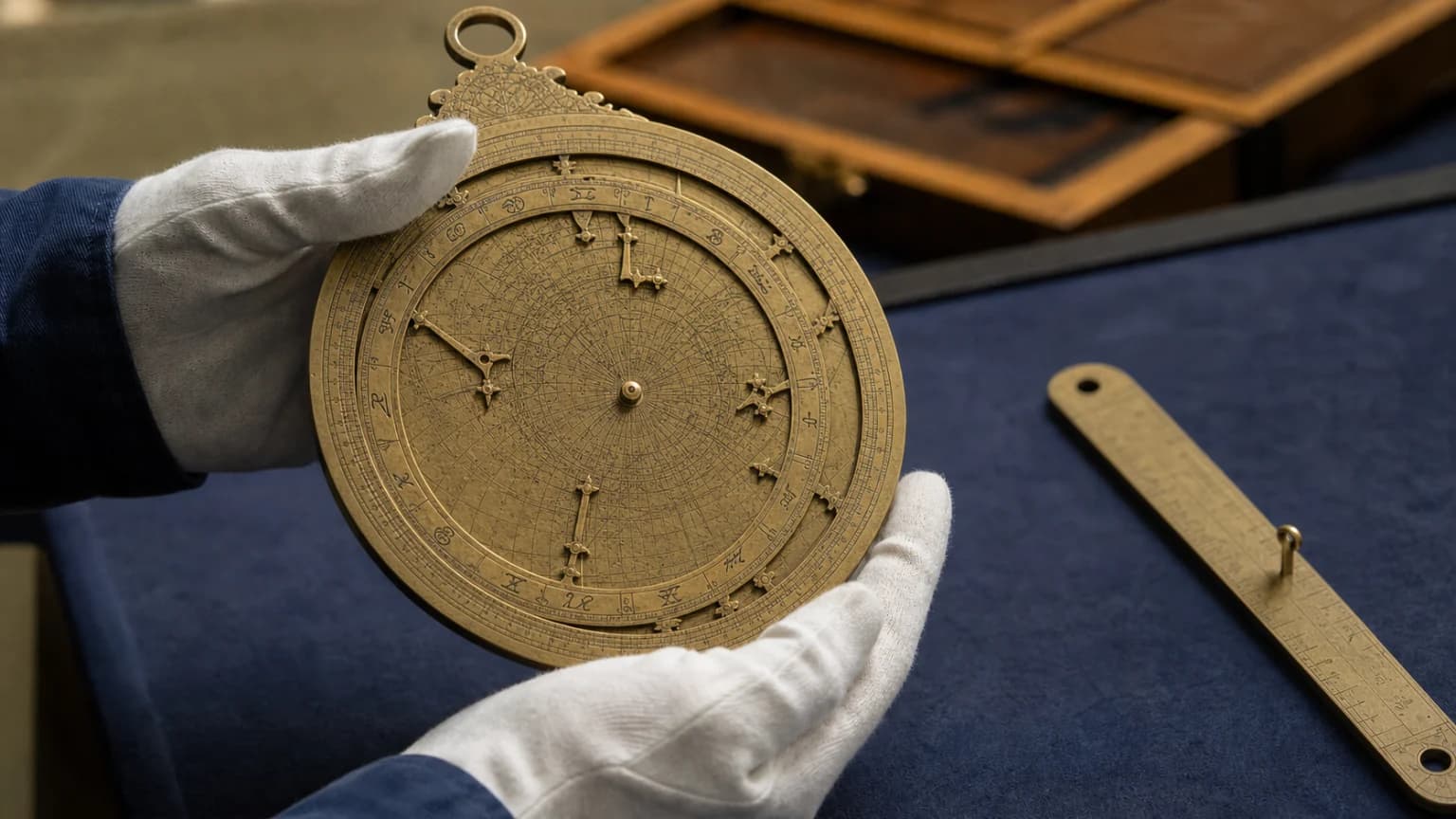
イスラーム世界の星盤はどう動くのか
平面星盤の母盤、緯度盤、星網、定規、照準儀を実物資料で読み、天体高度、時刻、礼拝時刻、キブラ、測量を求める仕組みと、古代からアラビア語圏・ヨーロッパへ続く技術史を解説します。
イスラーム世界の職人と学者は古代に由来する平面投影の技術を受け継ぎ、アラビア語の理論書、緯度別の盤、星名、都市表、礼拝時刻やキブラのための尺度を発展させた。ただし、「星盤を発明した唯一のムスリム科学者」を確定する史料はない。器物、写本、碑文、後世の伝記を区別すると、単純な発明者物語より豊かな技術史が見える。
主要部品を一枚で確認
| 部品 | 役割 | 確認点 |
|---|---|---|
| 母盤 | 緯度盤と星網を収める本体 | 縁の度数目盛、内側の空間、銘文 |
| 緯度盤 | 特定緯度の地平線、高度、方位を表示 | 対象都市・緯度、表裏の刻線 |
| 星網 | 明るい恒星と黄道を回転させる | 星の指針、黄道環、欠損・交換 |
| 表面の定規 | 目盛や天体位置を読み取る | 原部品か後補か |
| 裏面の照準儀 | 太陽・恒星の高度を測る | 照準孔、回転、度数環 |
| 軸と留め具 | 全層を中心で保持し回転させる | 軸、くさび状の留め具、修復 |
| 吊り環と座 | 器具を鉛直に吊るす | 環、上部の座、摩耗 |
天球を平面へ写す仕組み
観測者から見ると、恒星と太陽は地球の周りを一日で回るように見える。平面星盤は、この見かけの天球を立体のまま縮小するのではなく、球面上の点と円を平面へ対応させるステレオ投影を用いる。円として扱える線が多く、定規とコンパスで作図しやすいことが大きな利点だった。
表面では、空に属する星網が、地上の観測地点に属する緯度盤の上を回る。両者の重なりが、ある日・時刻に星が地平線の上か下か、どの高さと方位にあるかを表す。地球中心説を採用した中世の宇宙模型だが、日周運動の実用計算には機能する。
母盤は部品を収める器である
母盤はアラビア語で「ウンム」と呼ばれ、英語の資料ではマターとも表記される。深くくぼんだ内側に複数の緯度盤を収め、その上で星網が回転する。外縁には角度や時刻の目盛が刻まれることが多く、裏面には暦、黄道、影の尺度など別の計算図が配置される。
母盤の重さと縁の精度は、器具を鉛直に保ち、読み取りを安定させる。博物館の実物で「母盤だけ」が残る場合、現在見える刻線だけから元の機能すべてを推定してはいけない。星網、緯度盤、定規、照準儀が失われている可能性がある。
緯度盤を交換する理由
地平線に対する星の動きは観測地の緯度によって変わる。そのため一般的な平面星盤は、異なる緯度用に作図した薄い盤を何枚か備える。ケンブリッジ大学ホイップル博物館の1821年ペルシア星盤は四枚の盤と31個の星指針を持ち、別の1659年作は複数の緯度に対応する五枚の盤を備える。
緯度盤には地平線、天頂、高度線、方位線、等時線などが刻まれる。都市名が書かれていても、その都市だけでしか使えないという意味ではなく、同程度の緯度なら近似的に使える。ただし、別緯度の盤を入れたまま精密な時刻や方位を読むと誤差が生じる。
星網は回転する天空図である
星網は透かし彫りの円盤で、指針の先が選ばれた明るい恒星を示し、大きな円環が太陽の年周経路である黄道を表す。透かし部分から下の緯度盤を読める。星網を一回転させる動きは、空が一日で回る見かけの運動に対応する。
指針の数は器物ごとに違う。大英博物館の豪華な例には63の恒星指針があり、母盤にはイスラーム世界の103都市が記される。一方、少数の主要星だけを示す実用品もある。指針が多いほど常に高精度とは限らず、読みやすさ、製作精度、目的との適合が重要である。
黄道環は太陽の日付位置を置く
星網の黄道環は十二宮と度数に分かれ、選んだ日付における太陽の黄道上の位置を設定するために使う。これは占星術記号があるから器具全体が占い専用という意味ではない。中世の天文学では、太陽の年周位置を記述する共通座標として黄道が必要だった。
暦目盛から黄道位置を移し、星網を緯度盤へ合わせると、昼間の太陽高度から地方時を求められる。ただし暦の種類、当時の歳差、刻線の精度、日付換算を確認する必要がある。後世に暦目盛が追加された器物もあり、すべての線が製作時に同時に刻まれたとは限らない。
照準儀は裏面で高度を測る
照準儀は裏面の中心軸に取り付けた回転棒で、両端の照準孔を対象へ向け、外周の度数目盛から高度角を読む。恒星なら器具を吊り下げ、二つの孔を通して星を見る。建物や山頂の角度測定にも使える。
太陽を観測するときは目で照準孔をのぞいて直視してはならない。伝統的な方法では、照準板の影や光点を用いて方向を合わせる。博物館教育用の複製を現代に試す場合も、太陽観測用として安全性が確認された方法を使い、裸眼や光学器具で太陽を見ない。
表面の定規は結果を結ぶ
表面の定規は中心を通って回り、黄道上の位置、星の指針、母盤の目盛を結んで値を読む。照準儀と似た棒状でも、通常は表面で計算を読む部品と、裏面で高度を観測する部品を区別する。
現存品では定規や照準儀が失われ、別時代の部品で補われている場合がある。中心軸と留め具も交換されやすい。写真から部品名を付ける際は、博物館の状態記録に「欠損」「後補」「交換の可能性」とあるかを確認する。
軸と留め具が計算の中心になる
母盤、緯度盤、星網、定規、照準儀は中心の軸で重ねられ、くさび状の留め具で保持される。小さな部品だが、各層が同じ中心の周りを滑らかに回ることが計算の前提である。中心がずれれば刻線を正しく作っても読みが狂う。
大英博物館の資料は、軸、星網、緯度盤、母盤、照準儀、上部の座、吊り環に対応するアラビア語名も記録している。部品語彙そのものが、器具製作と使用法がアラビア語の専門知として体系化されていた証拠になる。
夜に恒星から時刻を求める流れ
- 観測地に合う緯度盤を母盤へ入れる。
- 暦と黄道目盛から、その日の太陽位置を確認する。
- 裏面の照準儀で、星網に載る既知の恒星の高度を測る。
- 表面でその恒星指針を測定高度の線へ合わせる。
- 星網と緯度盤の重なりから太陽位置、地平線、時刻目盛を読む。
これは操作原理の概要であり、個々の星盤の説明書ではない。盤の刻線、時刻方式、半球、暦、読み方向によって手順が変わる。実物の緯度と星指針を確認せず、汎用手順だけで精密値を出してはいけない。
昼に太陽高度から時刻を求める流れ
日付から黄道上の太陽位置を決め、裏面で太陽高度を安全に測る。次に表面で太陽位置をその高度線へ回し、地平線に対する位置と時刻尺度を読む。午前と午後で同じ高度になることがあるため、観測が正午の前か後かという情報も必要になる。
星盤が示すのは通常、観測地の太陽運動に基づく地方時である。現代の標準時、時間帯、均時差、夏時間を直接表示するスマートフォンではない。中世の「時」は季節不等時を使う場合もあり、刻線の種類を見分けなければならない。
礼拝時刻は観測と計算の応用だった
夜明け、日の出、正午、影、日没など太陽の位置に関係する礼拝時刻は、星盤の高度・時刻計算と結びついた。オックスフォード科学史博物館も、イスラーム世界の星盤が正確な時刻や礼拝時間の計算に使われたと説明する。
しかし、すべての星盤に五回の礼拝時刻がボタンのように刻まれているわけではない。法学上の定義、季節、緯度、使用する表と計算法が必要で、熟練者が読み解いた。器具が宗教実践に役立ったことと、用途が宗教だけだったことは同じではない。
キブラは自動で北を指す機能ではない
一部のイスラーム星盤には都市表、緯度・経度、キブラ方位を求める補助線や尺度がある。ホイップル博物館は、イスラーム星盤の裏面にマッカの方向や礼拝時刻を求める追加表が刻まれる場合があると説明する。
星盤そのものは磁気コンパスではない。観測地、天体、時刻、地理表などから方向を定める計算器であり、後代の器物に磁針が組み込まれることはあっても標準部品ではない。「星網を回せば常にマッカを指す」と説明するのは誤りである。
建物や山の高さも測れた
照準儀で頂点への高度角を測り、基線となる距離と三角形の比を使えば、塔、城壁、樹木、丘などの高さを推定できる。裏面の影の方形は、正接に相当する比を図式的に扱うための尺度だった。これは天文観測とは別の測量応用である。
ただし距離が分からず、地面が水平でなく、観測者の目の高さを補正しなければ結果は粗い。星盤は望遠鏡や現代測量機ではない。多用途であることを、あらゆる条件で高精度だったという主張へ広げてはいけない。
天文学と占星術は同じ器具を共有した
現存する星盤には黄道十二宮、月宿、占星術用の区分や表を持つものがある。大英博物館は用途として天文問題、時刻、マッカの方向とともにホロスコープ作成も挙げる。中世の使用者が現代の「科学」と「占い」を同じ境界で分けていたとは限らない。
したがって、宗教用途だけを強調して占星術尺度を隠すのも、十二宮があるから天文計算器ではないと決めつけるのも不正確である。一つの器物が観測、教育、暦、測量、礼拝、占星術、宮廷展示という複数の役割を持ち得た。
起源はイスラーム以前にさかのぼる
平面投影と星盤の前史は古代ギリシア語圏にさかのぼる。ホイップル博物館は星盤を古代に発明され、イスラーム世界で発展した計算器と説明する。古代の理論、後期古代の著作、シリア語・アラビア語への知識移動が、初期イスラーム期の製作と著述の前提になった。
この経路は「ギリシア人が完成品を作り、ムスリムが保存しただけ」でも、「過去と無関係に一人のムスリムが発明した」でもない。翻訳、作図法の改良、新しい表、用途、職人技、地域別の形式が積み重なった。
ファルガーニーの著作が示す九世紀の体系化
カタール・デジタル図書館が公開する英国図書館写本は、9世紀に活動したアフマド・アル=ファルガーニーによる星盤製作論の、現存最古の写本として紹介される。写本自体は691年ヒジュラ暦、すなわち13世紀末に書写されたもので、著者の自筆本ではない。
本文には幾何図、45の製作用表、星網、緯度盤、照準儀、環、留め具、南天用星盤など72の図表がある。これにより、9世紀のアラビア語圏で星盤製作が部品加工だけでなく幾何学と数表を伴う体系的知識になっていたことが分かる。
ビールーニーは可能な設計を集成した
カタール・デジタル図書館には、アル=ビールーニーの『星盤製作における可能な諸方式の包括』の写本が公開されている。記録は、現存が三写本しか知られない影響力ある著作で、122の図と七つの表を含むと説明する。
その一図には星盤内部の歯車が描かれ、携帯装置内部の歯車を示す最古級の図として研究されている。ただし、歯車式星盤は一般的な平面星盤の標準構造ではない。特殊な設計図を、すべての星盤が機械時計だった証拠にしてはいけない。
現存する器物は製作者と利用者を伝える
大英博物館の1236年作の星盤は、アブド・アル=カリーム・アル=アストゥルラービーの署名を持ち、銀と銅の象嵌、人物・動物・植物の装飾、複数の王侯称号を備える。大きさと豪華さから、実用だけでなく贈答・展示の性格も指摘されている。
メトロポリタン美術館の1654/55年作の平面星盤は、マシュハドに帰属されるムハンマド・ザマーン作で、真鍮と鋼を鋳造・鍛造・透かし彫り・彫刻している。同館は、この大きさでは精密な天体観測より時刻測定に適し、サファヴィー朝期に特徴的な精緻な書芸を持つと説明する。星盤を一律に「高精度観測器」と呼ばず、寸法、目盛、製作目的を個別に見る必要がある実例である。
器物の銘文は製作者、依頼者、都市、年、祈願、所有者を伝える一方、後世の改刻や部品交換もある。製作地と使用地が同じとも限らない。2026年に始まったオックスフォードの来歴研究も、収集経路と人の移動を含めて器物史を見直している。
1221年の歯車式星盤は例外的な機械である
オックスフォード科学史博物館のムハンマド・イブン・アビー・バクル作、618年ヒジュラ暦、1221/22年のイスファハーン製星盤は、裏面内部に歯車を備える。博物館は現存する最古の完全な歯車機械と説明し、月相や太陽と月の相対運動などを表示する。
これは星盤史の重要な傑作だが、通常の星網を手で回す星盤とは分けて理解する必要がある。「星盤は歯車機械ではない」という一般説明と、この一例は矛盾しない。一般型に特殊な暦機構を統合した例外的器物だからである。
知識はイベリア半島を通じても移動した
13世紀後半の『天文学知識の書』は、天体、観測器具、時刻測定に関する16論考を収める。米国議会図書館の記録は、アルフォンソ10世の関与のもと、トレドのユダヤ教徒、キリスト教徒、ムスリムを含む翻訳者がアラビア語などからカスティーリャ語へ知識を移したと説明する。
ヨーロッパへの伝播を一回の「受け渡し」に縮めることはできない。アル=アンダルス、シチリア、翻訳工房、大学、職人、航海者を通じて用語と設計が変化した。英語の星名に残る多くのアラビア語形も、長い翻訳と観測伝統の痕跡である。
唯一の発明者を断定できない理由
古代の数学的投影、後期古代の器具記述、初期アラビア語文献、後代の伝記に挙げられる人物は、それぞれ別の段階を示す。理論を説明した人、器物を製作した人、改良した人、最初に特定地域へ導入した人は同一とは限らない。
アル=ファザーリーを「イスラーム世界で最初に星盤を作った人物」とする後世の記述は、初期史を考える手掛かりにはなるが、署名・年紀のある現存品で直接確認できるわけではない。最も安全な結論は、古代起源を持つ器具が8~9世紀以降のアラビア語圏で体系化・多様化したというものである。
博物館の星盤を読む手順
- 登録番号、製作者、製作地、年紀、材質、直径を記録する。
- 正面、背面、側面、分解写真を分け、見えない部品を推測しない。
- 母盤、星網、緯度盤、定規、照準儀、軸、留め具、吊り環を照合する。
- 緯度盤の都市・緯度、星指針の数、黄道、暦、影の尺度を読む。
- 欠損、後補、再利用された盤、修復、腐食という状態記録を確認する。
- 銘文の翻字・翻訳と、学芸員が付けた推定を区別する。
- 画像の利用条件とクレジットを確認する。
よくある誤解
- 「星盤はイスラーム世界でゼロから発明された」:平面投影と器具の前史は古代にあり、アラビア語圏で大きく発展した。
- 「すべて歯車で動く」:一般型は星網や定規を手で回す。歯車式は特殊例である。
- 「一枚あれば世界中で同じ精度」:通常は観測緯度に合う盤が必要である。
- 「キブラを磁石のように指す」:地理・天文情報を使って計算する器具である。
- 「礼拝専用の宗教具」:時刻、天文、測量、教育、占星術、展示にも使われた。
- 「博物館の一枚の写真で完全な構造が分かる」:裏面や内部、欠損、後補部品を確認する必要がある。
関連して読む
天文理論と観測所の関係はトゥースィー対とマラーガ天文台、計算法とアラビア語数学はアル=フワーリズミーの代数学とアルゴリズムで詳しく扱う。地理表と平面上の世界表現を比較するにはイドリースィーの1154年世界図、金工と同様に工房・注文主・後世の分散を追うにはシャー・タフマーシュの『シャーナーメ』を参照できる。
出典
- British Museum — Seeing stars, astrolabes and the Islamic world — 母盤、緯度盤、星網、照準儀の四主要部、恒星指針、緯度交換、1236年の豪華な星盤と贈答的性格の確認に用いた。
- British Museum — Islamic astrolabe collection record 1880,0308.1 — 軸、星網、緯度盤、母盤、照準儀、座、環のアラビア語部品名と、時刻・キブラ・天文・占星術という用途の確認に用いた。
- Whipple Museum — Persian planispheric astrolabe, 1821 — 四枚の緯度盤、31星の星網、影の方形、照準儀と、緯度によって盤を交換する仕組みの実物例に用いた。
- Whipple Museum — A brief history of calculating devices — 星盤が古代に成立し、イスラーム世界で発展した多用途の計算器であるという歴史的位置づけに用いた。
- History of Science Museum, Oxford — Science in the Islamic World — 平面天空図、星網の日周回転、時刻、礼拝時間、高度・角度の計算と、長期使用の概要に用いた。
- History of Science Museum, Oxford — Astrolabe with geared calendar — ムハンマド・イブン・アビー・バクルが1221/22年にイスファハーンで製作した歯車式星盤と、一般型とは異なる機構の確認に用いた。
- Qatar Digital Library — al-Farghani's complete treatise on the astrolabe — 最初期のアラビア語星盤製作論、現存最古写本、45表を含む72図表、南天盤と部品作図の確認に用いた。
- Qatar Digital Library — al-Biruni's comprehensive astrolabe treatise — 三写本が知られる著作、122図・七表、携帯器具内部の歯車を示す最古級図という写本記録に用いた。
- Library of Congress — The Books of the Wisdom of Astronomy — 1276~1279年の器具・時刻論集と、トレドでアラビア語などからカスティーリャ語へ移された知識の複数宗教共同体による翻訳背景に用いた。
- Library of Congress — al-Sufi's Book of the Fixed Stars — 星名、恒星位置、等級、アラビア語天文学と後世の写本伝承を、星網の恒星指針の背景として確認した。
- UNESCO — Evolution of astronomy along the Silk Roads — ギリシア・インド・イラン・アラビア語圏の翻訳と交流を、単一文明の孤立した発明ではない知識移動として位置づけるために用いた。
- The Metropolitan Museum of Art — Planispheric Astrolabe 63.166a–j — 1654/55年、マシュハドに帰属するムハンマド・ザマーン作の材質、技法、寸法、時刻・占星術用途と、精密観測には寸法上の限界があるという館蔵解説の確認に用いた。


