What Was a Ribat? Fortress, Residence and Devotional Space
Why ribat can describe different frontier, coastal, lodging and religious institutions—and how the fortified ribats of North Africa actually worked.
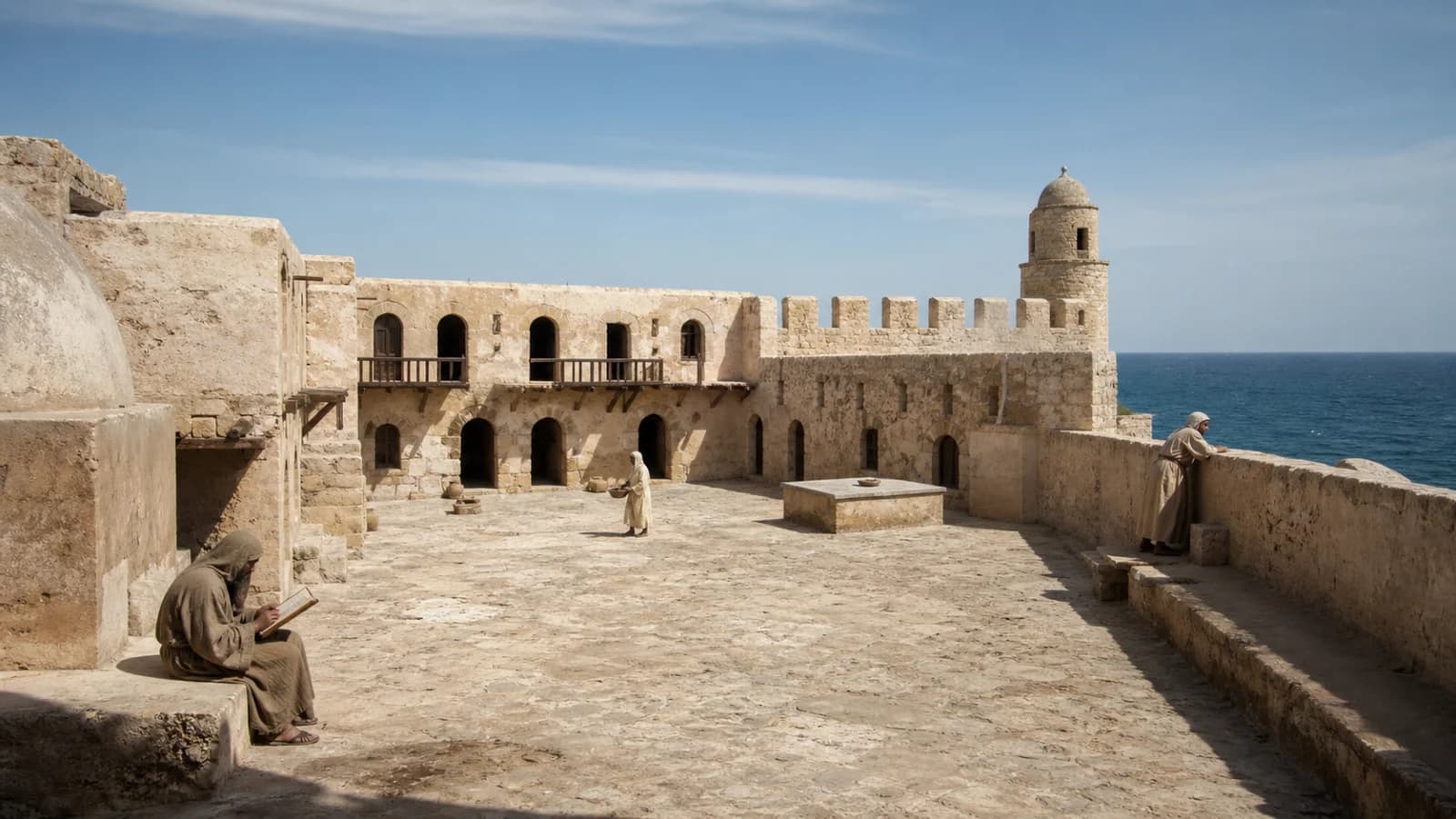
The cover image is an original AI-assisted historical reconstruction, not a photograph of a specific ribat.
The North African fortified type
The ribat at Sousse in present-day Tunisia is a strong surviving example. Archnet describes ninth- and tenth-century coastal ribats as compact, mostly unadorned fortifications occupied by devout soldiers who helped protect cities from maritime attack. In peaceful periods, residents could devote themselves to worship and teaching.
Typical features include thick outer walls, a controlled entrance, corner towers or a watchtower, a central courtyard and small cells on one or more levels. A prayer space could be incorporated within the enclosure. Defensive form and religious practice belonged to the same institution, but that does not make a ribat a monastery in the Christian architectural sense.
A term that did not stay fixed
Words travel. Ribat, rabat and related place names are connected to ideas of stationing or binding oneself at a post, yet actual institutions evolved. Some sites served travelers or pilgrims; some became associated with Sufi communities; some lost military functions; and some were rebuilt so extensively that one period’s plan cannot stand for the whole history.
Translation as “fortified monastery” is therefore only a rough shortcut. It can suggest communal residence and devotion, but it imports a different religious institution and may hide military, charitable, educational or lodging roles documented at a particular site.
Ribat, fortress and caravanserai
A ribat may resemble a small fortress because it has walls, towers and a gate. It may later function like a caravanserai because it houses travelers. Architectural similarity or later reuse does not erase the distinction. Dating, patronage, inscriptions, location and recorded occupants are needed to name a building responsibly.
The site’s position is especially revealing. A coastal watch post, frontier station, urban lodging and inland devotional house answer different needs even when all have a courtyard and cells.
How to read a ribat
- Establish the word’s local meaning in the period being studied.
- Examine walls, towers, sightlines and access for evidence of defense.
- Identify prayer, residential, storage and service spaces without assuming a fixed template.
- Separate original construction from later conversion and restoration.
- Avoid turning devotion into proof of a universal monastic order.
The value of the ribat lies precisely in its unstable boundary: watch post and residence, religious discipline and public protection, local building and changing institution.
Sources
- Archnet: Ribat of Sousse — coastal defense, religious life, cells and later uses.
- UNESCO World Heritage Centre: Medina of Sousse — urban and defensive context.
- Archnet: Ribat of Monastir — a major North African example with multiple building phases.
Related reading
- How caravanserais worked
- Islamic fortifications guide


