伊斯兰星盘如何运作:盘体、星网、纬度盘与照准仪
Muslim Post Editorial Desk@muslimpost
认识平面星盘的主要部件、测量天体高度的方法,以及它如何用于时间与方向问题。
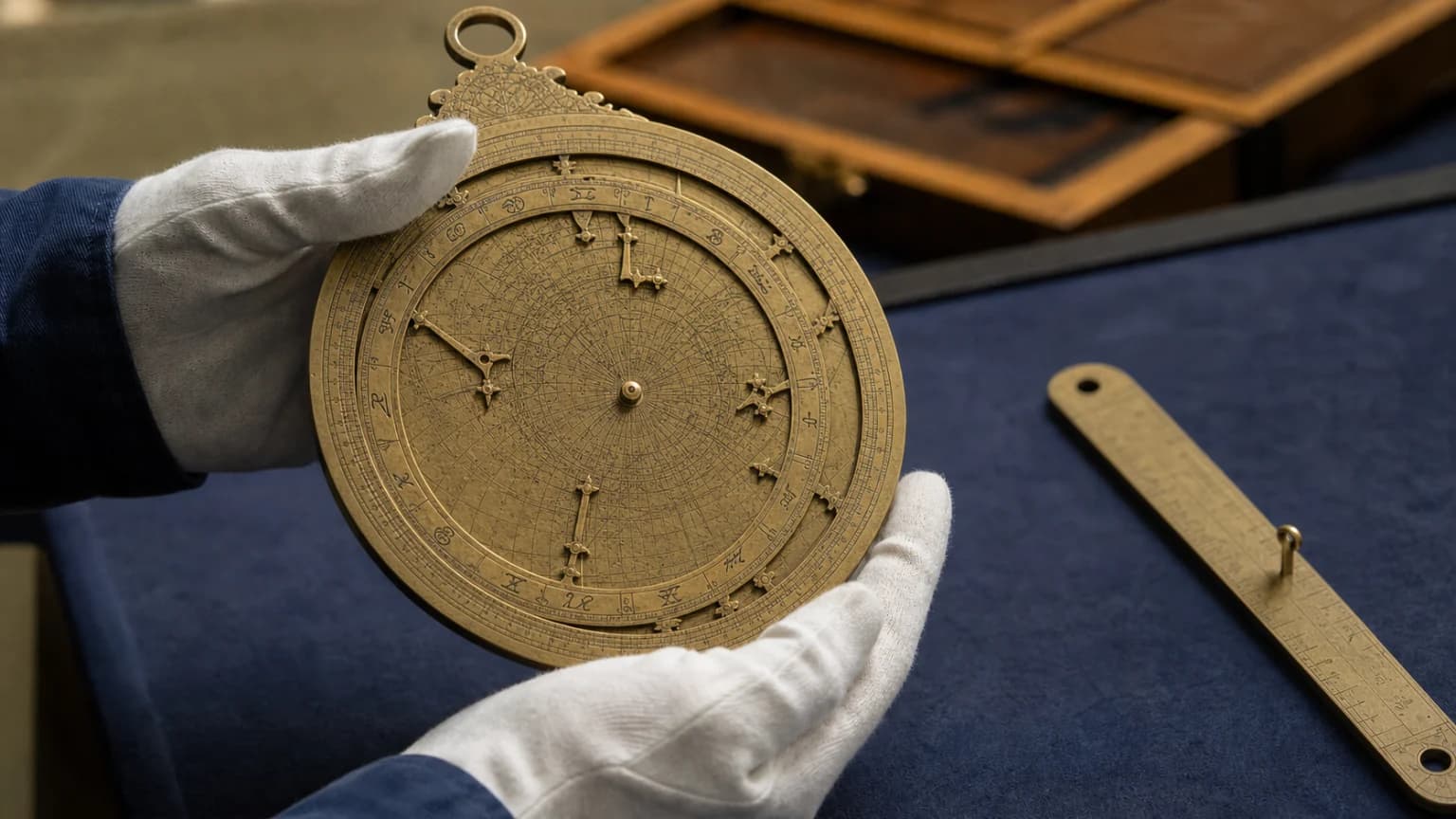
平面星盘是把天球立体投影压到平面上的模拟仪器,不是齿轮机械。盘体容纳按纬度制作的盘片,星网标示亮星与黄道,背面的照准仪测量天体高度。
核心要点
- 盘体是带刻度边缘的主体。
- 纬度盘刻有特定地点的地平与高度坐标。
- 星网是可转动的亮星与黄道图。
- 背面照准仪用于测量太阳或恒星高度。
如何使用这份指南
把人物、器物与制度放回具体年代和地区,不要用单一标签替代来源。遇到争议说法时,优先查看博物馆、档案馆与学术出版物。
资料来源
以下资料用于核实事实与限定文章范围;链接指向公开机构页面,不含商业推广。
- British Museum: Seeing Stars — Astrolabes and the Islamic World — Explains the principal components and uses of astrolabes in the Islamic world.
- British Museum: Astrolabe Collection Object — Provides object-level evidence for materials, construction and inscriptions.
- British Museum: Astrolabic Quadrant — Shows how related astronomical instruments differed in form and operation.
- The Metropolitan Museum of Art: Planispheric Astrolabe — Provides object-level details for a dated seventeenth-century Iranian astrolabe.
- History of Science Museum, Oxford: The Planispheric Astrolabe — Defines the mater, plates, rete, rule and alidade and explains their operation.
- Science Museum Group: Islamic Astrolabe — Documents an early Syrian planispheric astrolabe and its surviving parts.


