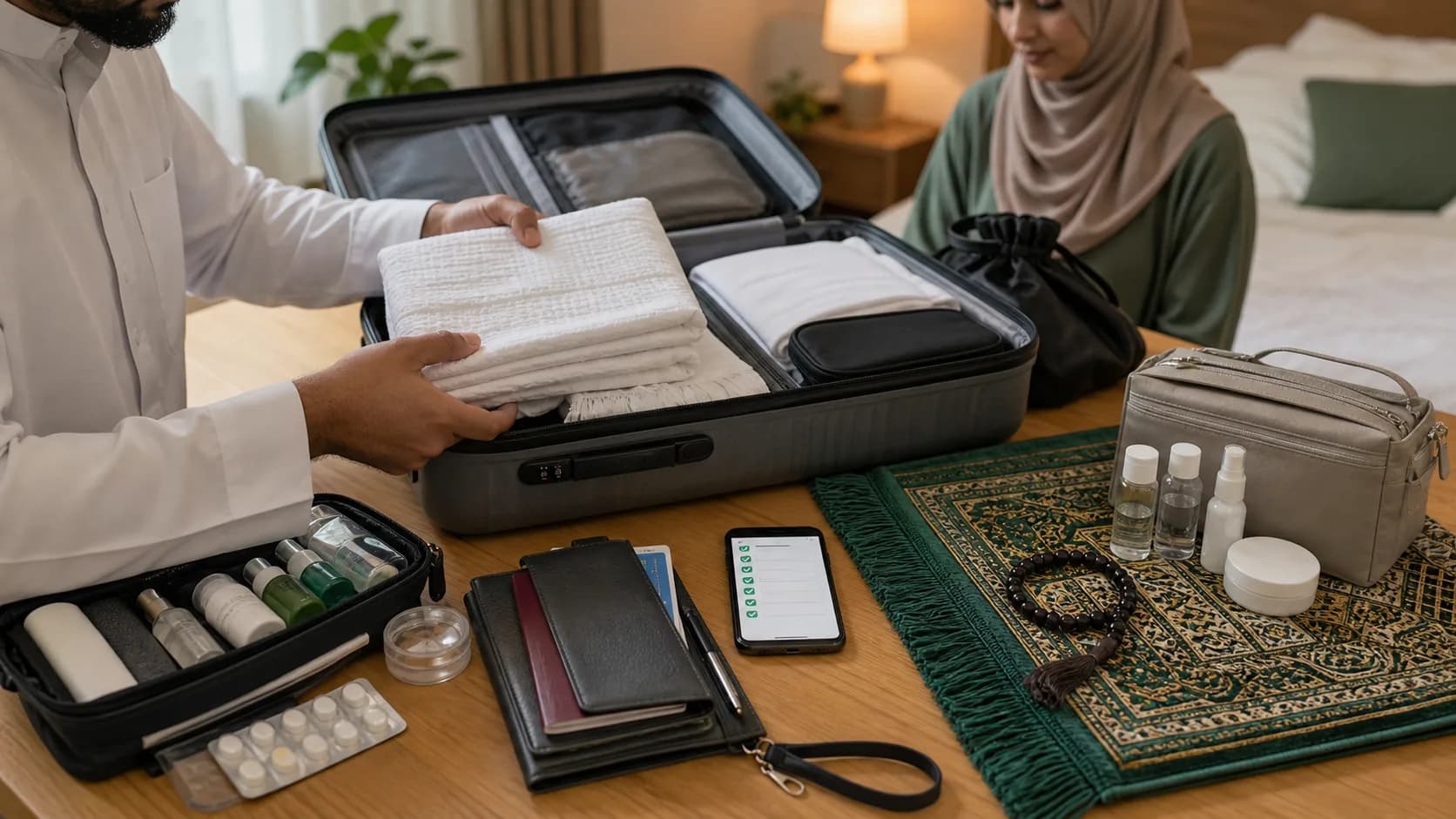
Umrah Packing Checklist for First Time Pilgrims Documents Ihram and Essentials
A first-time Umrah packing checklist covering documents, Nusuk permits, health preparation, ihram, worship items, toiletries and luggage organization.
A first-time Umrah packing checklist should begin before the suitcase opens. Most packing mistakes happen because the traveler starts with clothes and forgets the harder items: passport validity, permit access, vaccination checks, medication, footwear, phone setup and what must stay in the carry-on. Umrah is a spiritual journey, but the first practical duty is to arrive prepared enough to focus on worship.
Use this checklist with the qibla finder, prayer times, and Ramadan planning page if your travel overlaps a busy season. Official information can change, so keep Nusuk, Ministry of Hajj and Umrah, airline and health guidance open while finalizing the bag. This article is a practical checklist, not a replacement for official entry, visa or medical requirements.
The cleanest way to pack is in layers: documents and permits, health and medicine, ihram and worship items, clothing and footwear, then comfort items. Anything that could block entry, delay a permit check or affect health belongs in the first two layers and should not be buried in checked luggage.
Make the first layer boring and complete. Keep passport, visa or entry documents, airline booking, hotel address, transport booking, emergency contacts and Nusuk access together. If your group has elders, children or several rooms, add a printed card with hotel name, local phone number and group leader contact. A screenshot is useful, but it should not be the only copy when a phone battery dies or roaming fails after arrival.
The Ministry of Hajj and Umrah lists the Umrah permit application as a Nusuk channel service, and Nusuk itself is positioned as an official platform for the Umrah journey. That means a packing checklist should include digital readiness: account login, permit access, phone number, charger, power bank and a backup way to reach the group. This is not glamorous, but it is often the difference between a calm first hour and a stressful one.
Carry-on items that should not leave your hand
- Passport, visa or entry documents, airline booking, hotel details and emergency contacts.
- Nusuk account access, permit screenshots where appropriate, phone charger and a backup power bank.
- Prescription medicine in original packaging, basic personal medicine and any medical letter you may need.
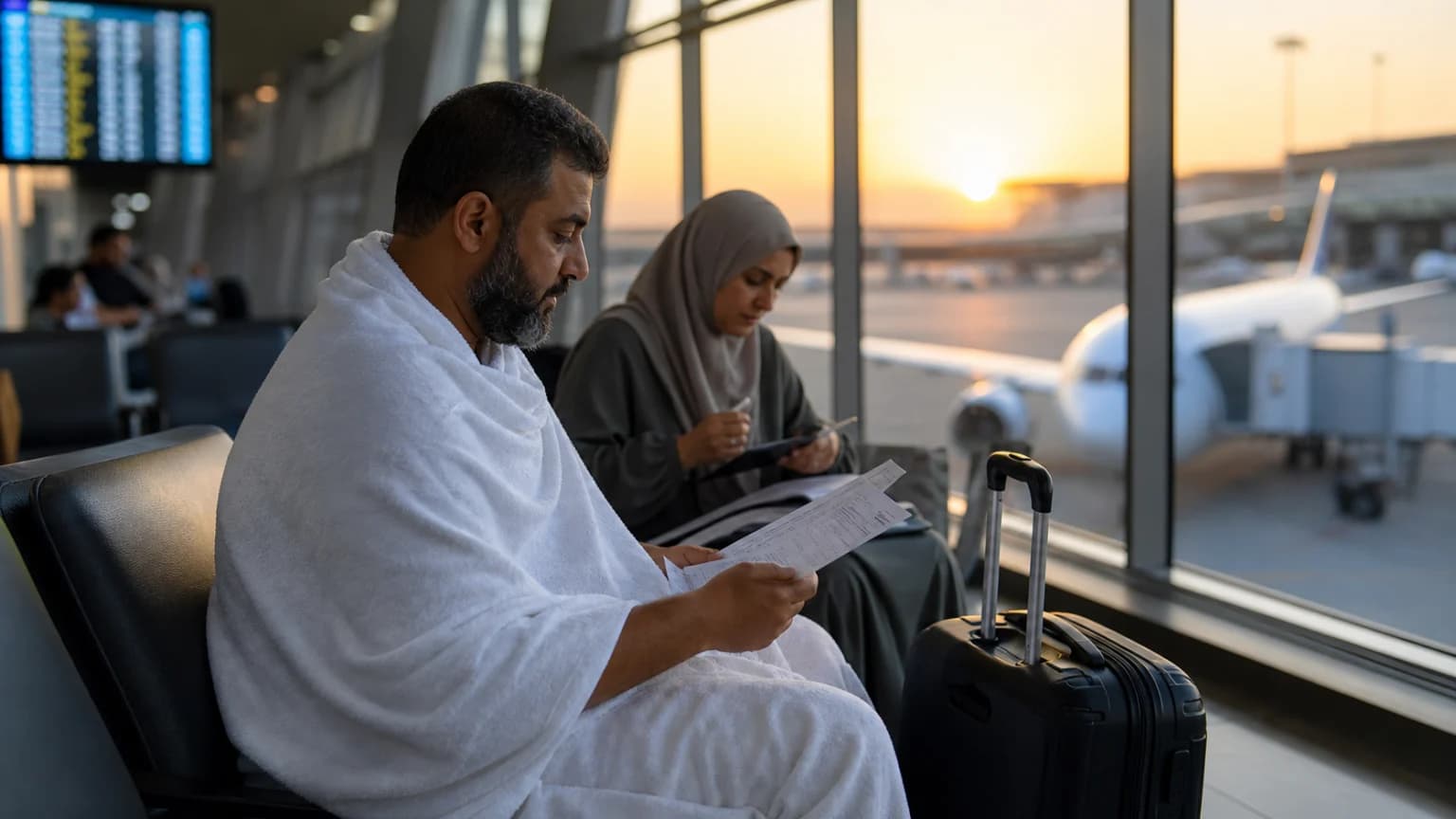
- Ihram garments or modest arrival clothing depending on your route and where you enter ihram.
- A small unscented toiletry kit, prayer mat or thin travel mat, and one change of clothes.
Pack around the ritual sequence
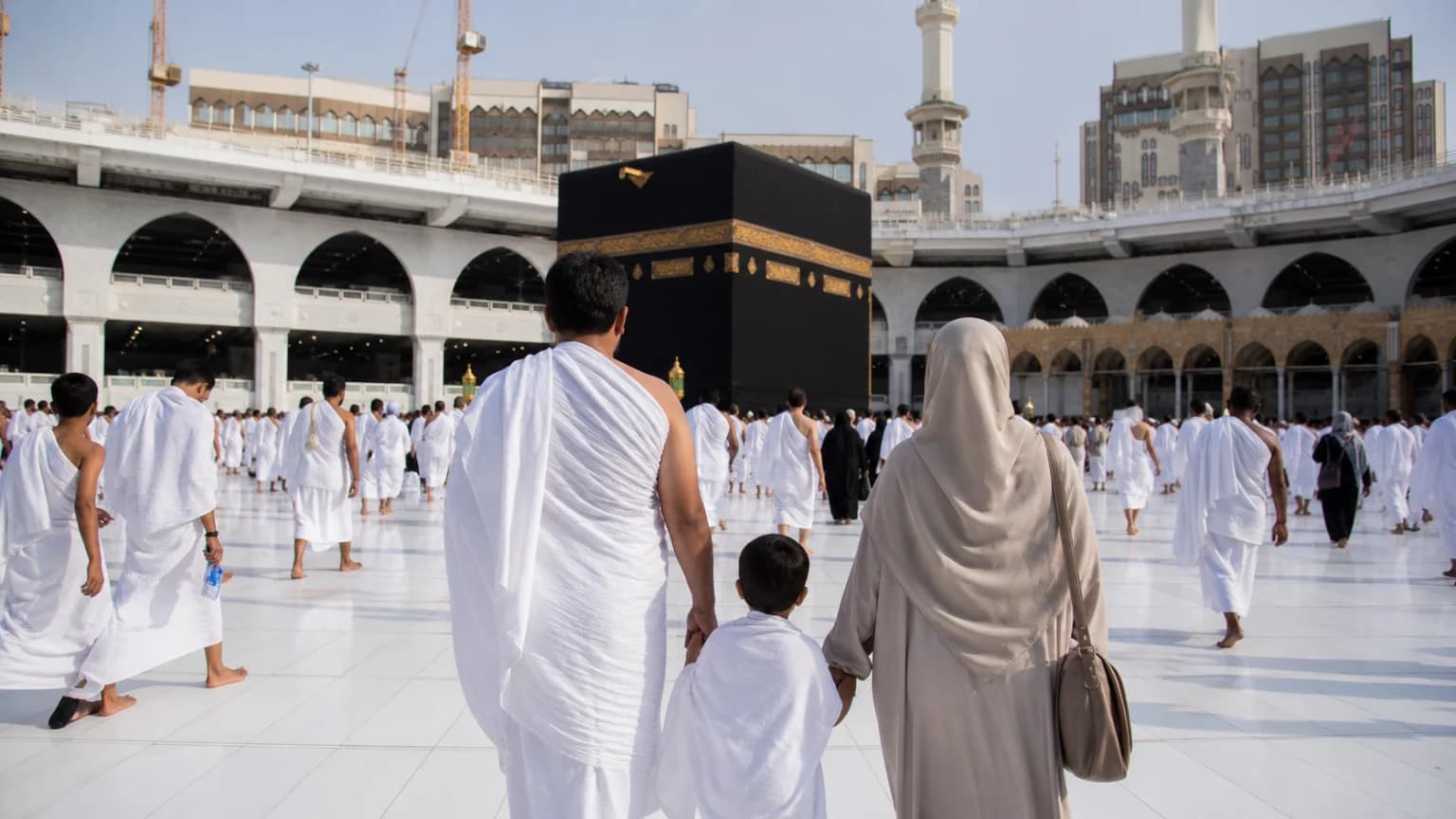
Nusuk describes the Umrah journey through ihram, tawaf, sai and completion. That sequence should shape the bag. Ihram garments need to be clean, accessible and not trapped at the bottom of a large suitcase. Footwear should be comfortable enough for walking and easy enough to manage around prayer areas. A small drawstring or crossbody pouch can keep sandals, phone and documents close without overloading the pilgrim.
Avoid packing as if every problem can be solved by buying something after arrival. Shops exist, but a tired first-time pilgrim may not want to search for unscented toiletries, comfortable sandals, a working adapter or medicine after a long flight. The goal is not to bring everything. The goal is to make the first 24 hours easy.
For men entering ihram before arrival, the bag should make that transition easy: clean ihram garments, belt or pouch if used, sandals that do not create blisters, and a simple place for documents. For women, modest breathable clothing, a spare khimar or scarf, and footwear that has already been tested are more useful than packing many outfit variations. Everyone should reduce fragrance-heavy items and check the rules they follow for ihram before choosing toiletries.
Health and comfort items are not optional extras
CDC guidance for Hajj and Umrah travelers points readers toward current health and vaccination requirements from Saudi authorities and reminds travelers to prepare for mass-gathering health risks. That means the packing list should include medical planning: prescriptions, hydration habits, masks if needed, blister care, sun protection, and a conversation with a clinician when the traveler has chronic conditions.
WHO EMRO also frames Hajj and Umrah as journeys where travelers should pay attention to official Saudi Ministry of Health guidance. The practical packing result is simple: do not treat health documents as a last-minute screenshot. Keep vaccination records, medication labels and medical notes where they can be shown if needed. If a requirement changes, the traveler who packed documents in one clear folder can adjust faster than the traveler whose information is scattered across chats.
A first-time pilgrim should also pack for walking. Tawaf, sai, hotel corridors, bus points and airport transfers can create more steps than expected. Bring footwear already tested at home, blister care, a refillable bottle if allowed by your operator and a light bag that does not swing during crowds. Heavy bags and new shoes are two avoidable problems that can steal attention from worship.
For the checked bag, pack modest clothing that can be washed or repeated, weather-appropriate layers, a small laundry plan, sandals or walking shoes already tested at home, and simple snacks allowed by travel rules. Leave room for the return journey. Many first-time pilgrims overpack clothing and underpack access: chargers, copies, medicine, a small pouch and comfortable footwear matter more than a perfect outfit plan.