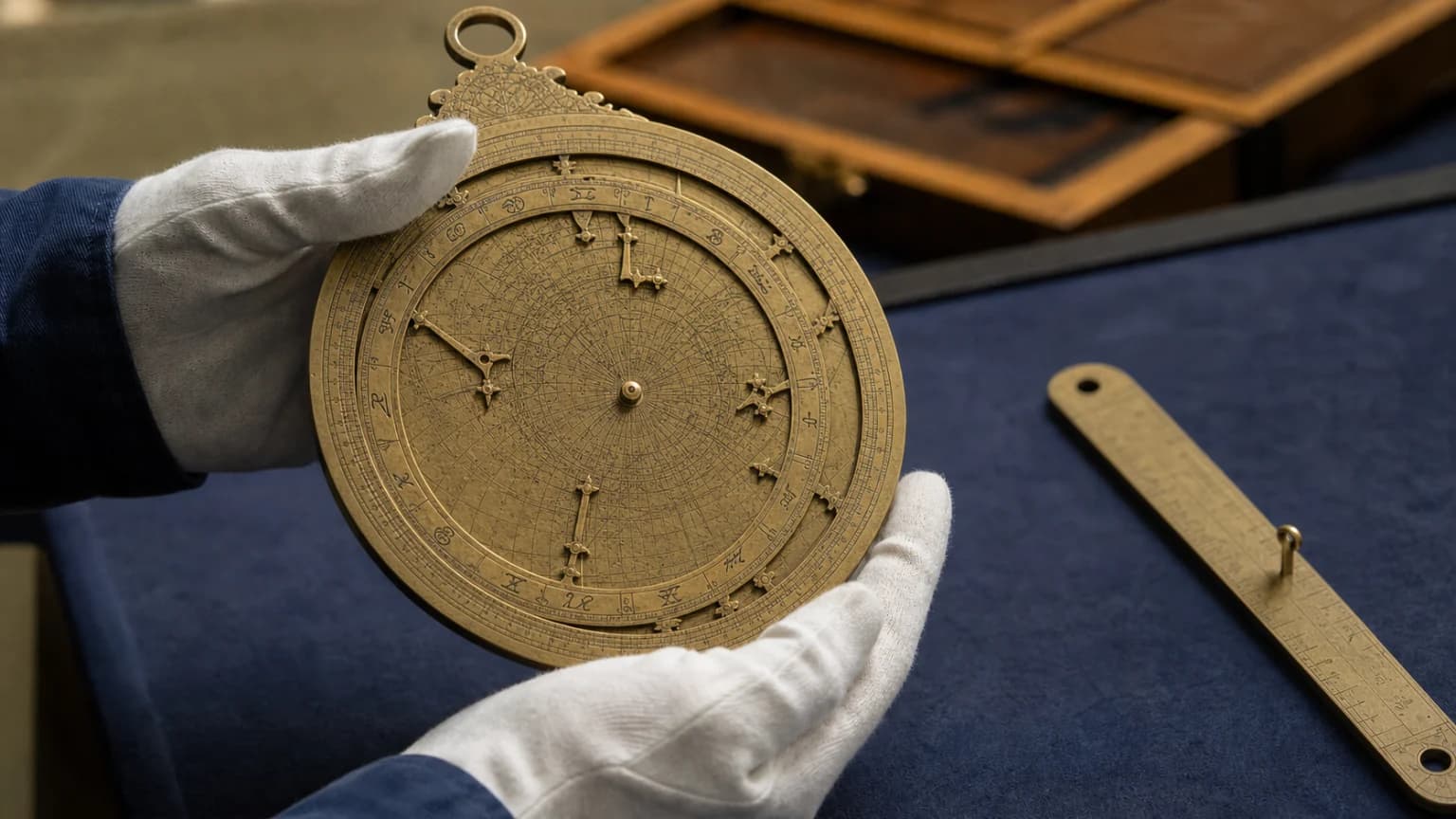
이슬람 아스트롤라베: 모체, 레테, 위도판, 자, 알리다드
Muslim Post Editorial Desk@muslimpost
0
아스트롤라베의 구성품, 하늘의 평면 투영, 시간·방향·고도 관측에 쓰는 방법을 설명합니다.
평면 아스트롤라베는 삼차원 천구를 평평한 원판에 투영합니다. 모체에는 위도별 판이 들어가고, 레테에는 별과 황도가 표시되며, 앞면은 자로 읽고 뒷면은 알리다드로 고도를 잽니다. 이것은 단순한 시계가 아니라 여러 천문 문제를 푸는 다목적 도구였습니다.
핵심 사항
- 모체는 움직이는 부품과 위도판을 담는 본체입니다.
- 각 위도판에는 특정 위도에 맞춘 좌표망이 새겨져 있습니다.
- 레테는 회전하며 하늘의 겉보기 일주 운동을 나타냅니다.
- 알리다드는 태양이나 별의 지평선 위 고도를 측정합니다.
이 안내서 활용 방법
인물, 유물, 제도를 해당 시대와 지역의 맥락에서 읽으십시오. 논쟁이 있는 주장은 박물관 목록, 기록보관소, 학술 출판물을 우선 확인합니다.
자료 출처
아래 공개 기관 자료는 사실을 검증하고 글의 범위를 정하는 데 사용했으며 상업적 홍보를 포함하지 않습니다.
- British Museum: Seeing Stars — Astrolabes and the Islamic World — Explains the principal components and uses of astrolabes in the Islamic world.
- British Museum: Astrolabe Collection Object — Provides object-level evidence for materials, construction and inscriptions.
- British Museum: Astrolabic Quadrant — Shows how related astronomical instruments differed in form and operation.
- The Metropolitan Museum of Art: Planispheric Astrolabe — Provides object-level details for a dated seventeenth-century Iranian astrolabe.
- History of Science Museum, Oxford: The Planispheric Astrolabe — Defines the mater, plates, rete, rule and alidade and explains their operation.
- Science Museum Group: Islamic Astrolabe — Documents an early Syrian planispheric astrolabe and its surviving parts.


