Ali ibn Isa’s Notebook of the Oculists Explained
What Ali ibn Isa’s ophthalmic manual says about eye anatomy, diagnosis and treatment, how it circulated, and where modern praise needs historical care.
Ali ibn Isa al-Kahhal’s Tadhkirat al-kahhalin serves as a systematic medieval Arabic manual for eye specialists, organizing clinical knowledge through structured anatomical description and symptom-based treatment protocols. The title utilizes the term kahhal to denote a specialist in ocular care, reflecting a professionalized field that integrated Greek physiological theories with observed clinical practice in the Islamicate world.
Anatomical Framework and Terminology
The text establishes its authority by defining the anatomy of the eye with precision. Ali ibn Isa moves beyond general descriptions to delineate specific structures, providing a specialized vocabulary that allowed practitioners to communicate complex conditions accurately. This terminology is not merely descriptive but functional, enabling the identification of disease locations within the ocular framework. The manual treats the eye as a distinct organ system requiring specialized intervention rather than a secondary appendage.
Such precise language indicates a mature professional field where knowledge was codified for teaching and practice. The focus on structure underpins the subsequent diagnostic methods, ensuring that treatments are targeted to specific anatomical sites. This approach separates theoretical anatomy from practical application, creating a bridge between medical theory and surgical or pharmacological intervention.
Classification of Diseases
Ali ibn Isa categorizes ocular disorders into external and internal diseases, a distinction that guides both diagnosis and therapeutic strategy. External conditions are those visible on the surface, such as lesions or inflammatory responses, while internal ailments involve deeper structures like the lens or vitreous body. This classification allows for a systematic approach to patient examination, where the practitioner first identifies the location of the pathology before determining its nature.
The text provides detailed symptoms for each category, linking specific visual disturbances or physical signs to underlying conditions. By correlating symptoms with anatomical sites, the manual offers a reliable framework for assessment. This method relies heavily on careful observation, documenting how patients present rather than speculating on metaphysical causes.
Treatment Protocols and Materials
Therapeutic interventions in the Tadhkirat encompass both pharmaceutical agents and physical procedures. Drugs are prescribed based on their perceived effects on the identified disease site, ranging from topical applications to internal remedies. The manual details the preparation and application of these substances, emphasizing the importance of dosage and frequency.
Procedures described include cleaning techniques, incisions, and the removal of foreign bodies or pathological tissues. These actions require steady hands and clear visual guidance, reinforcing the need for specialized training. The text does not guarantee success but provides a standardized set of actions intended to alleviate symptoms and restore function.
Transmission and Epistemic Limits
The work survived through manuscript copies and later translations, spreading its methods across linguistic and cultural boundaries. However, the existence of prescriptions does not equate to measured clinical outcomes. Historical texts offer evidence of what was believed to be effective rather than proof of efficacy by modern standards.
- Verify anatomical terms against contemporary Greek sources
- Distinguish between external and internal disease descriptions
- Analyze drug compositions for historical accuracy
- Note variations in procedural details across manuscripts
The gap between the text’s prescriptive nature and actual patient recovery remains a significant area of study. The manual reflects the clinical environment of its time, offering a window into the professional standards of medieval ophthalmology without endorsing the remedies themselves.
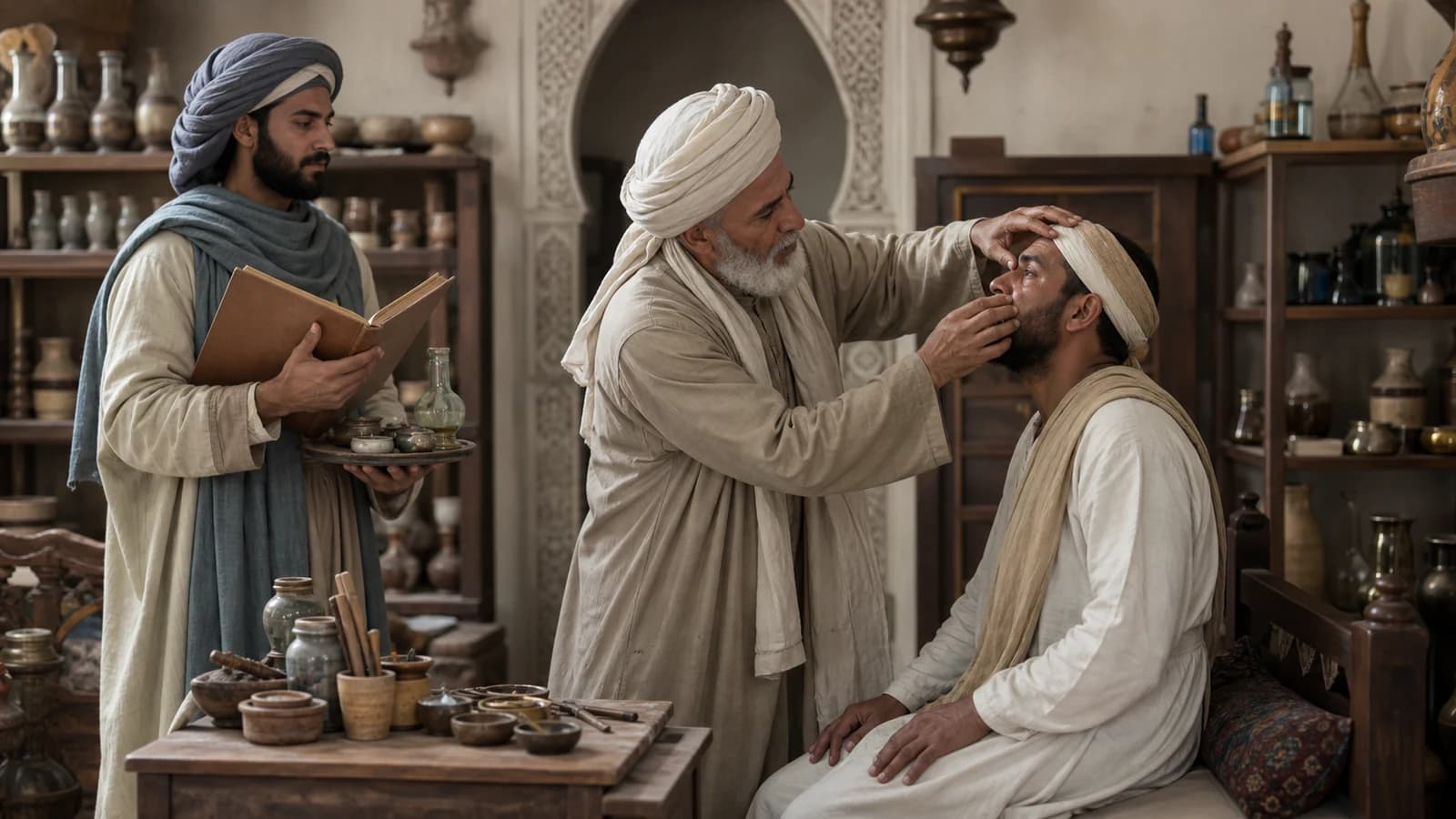
The cover image is an original AI-assisted medical workshop reconstruction, not a portrait or a reenactment of a documented operation.
Sources
- PMC: Ali ibn Isa and Medieval Ophthalmology — biography, contents and clinical context.
- PMC: Ophthalmology in the Medieval Islamic World — broader evidence and historiography.
- U.S. National Library of Medicine: A Note on Ophthalmology — ophthalmic manuscript tradition and catalog evidence.


